
Finding the Perfect Match: Why We Grade Our Potential Partnerships

How We Decide if a Client is the Right Fit
In the early years of Danger Boat, we would say “yes” to working with almost anyone who came knocking. Whether we were performing in a rec center or at an international conference operating on a shoe-string budget, we’d take the work. More than a decade later, saying yes to everything is beyond our capacity and is not creatively sustainable. But how do we pick and choose who we should partner with?
Like any business, who we work with makes a big impact on how we work. We needed an internal system to help us decide when to say “No” to opportunities.
At Danger Boat, we believe the best creative work comes from healthy, aligned partnerships. So, to ensure we're setting every project up for success, we’ve developed a client grading system.
Why We Created a Client Grading System
A client grading system helps us evaluate whether projects are a good fit before saying “yes.”
One of the reasons people hire agents or lawyers is to have someone negotiate on your behalf with a little emotional distance. This is our attempt to do that for ourselves. We wanted to define what matters to us, what marks a successful project, and what conditions need to be in place for everyone involved to have a good experience.
When a project sounds exciting, it can be tempting to say “yes” right away. But enthusiasm alone doesn’t mean we should agree to be paid in pizza. Our grading system gives us a clearer way to evaluate whether a potential partnership is likely to actually work well for both Danger Boat and our potential partners.
How the Client Grading System Works
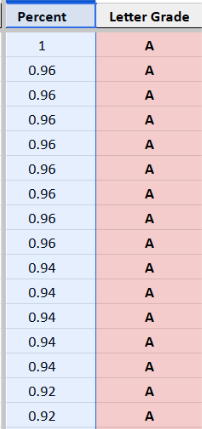
An example of our spreadsheet formula aligning “scores” with “grades.”
We use a spreadsheet with 10 categories to provide an overview of whether we should say yes to a project. We rank each category on a 5 point scale, with 1 being low and 5 being high. If we’re ever uncertain, we place a 3.
Dividing it into categories ensures nothing overwhelms our decision to say yes. A big budget is great, but it does not solve poor communication. An exciting creative opportunity is wonderful, but it still needs a realistic scope. A project is more likely to succeed when it scores well across several criteria.
At the end, we have a formula that assigns the score a letter grade. Our goal is to only work with A and B clients, be cautious with C clients, and avoid at all costs projects that score a D or an F.
Here are the ten categories we use to grade our partnerships, in no particular order:
1) Decision Access
Are we working directly with a decision maker?
It can be frustrating if we’re working with someone who is enthusiastic, but unable to make decisions on behalf of the project. If every choice needs to be brought to someone else, or a committee that only meets quarterly needs to vote on it, the project can quickly become slow and difficult.
If all of your ideas are processed through an institutional game of “telephone”, your request for a fireside chat with the CEO can be rejected because the venue lacks a pyrotechnics license.
2) Budget Strength
Is there a sufficient budget to support the project?
Sometimes, people's ideas are bigger than their budgets. They want us to be there for two full days, but they can only afford our cast for one. Another common problem is when potential partners start "bundling" our services, i.e. they hire us for a performance, but also want us to throw in a keynote and help them plan the entire event for the same fee.
Usually we try to work within the means of any budget, but it’s not always possible. A strong project needs a budget that matches the goals, scope, and level of customization required.
3) Urgency & Commitment
Is there a date they’ve settled on or a specific deadline in mind?
A specific event date or deadline gives the project focus. It helps everyone understand what needs to happen and when.
If someone reaches out while they are still in the early exploratory phase, that can mean the road to the event includes many additional meetings, shifting ideas, and uncertain timelines. We have been told we are fun to have in meetings, which is lovely. Unfortunately, we do not have unlimited time to be charming on Zoom.
4) Organizational Clarity
Is the project clear and achievable?
There’s a wide gulf between, “We’d like you for a keynote on Oct. 6 at 11am for a trade association of podiatrists on the topic of resilience,” vs “We thought we could do something fun together.”
We are always happy to help clients clarify their goals. But the strongest projects usually start with at least some sense of the audience, objective, timeline, and desired outcome.
5) Brand Alignment
Does the client’s brand align with our values and approach?
Shared values make collaboration easier. They give everyone a common language and reduce friction around decisions, tone, and expectations.
For us, good brand alignment means the client values humor, curiosity, empathy, and thoughtful engagement. When those values are shared, we are more likely to create shows, workshops, and events that feel meaningful, useful, and fun.
6) Scale & Reputational Value
Would this client help us grow our reputation, reach, or network?
We are happy to work with organizations of many sizes. At the same time, we give special consideration to projects that help us reach new audiences, enter a new industry, earn media attention, or build relationships that could lead to future opportunities.
Some projects are valuable not just because of the fee, but because of the doors they may open.
7) Communication Quality
Is the client responsive, clear, decisive, and respectful?
Early communication is often a strong indicator of what the full project will feel like. Do they respond in a reasonable amount of time? Are their emails clear, or do they read like a puzzle box with a calendar invite attached? Do they treat our team with kindness and respect?
Good communication makes the work better. It also makes the process more enjoyable for everyone involved.
8) Scope Realism
Do the expectations match the budget and delivery plan?
We always want to exceed expectations, but the expectations still need to be realistic.
We are an improv company. We can do many surprising things. We cannot get you to the moon. Unless our rocket project gets that government grant…
Scope realism means the client understands what is included, what is not included, and what support they may need to provide. For example, if someone hires us to perform an Improv Café-style event, that does not mean we are also responsible for selling tickets, managing registration, and handling all event marketing.
9) Repeat Potential
Is there a possibility for future work?
More than 60% of our clients are repeat customers, and we generally prefer building long-term relationships. Repeat work helps us understand a client’s audience, goals, and culture more deeply. It also allows us to create better and more customized experiences over time.
We are not opposed to one-time projects, but we pay attention to whether there is potential for an ongoing partnership.
10) Financial Reliability
Is there evidence that payment will happen promptly and smoothly?
We love performing, teaching, and creating with clients. We also need to get paid so the lights stay on, the actors get paid, and the boat remains reasonably danger-free.
A strong client has a clear payment process, a vendor system in place, and a timeline for when invoices will be paid. When payment is smooth, everyone gets to end the project on a high note instead of a follow-up email titled “Just checking in again…”
Conclusion
Not every opportunity is the right opportunity, and that is okay. The goal of our client grading system is not to make the sales process colder or more rigid. It is to make our decisions clearer, more intentional, and more honest. When we understand what makes a project likely to succeed, we can say yes with more confidence, set better expectations, and build stronger partnerships from the start.
For us, the best clients are not just the ones who hire us. They are the ones who share our commitment to meaningful work, clear communication, realistic expectations, and a process that lets everyone do their best.
