
Can Comedy Save Civic Dialogue? 414 Audience Surveys Say Yes.
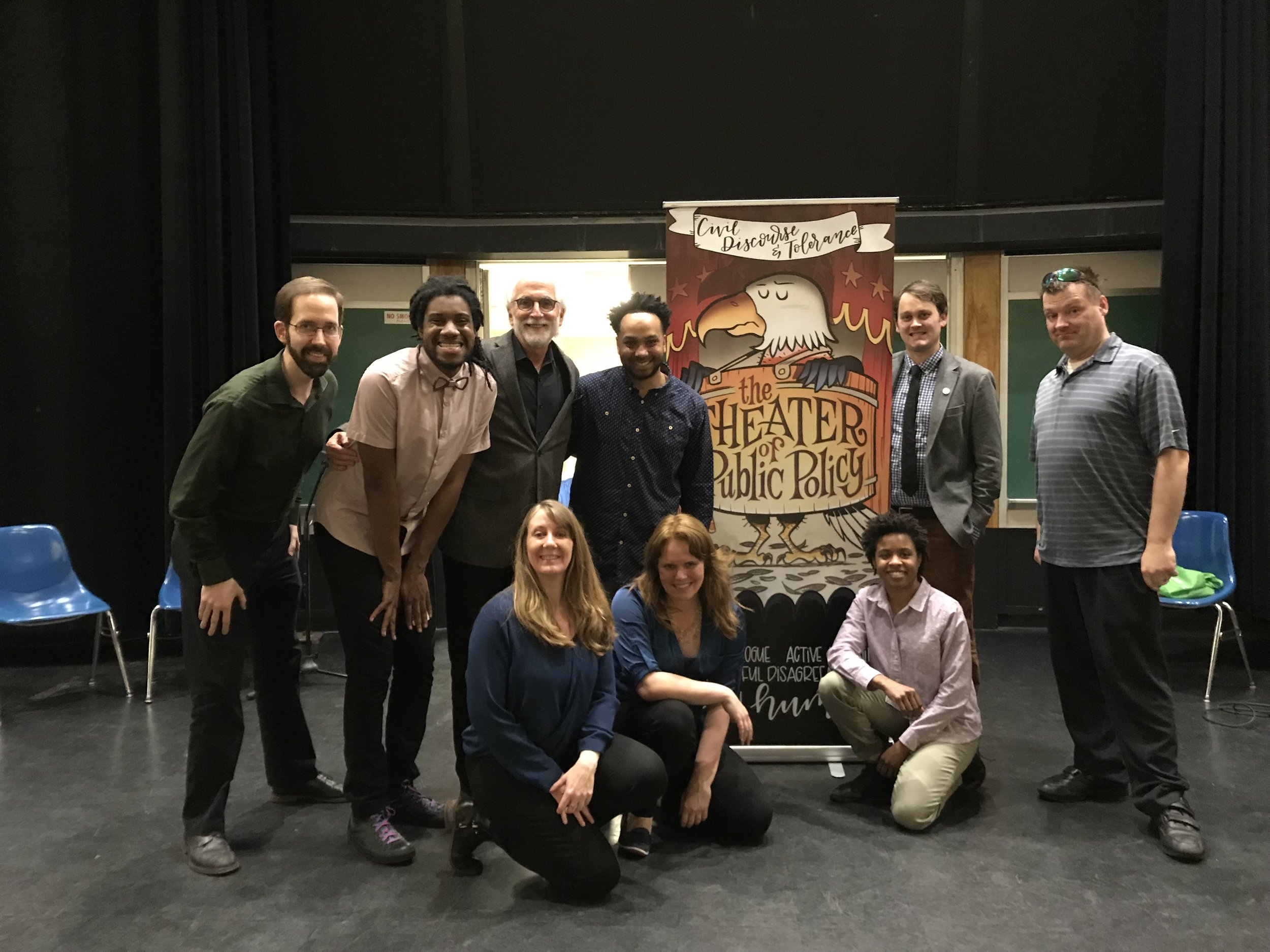
Danger Boat cast members pose after performing an interview-inspired show about gentrification at Hofstra University (Long Island, NY).
Can Comedy Save Civic Dialogue? 414 Audience Surveys Say Yes.
In a world of polarized shouting matches and dry panel discussions, how do we get people to actually engage with tough topics? In 2018, Danger Boat Productions set out on a nationwide campus tour to find out:
Can Improv Comedy help people engage more thoughtfully with difficult issues?
Survey data from the tour suggests the answer is “yes.”
Audiences did more than enjoy the shows, though. They reported that the events:
helped create civil discussion,
introduced new perspectives,
and made serious public issues easier to engage with.
For colleges, conferences, civic organizations, and mission-driven groups, that is a useful lesson: people are more willing to wrestle with complex ideas when the experience is thoughtful, participatory, and genuinely enjoyable.
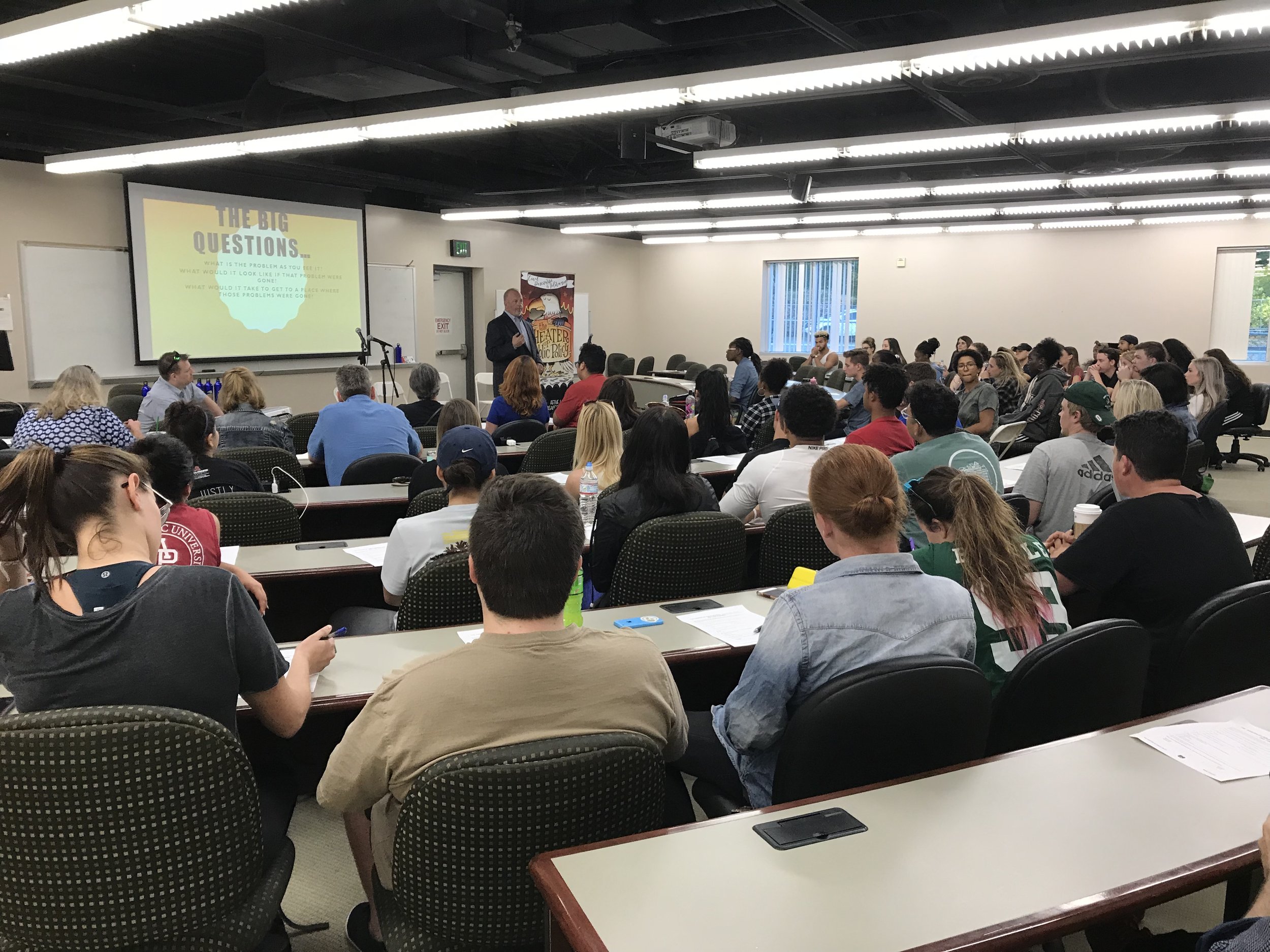
Our show at Southwest Baptist University in Bolivar, MO focused on the partisan divide.
Background
In 2018, Danger Boat Productions set out on a cross-country tour with Pi Kappa Delta, one of the oldest forensics organizations in America, on a cross-country civic dialogue tour. The goal was to see whether improv could do what traditional panels and lectures often struggle to do: create a lively, civil conversation about some of the toughest issues in the country.
The tour explored topics ranging from the politics of #MeToo to the future of the economy. Performances took place at college campuses across the country, including:
Gustavus Adolphus College
Southwest Minnesota State
Tennessee State University
Ferris State University
Webster University
Southwest Baptist University
University of Central Missouri
St. Cloud State University
Hofstra University
Azusa Pacific
Each event followed one of Danger Boat’s live civic engagement formats, combining serious conversation, audience participation, and improvised comedy.
About the Survey Data
Across ten campus events, Danger Boat Productions collected 414 audience surveys from an estimated 990 attendees. The results were encouraging. Audiences gave the overall events an average score of 4.5 out of 5, and 86% said they would recommend the performance to a friend or co-worker.
This was not a formal academic study. The results come from voluntary audience surveys collected after live campus performances. Still, the responses offer a useful snapshot of how audiences experienced the events and what they found valuable.
Here is what we learned about the power of civic dialogue, experiential learning, and why your next event might need a dose of unscripted humor.
86%
would recommend to a friend or co-worker
92%
enjoyed the improv
4.5/5
average rating
88%
agreed the program helped create civil discussion
What We Learned
The data suggests that the improv was a core component of serious civic dialogue and one of the reasons it worked, not just a distraction.
Across the tour, 92% of respondents said they enjoyed the improv, while 88% agreed that the program helped create a civil discussion on issues and ideas.
That combination matters. Civic events often struggle to balance substance and accessibility. If a conversation is too formal, people tune out. If it is too loose, the issue can lose its weight. The survey data suggests that Danger Boat’s model helped audiences stay engaged with serious topics by making the experience lively, human, and approachable.
In other words, comedy was a core element of civic conversation.
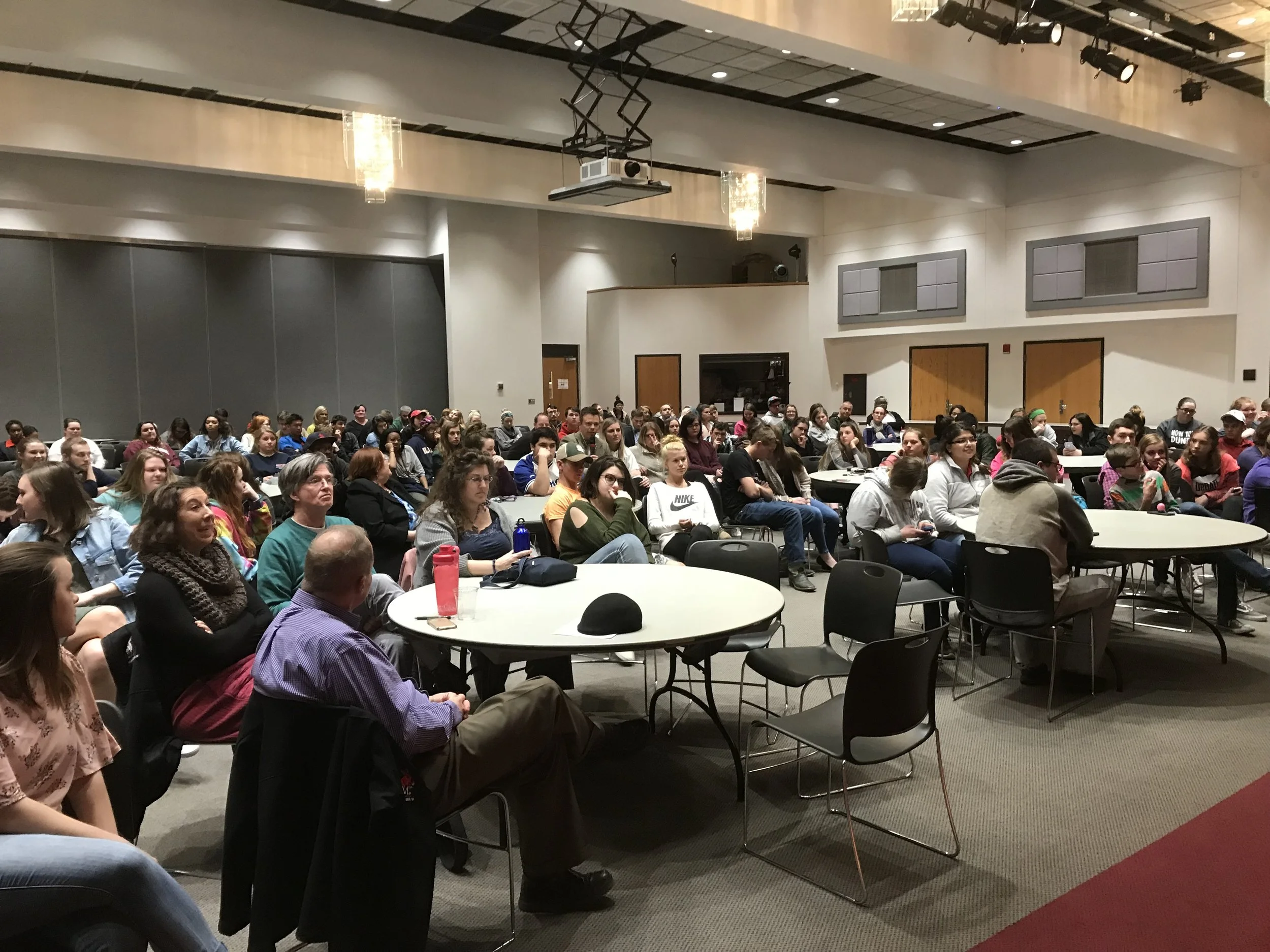
The audience watches a performance at the University of Central Missouri about police misconduct.
The Formats
1) Improv Cafe
Improv inspired by small group discussion and audience feedback
The Improv Café format performed especially well. In this format, audience members first discuss the issue in small groups while improvisers listen in. Then the improvisers create scenes inspired by what people in the room are thinking, wondering and wrestling with.
That structure made the comedy feel directly connected to the audience's own experiences. It also gave participants more than one way to engage: through conversation, listening, laughter, and shared reflection.
For campus and conferences, this is especially useful. The format gives people a structured way to talk with one another before seeing their ideas reflected back through performance.The knowledge that comedy is coming next takes the pressure off the conversations and creates space for meaningful connection.
2) Flagship Show
Improv inspired by an onstage expert interview and audience Q&A
The Flagship Show was the most frequently used format on the tour, and the results were consistently strong. This format combines an expert interview, audience questions, and improvised scenes that bring the ideas to life.
This format worked for a number of reasons. The interview gave the event credibility and depth. The improv gave the audience a way to process the ideas in real time.
That is the core value of the format: you can dive into complex issues if you also give people a creative way to understand and remember them. Because if you cannot keep your audience's attention, you cannot change how they think.
3) Debate Show
Improv inspired by a two-sided debate.
The debate format also performed well, especially on questions related to civil discussion.
That finding is important; disagreement does not have to derail an event. With the right structure, facilitation, and tone, tension can be useful. On this tour, we found that pairing that tension with humor, reflection, and a clear container for the conversation allowed the group to explore new perspectives and have better dialogue.
Comedy does not make the disagreement disappear. It helps the room to be more willing to stay curious.
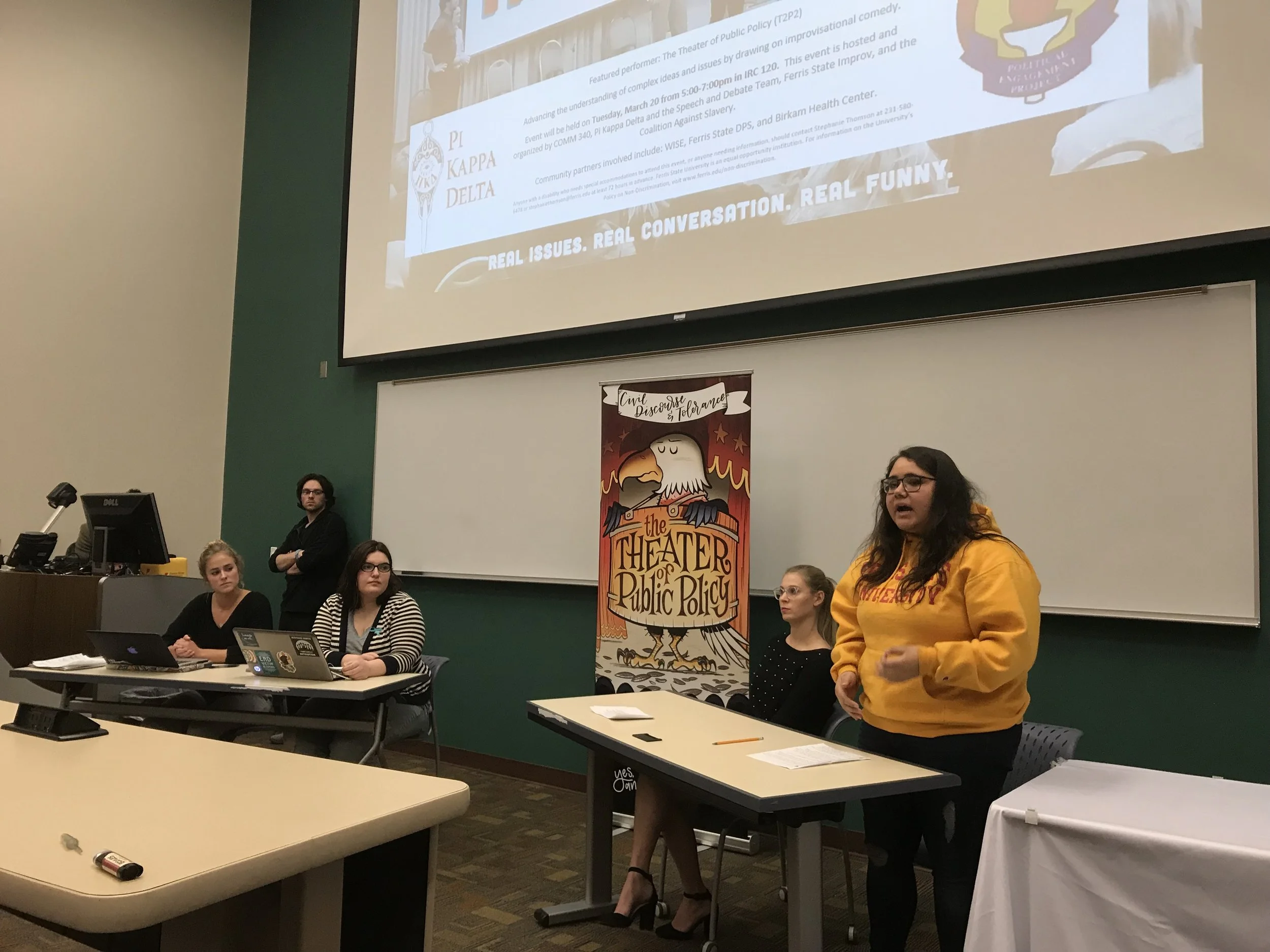
Our show at Ferris University used the debate format to discuss “Legislating Feminism.”
Who Attended?
While students made up most of the survey respondents, the format also resonated with faculty, staff, and community members. That matters because civic dialogue events need to serve more than one audience at once if their goal is to really dig into an issue from multiple angles. Comedy can be an excellent bridge across those audiences.
One practical lesson from the tour: campus events work best when they are connected to classrooms, faculty, or existing academic networks. Social media and flyers can help, but direct classroom promotion appeared to be the strongest driver of awareness.
A Professor saying, “You should go to this,” is far more effective than a poster with a clever pun.
Conclusion
The lesson from this tour is simple: people are more willing to engage with complex topics when the experience feels thoughtful, participatory, and genuinely enjoyable.
Improv gives audiences another way into the conversation. It helps people laugh, listen, reflect, and see an issue from more than one angle. For colleges, conferences, civic organizations, and mission-driven groups, that can turn a difficult topic into the focal point of an event that people actually want to attend and will remember afterward. Humor can bring people closer to a solution grounded in multiple perspectives, rather than deepening divides across complicated topics.
What’s Next?
Since this tour, Danger Boat Productions has continued to design live events that make serious ideas easier to understand, easier to talk about, and more fun to experience. Next week, for instance, we’re re-visiting Southwest Minnesota State University for a flagship show all about voting, including the complicated aspects of it (i.e. attacks on voting by mail, fraud accusations, and voter efficacy).
Combining comedy with conversation is our expertise. If your organization is planning a conference, campus event, civic dialogue, or public conversation, we’d love to work with you to make the topic come alive for your audience.
