
WATCH/LISTEN: Hennepin County Attorney Debate - Rep. Cedrick Frazier and Anders Folk
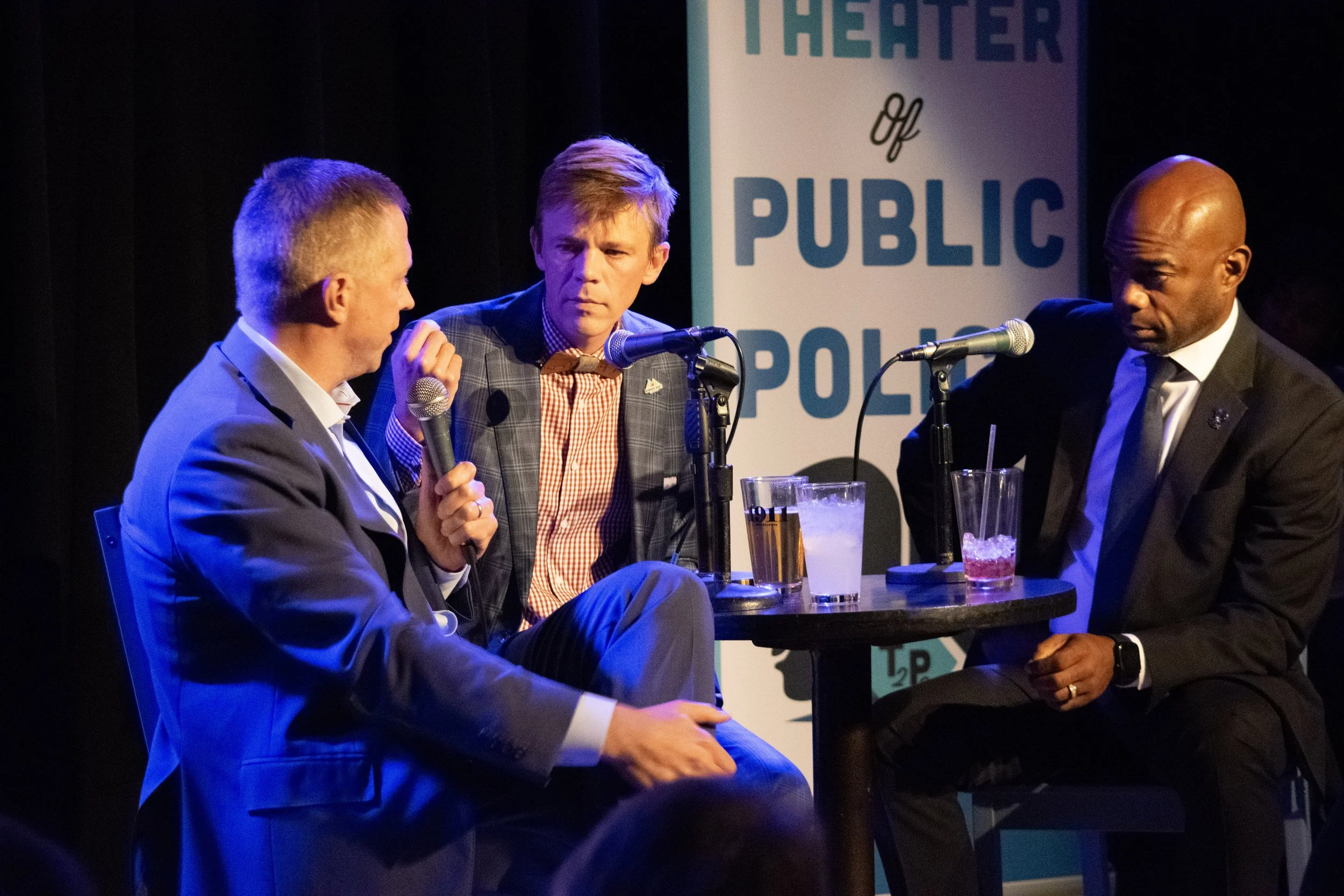
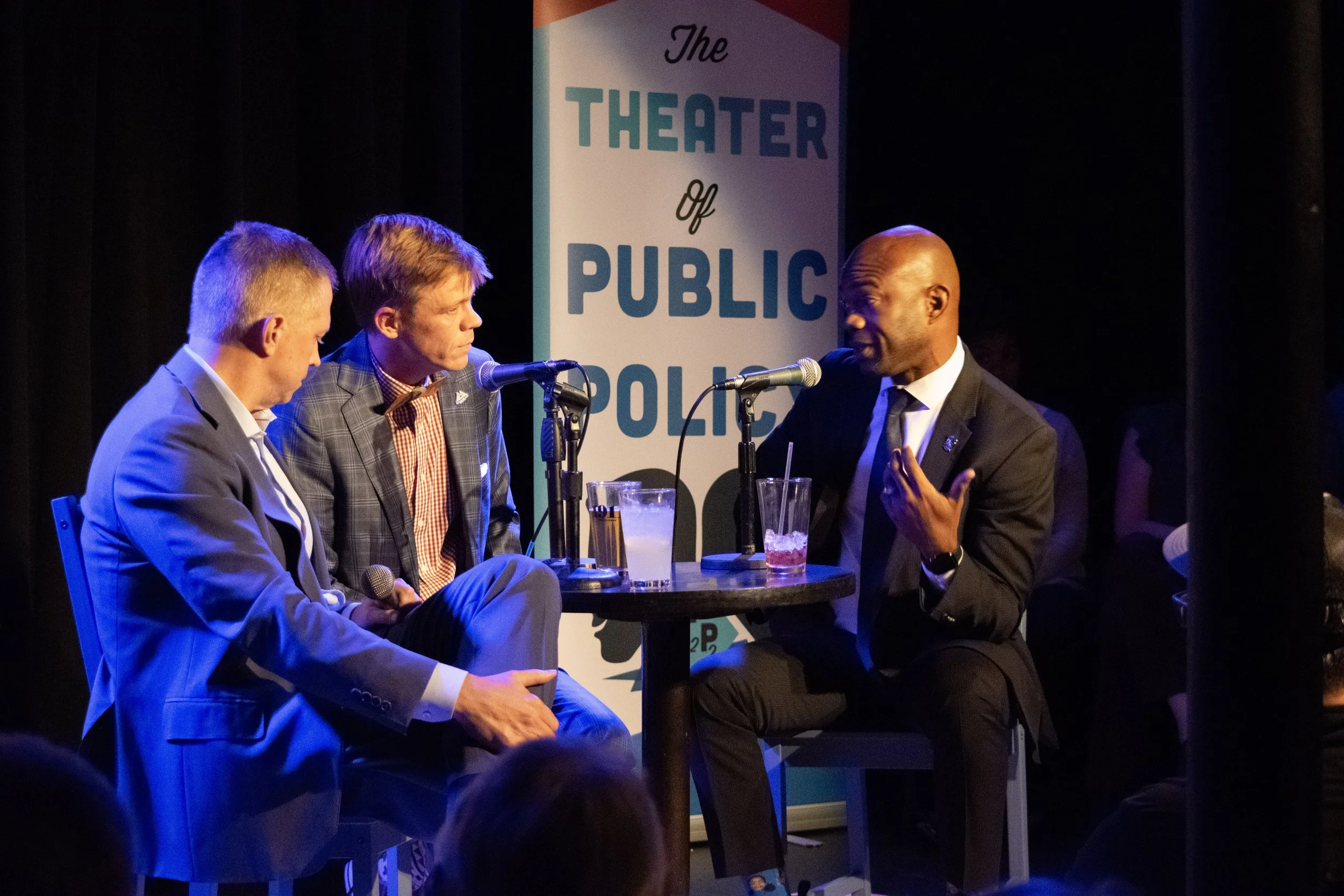
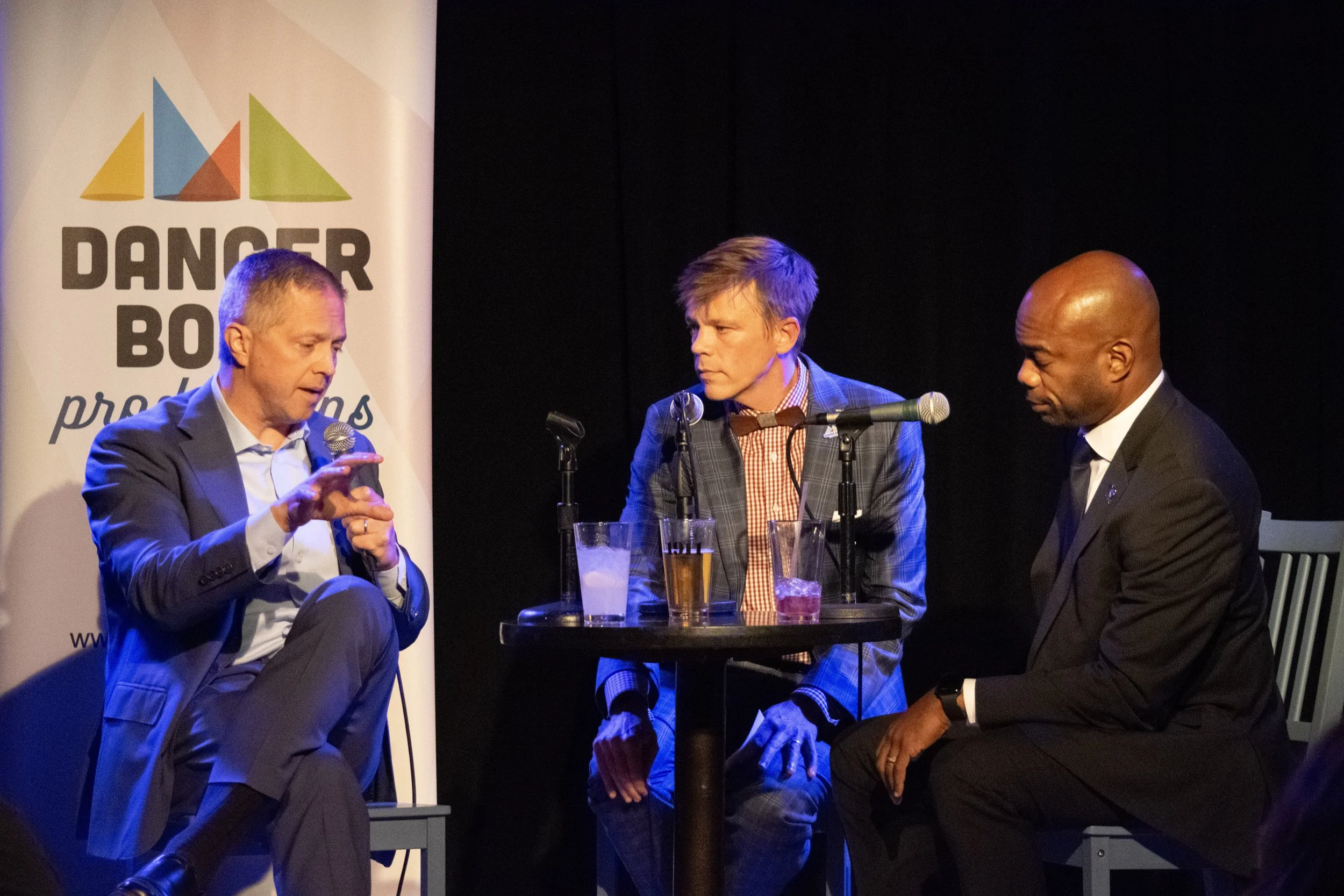
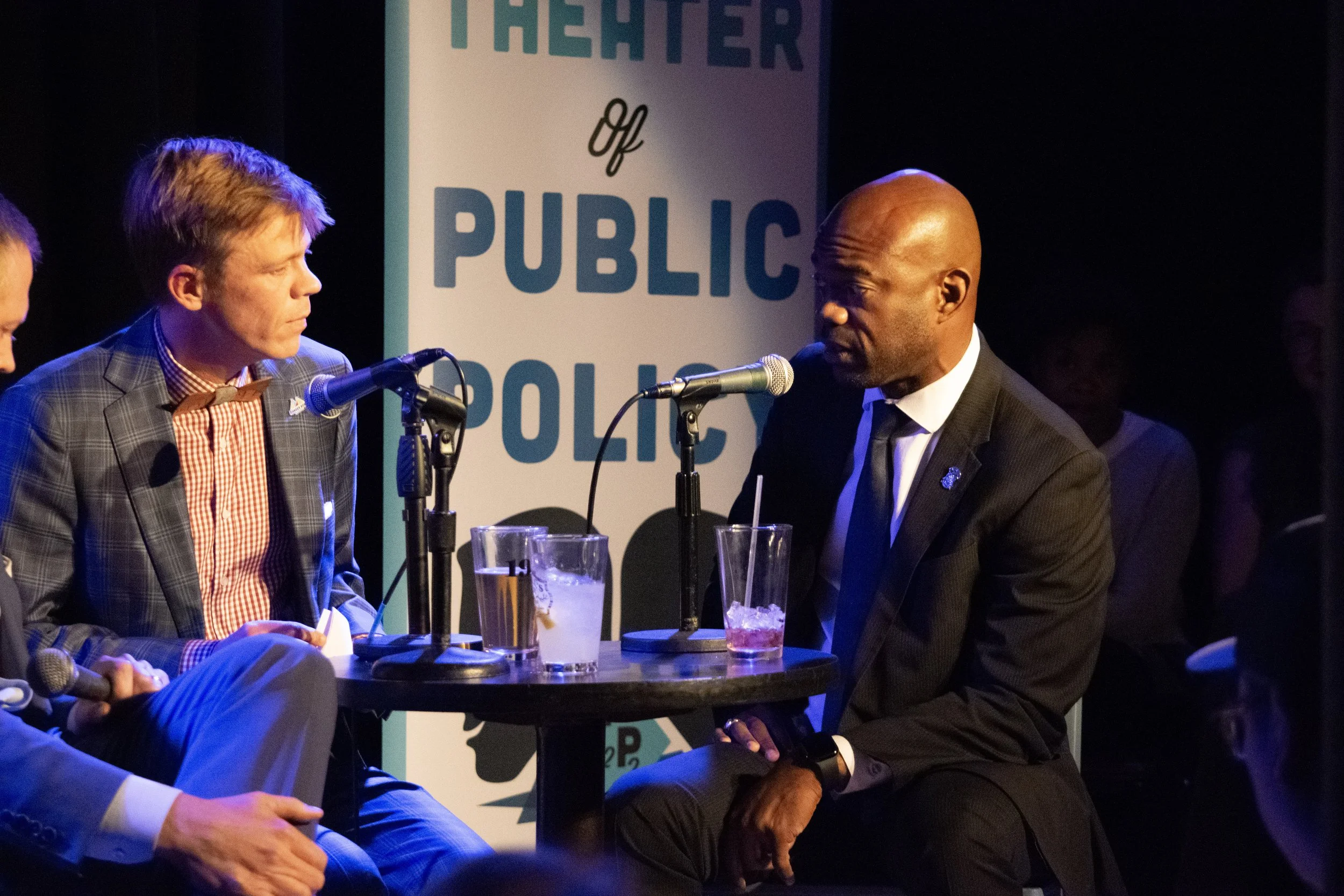
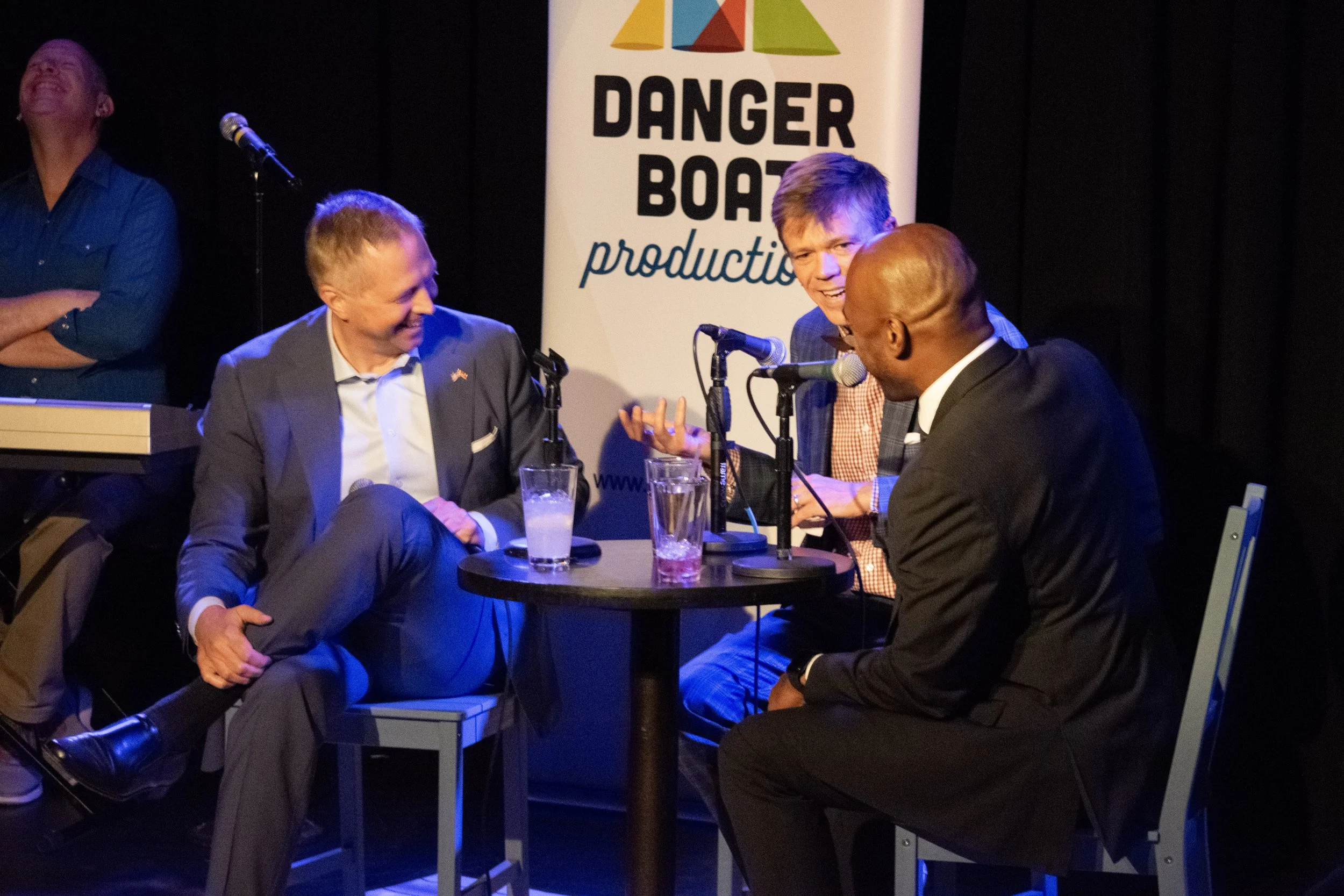
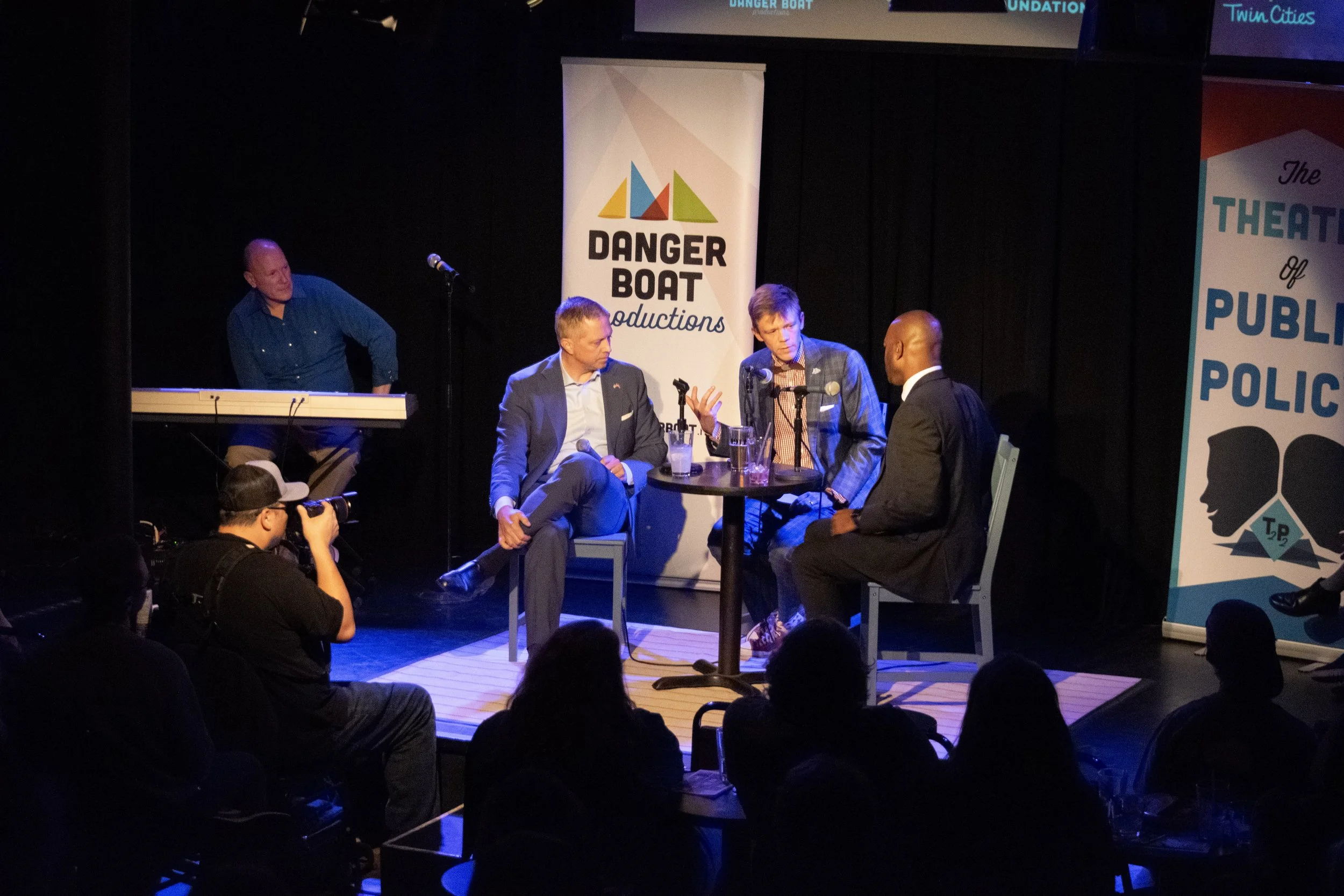
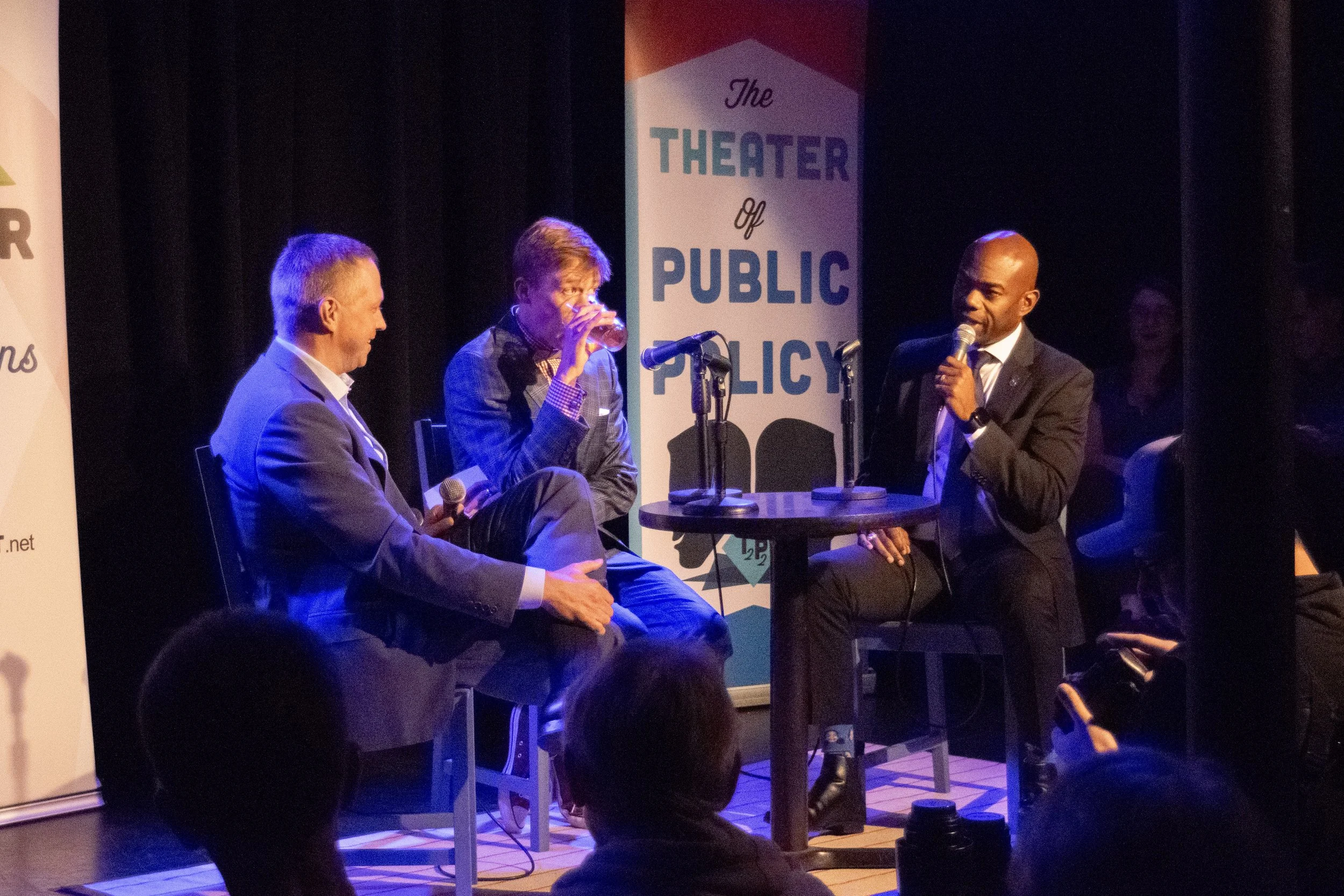
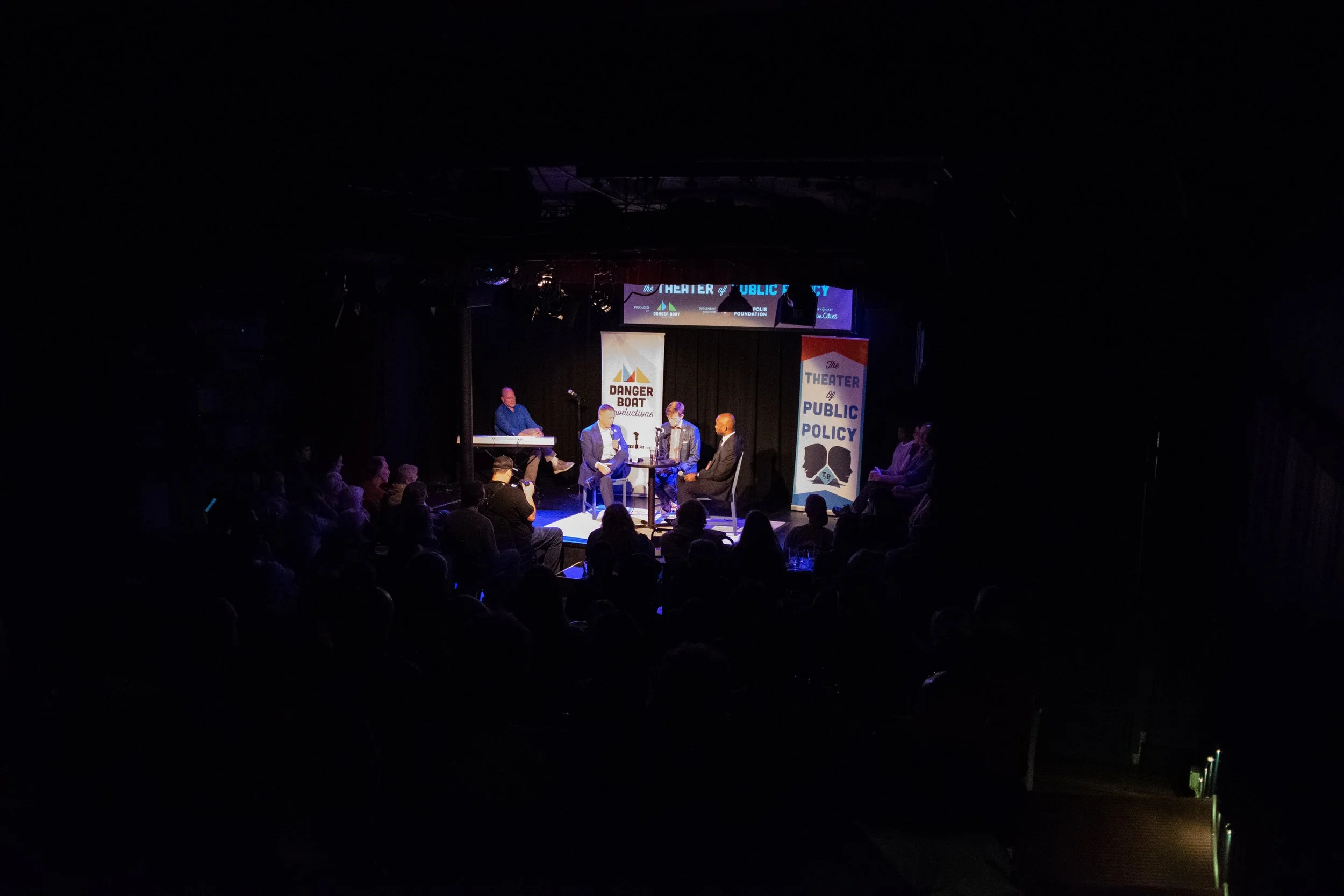
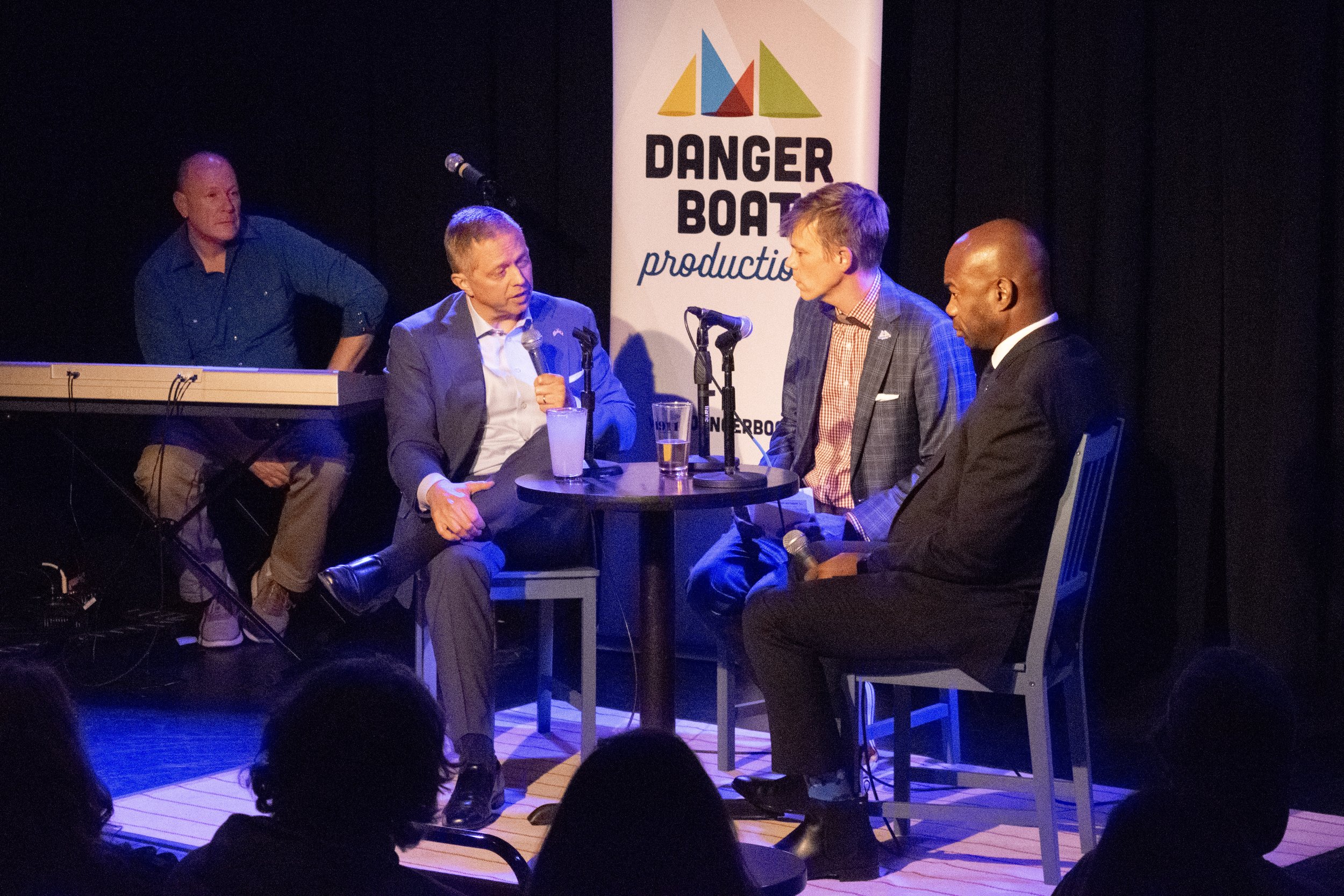
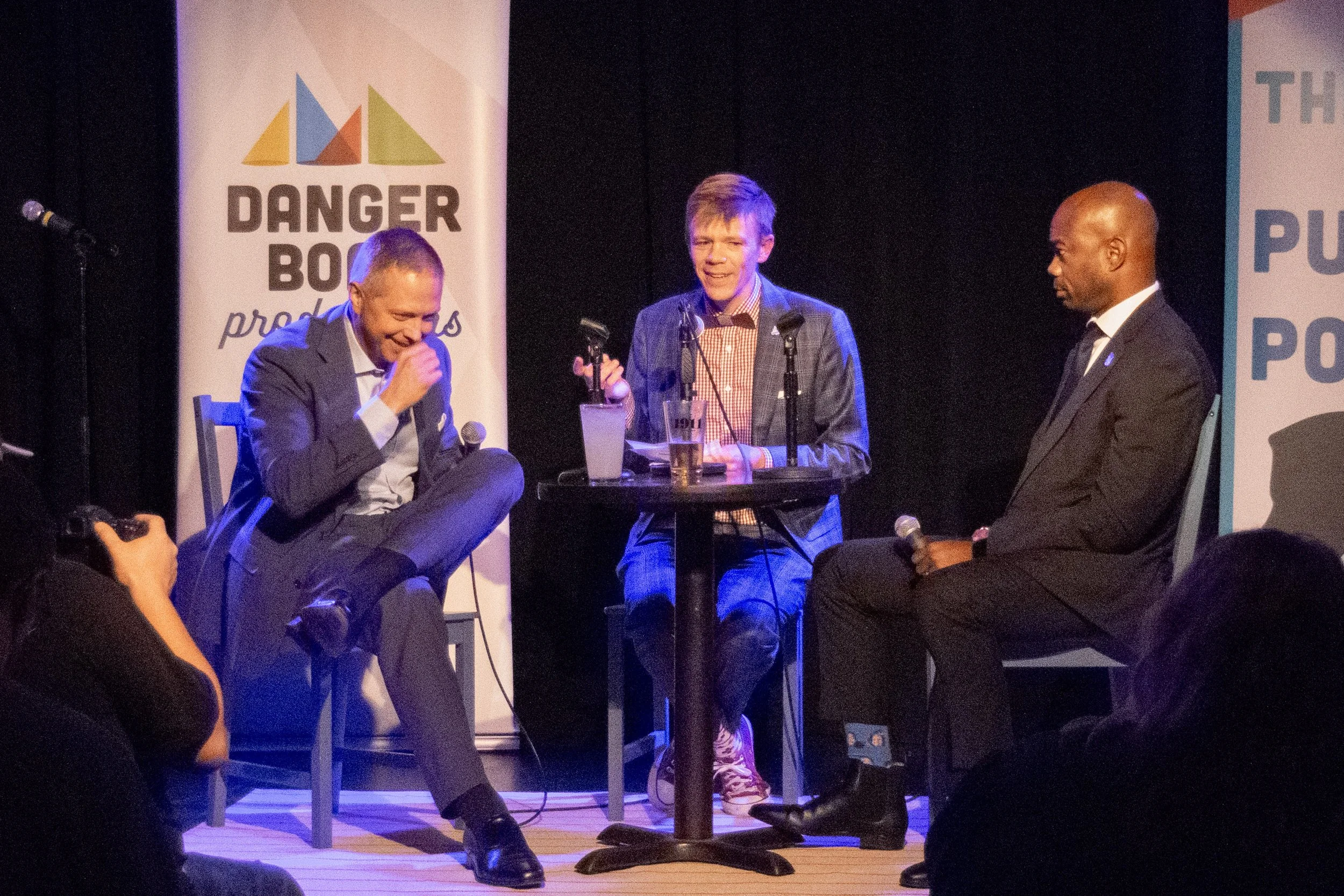
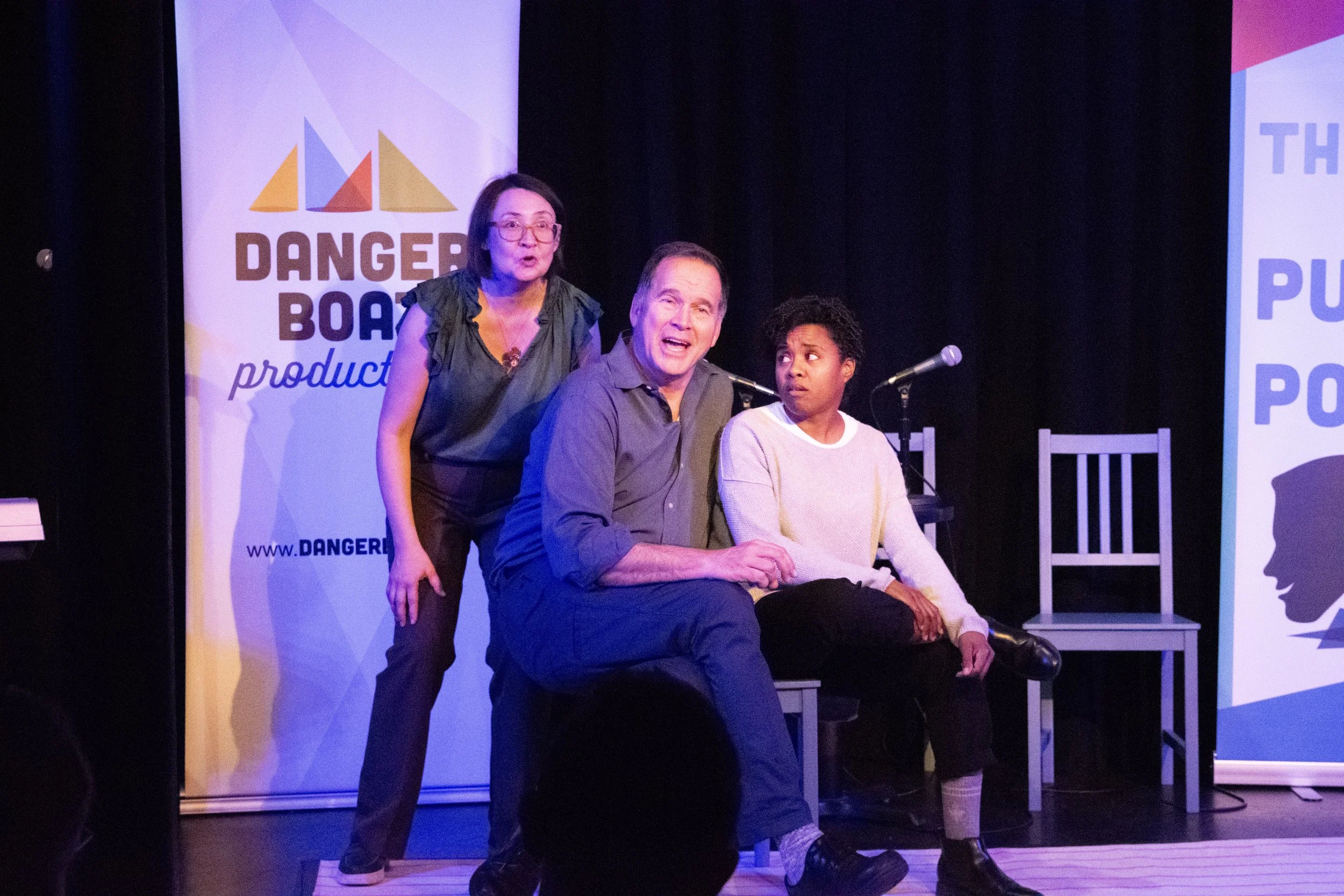
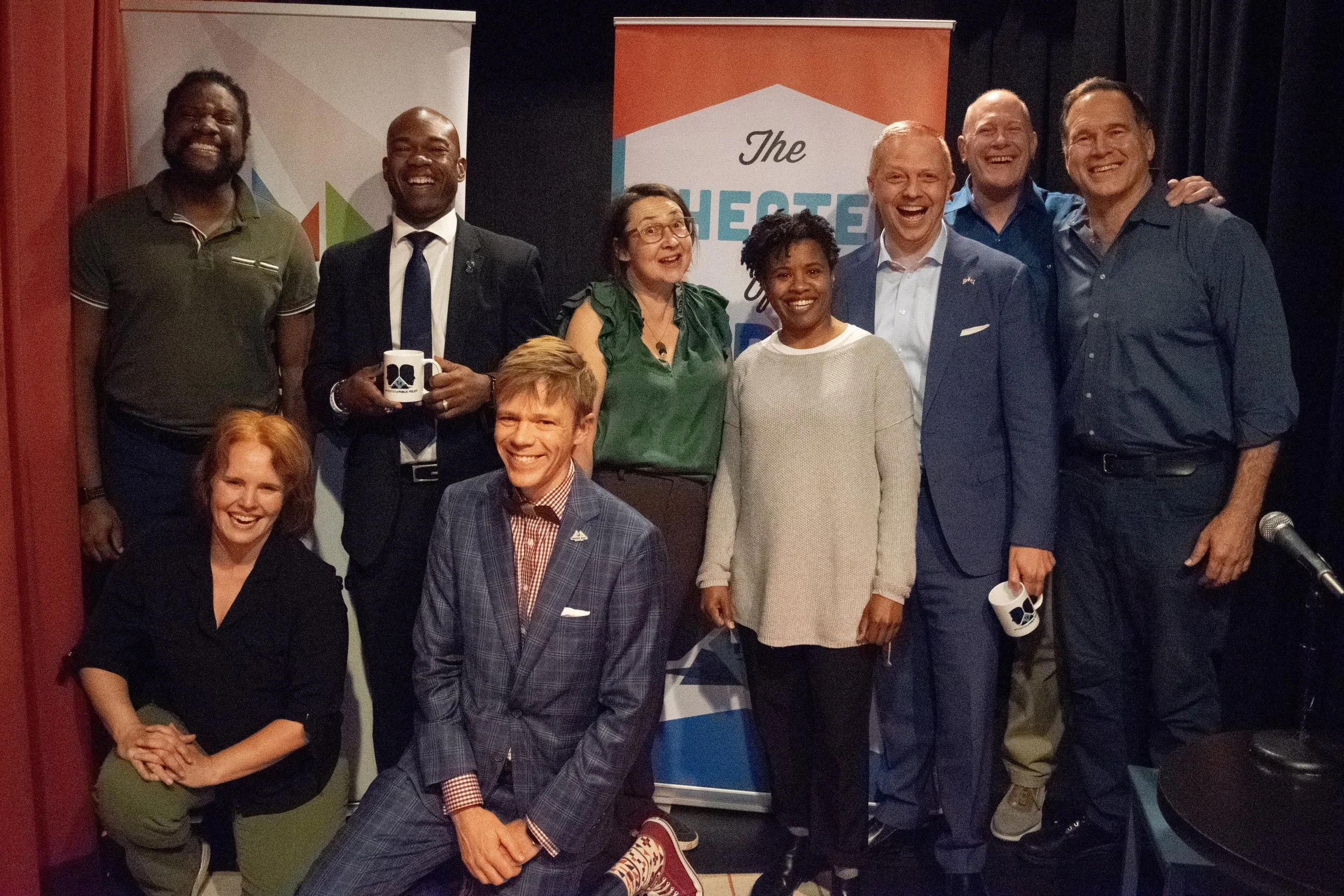
WATCH/LISTEN: Folk and Frazier on The Theater of Public Policy
By Tane Danger | 20 min read
This fall, voters in Hennepin County will choose between former Acting U.S. Attorney Anders Folk and Rep. Cedrick Frazier in the race for Hennepin County Attorney. It is one of the most consequential contests for voters in the county this year.
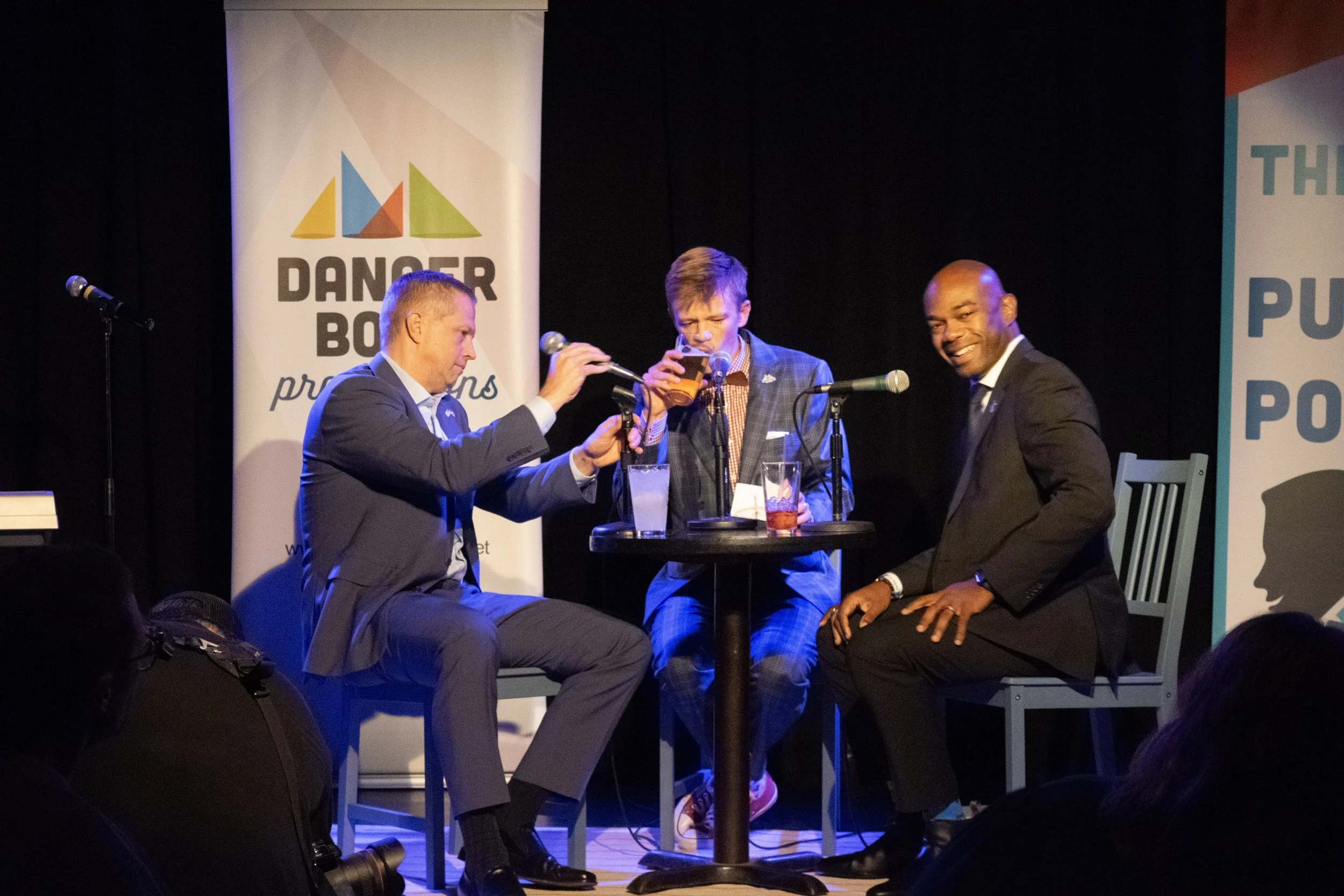
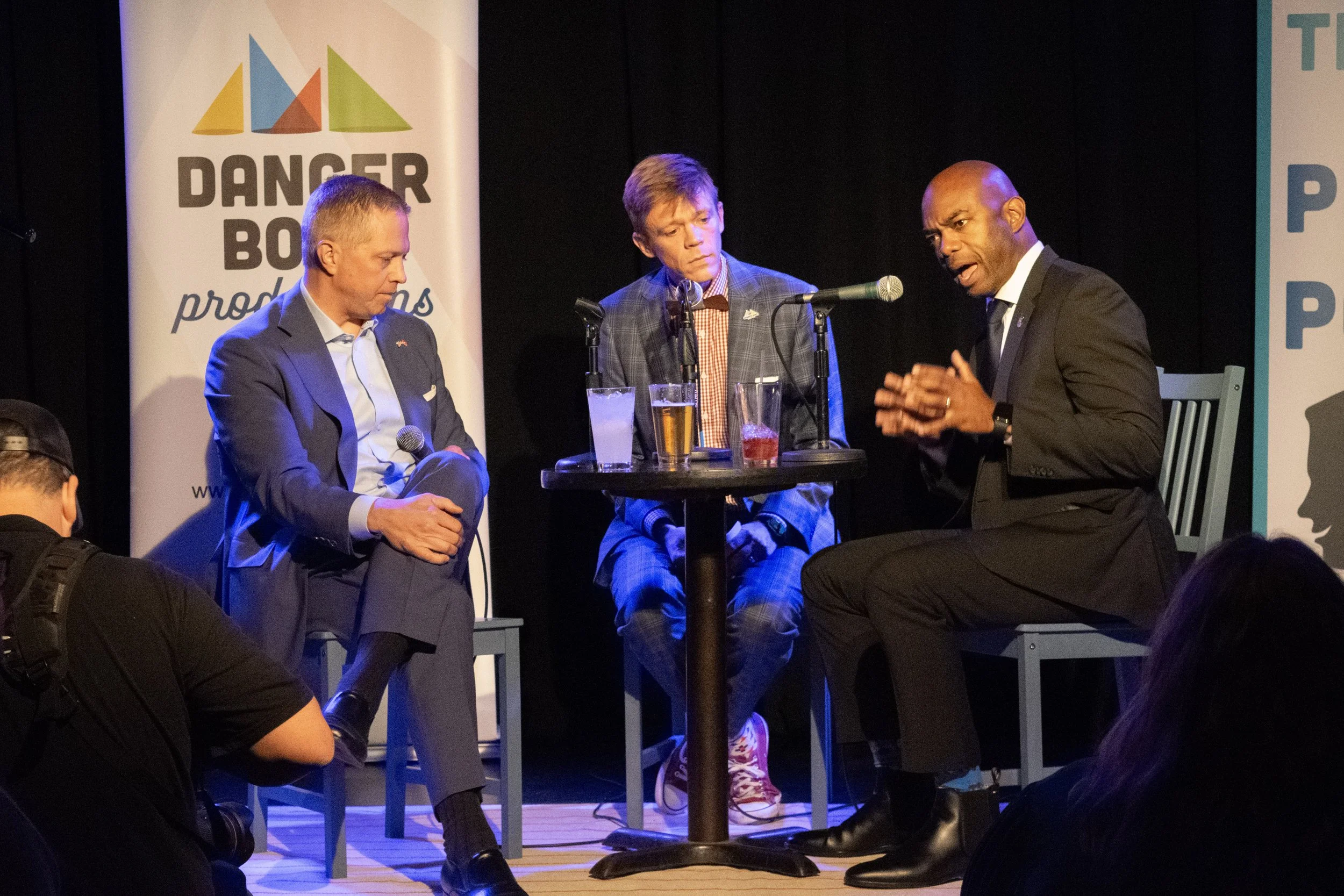
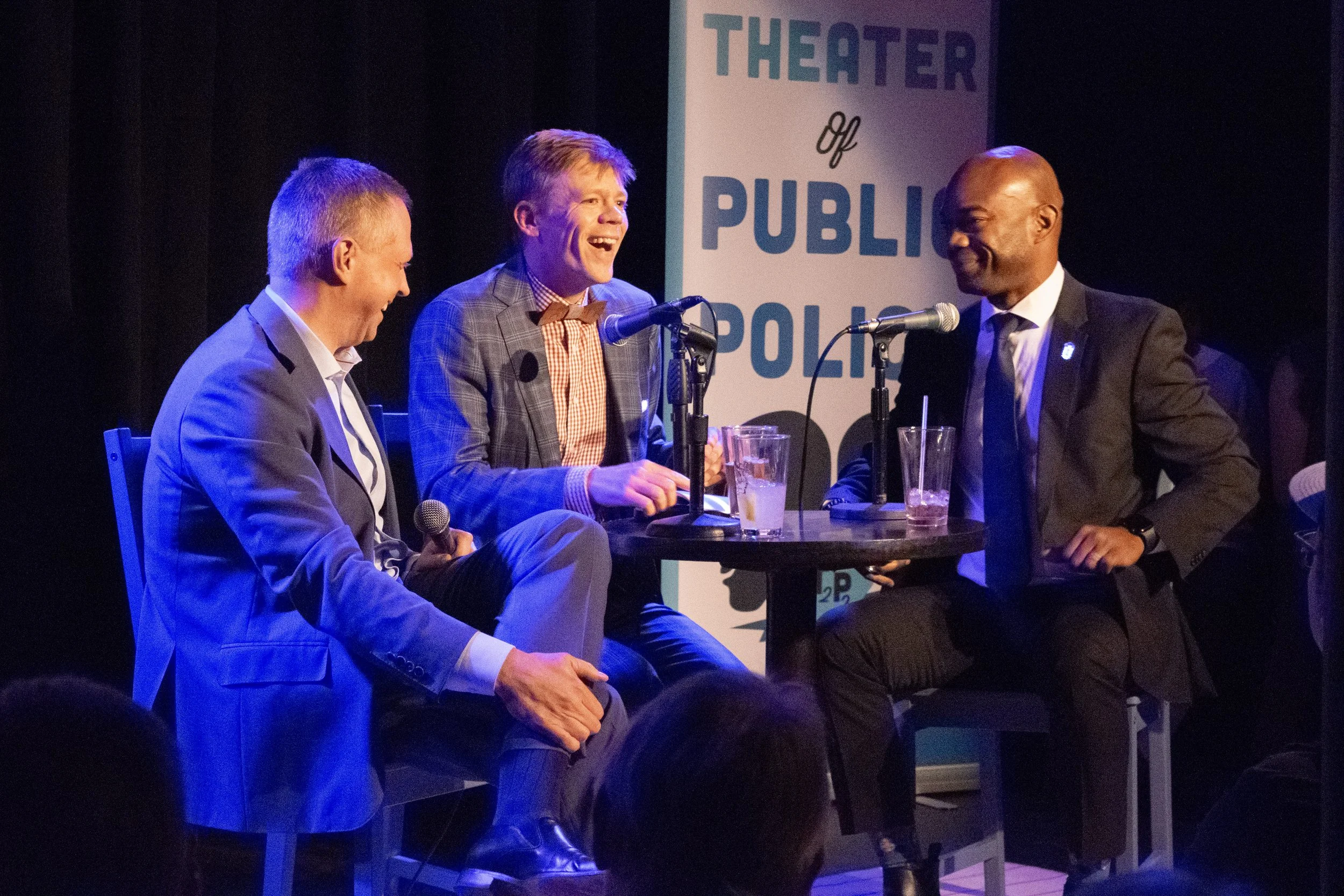
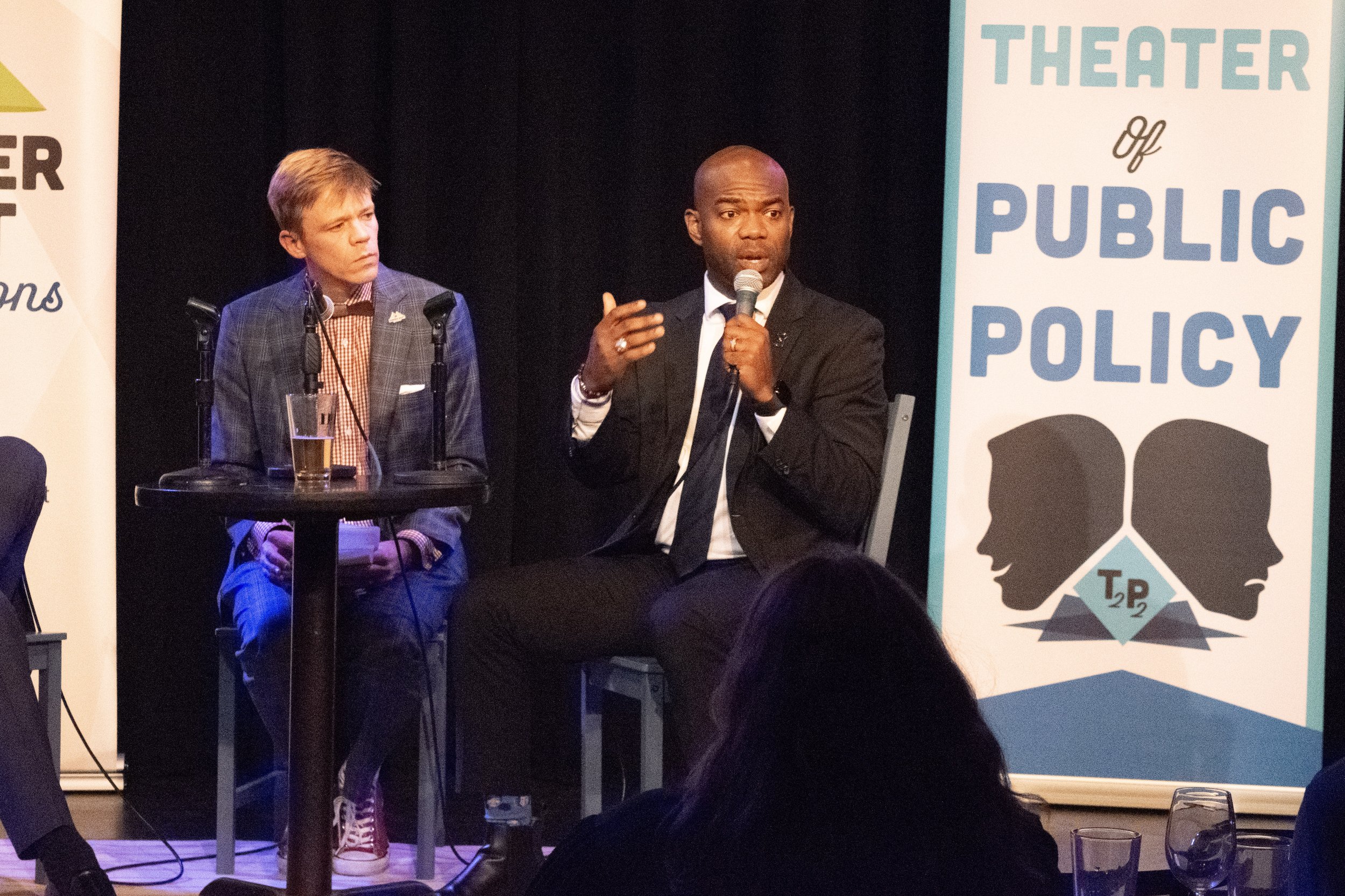
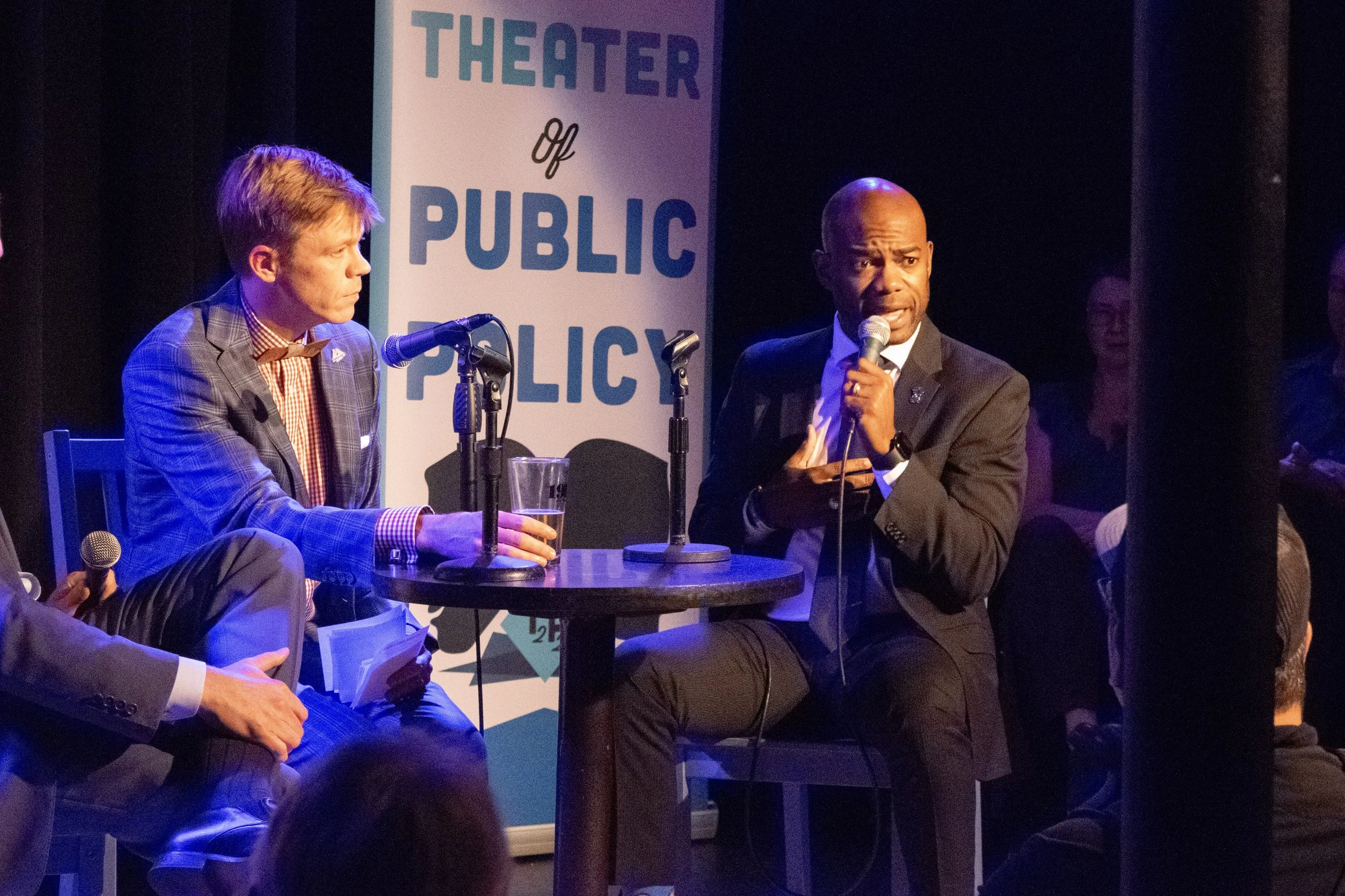
On Tuesday October 13, I moderated a debate between the candidates on The Theater of Public Policy. It was one of only two debates between them since the August primary. The video and audio of that debate is below.
Video: Hennepin County Attorney Debate - Anders Folk and Cedrick Frazier (Oct. 13, 2026)
Audio: Hennepin County Attorney Debate - Anders Folk and Cedrick Frazier (Oct. 13, 2026)
Full transcript below.
Why it Matters
The county attorney leads Minnesota's largest public law office. It prosecutes everything from adult felonies to juvenile justice cases in the state's most populous county. The office has also been investigating the killings of Renée Good and Alex Pretti by federal agents during Operation Metro Surge. Whoever wins will lead that work for the next four years or more.
Sitting Hennepin County Attorney Mary Moriarty isn't running for a second term (both Folk and Frazier had things to say about her tenure and turning the page during the debate). A non-partisan August primary featured five candidates. Rep. Frazier and Mr. Folk were the top two finishers and moved on to the general election.
The Theater of Public Policy and Debates
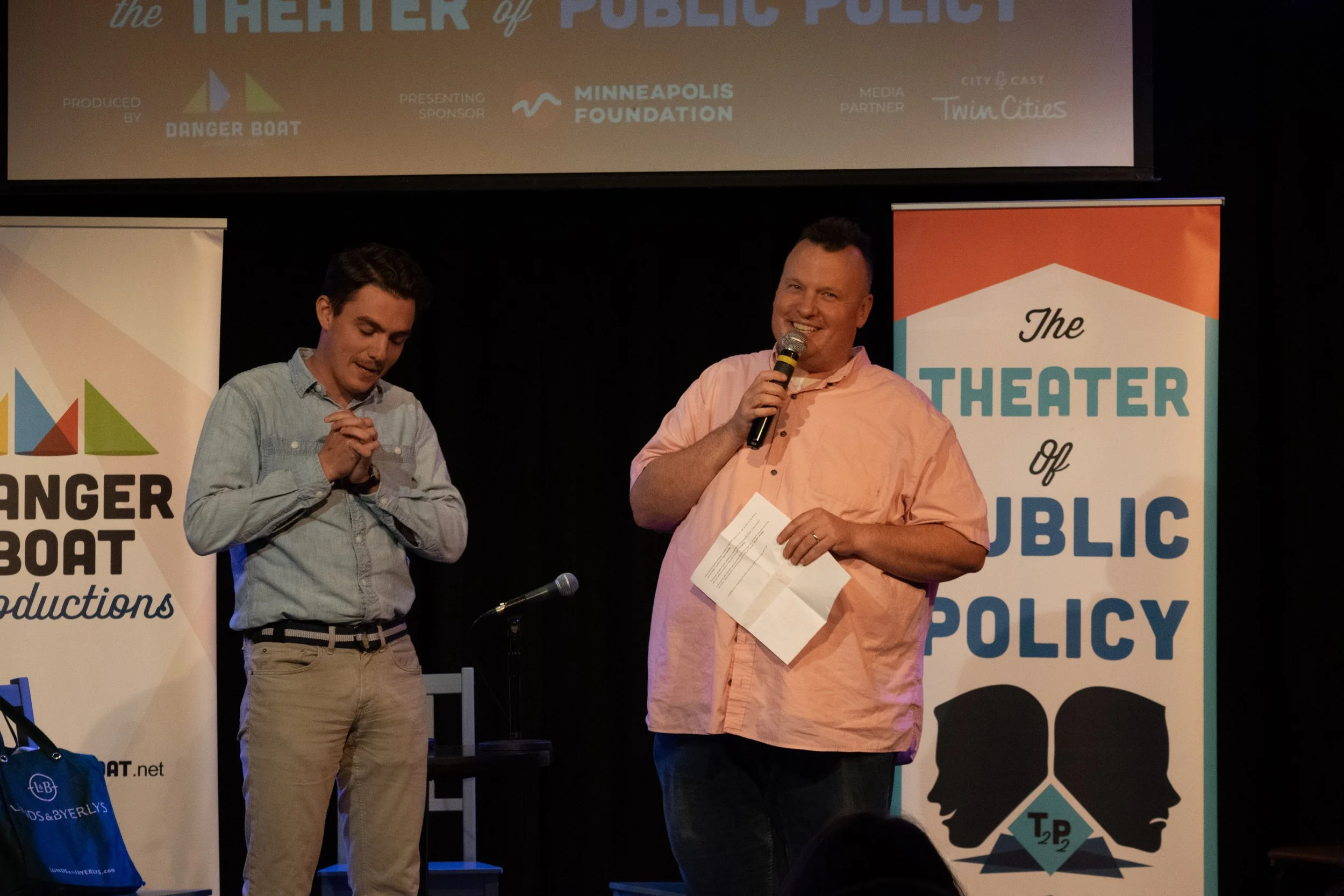
I've become really passionate about the need for more open, well-moderated debates. Fewer are happening, and many feel like two people reciting talking points while a moderator watches the clock. Voters deserve better. So Danger Boat Productions decided to step up and invite Mr. Folk and Rep. Fraizer to a unique yet substantive debate on The Theater of Public Policy.
I asked tough questions and worked hard to pin the candidates down on where they differed. A few topics that came up:
Prosecuting federal agents
Asked about prosecuting federal agents that violated laws during operation Metro Surge, both said they'd hold agents accountable for breaking Minnesota law. Folk said there was “no daylight” between them on how they’d handle this, and Frazier agreed.
Moriarty’s record
Folk argued that under current County Attorney Mary Moriarty, the office has drifted from its public safety mission and alleged that Frazier would continue many of her policies and practices. Frazier argued repeatedly that he is not Moriarty and she isn't on the ballot, and asserted that he would bring change to the office, too.
Relationships
Frazier made the case that his work in politics and building relationships across levels of government sets him up to bring the necessary players to the table to solve tough issues. Folk said he too had a history of building relationships and that rebuilding trust in the office after Mary Moriarty’s tenure would be one of his top priorities.
Prosecutor vs. Public Defender
Folk argued his prosecution experience makes him better prepared as he’s done the job before. Frazier noted that past county attorneys Amy Klobuchar and Mike Freeman also came from professional backgrounds outside of prosecution.
Juvenile offenses
We also covered relations with law enforcement, the federal government and juvenile justice. There was specifically a question on why Minneapolis has seen a spree of window smashings primarily by youth offenders while St. Paul hasn’t, and what the Hennepin County Attorney’s Office could learn from Ramsey County.
Turning up the heat
The discussion got heated, particularly in the second half. That’s good. We want candidates to lean into the tough questions, push each other on their differences, and show how they’d stand up for their arguments. Both Mr. Folk and Rep. Frazier did that in this debate, giving voters a clear look at where they differ. Yet in the end, they still shook hands with each other and the entire The Theater of Public Policy cast.
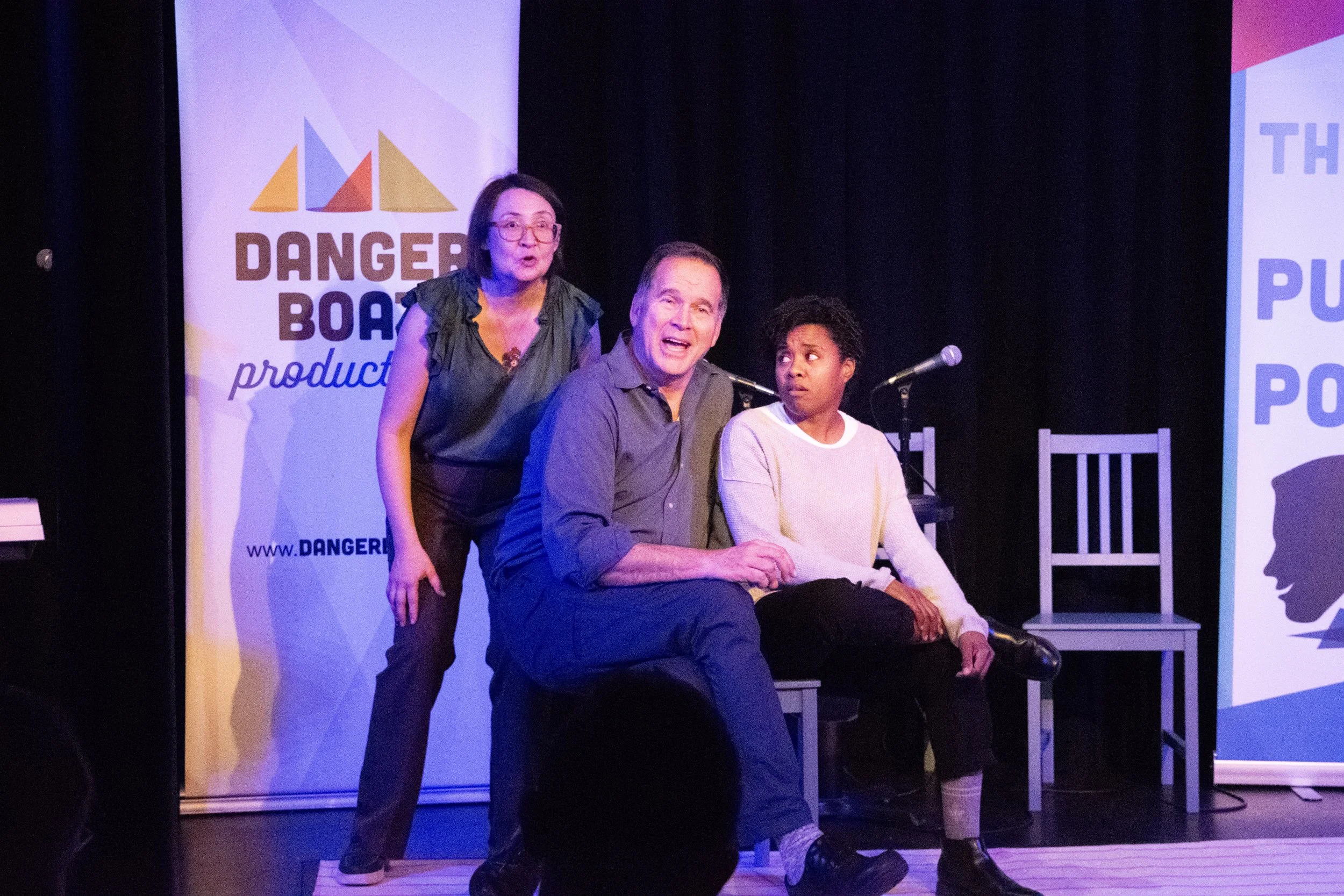
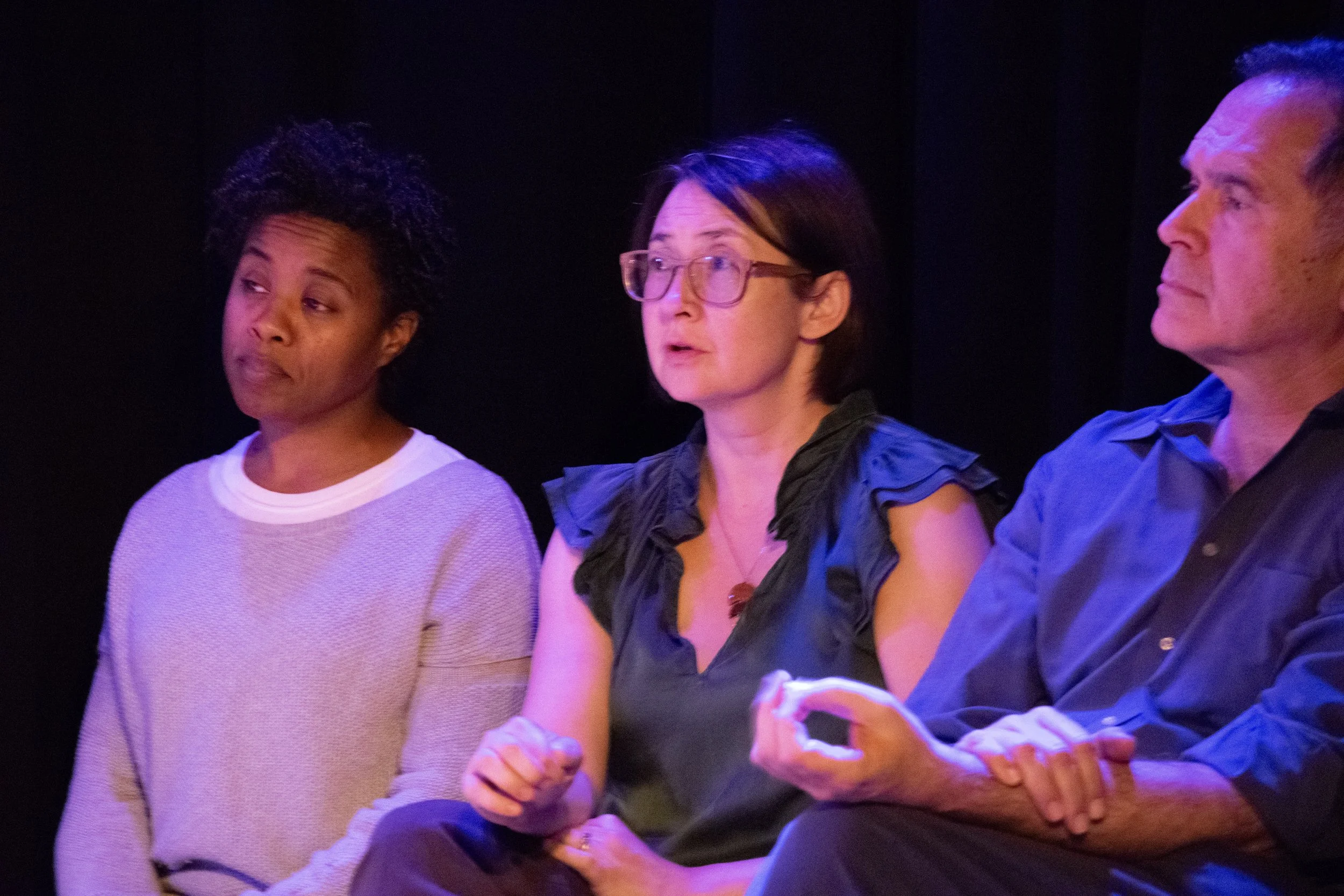
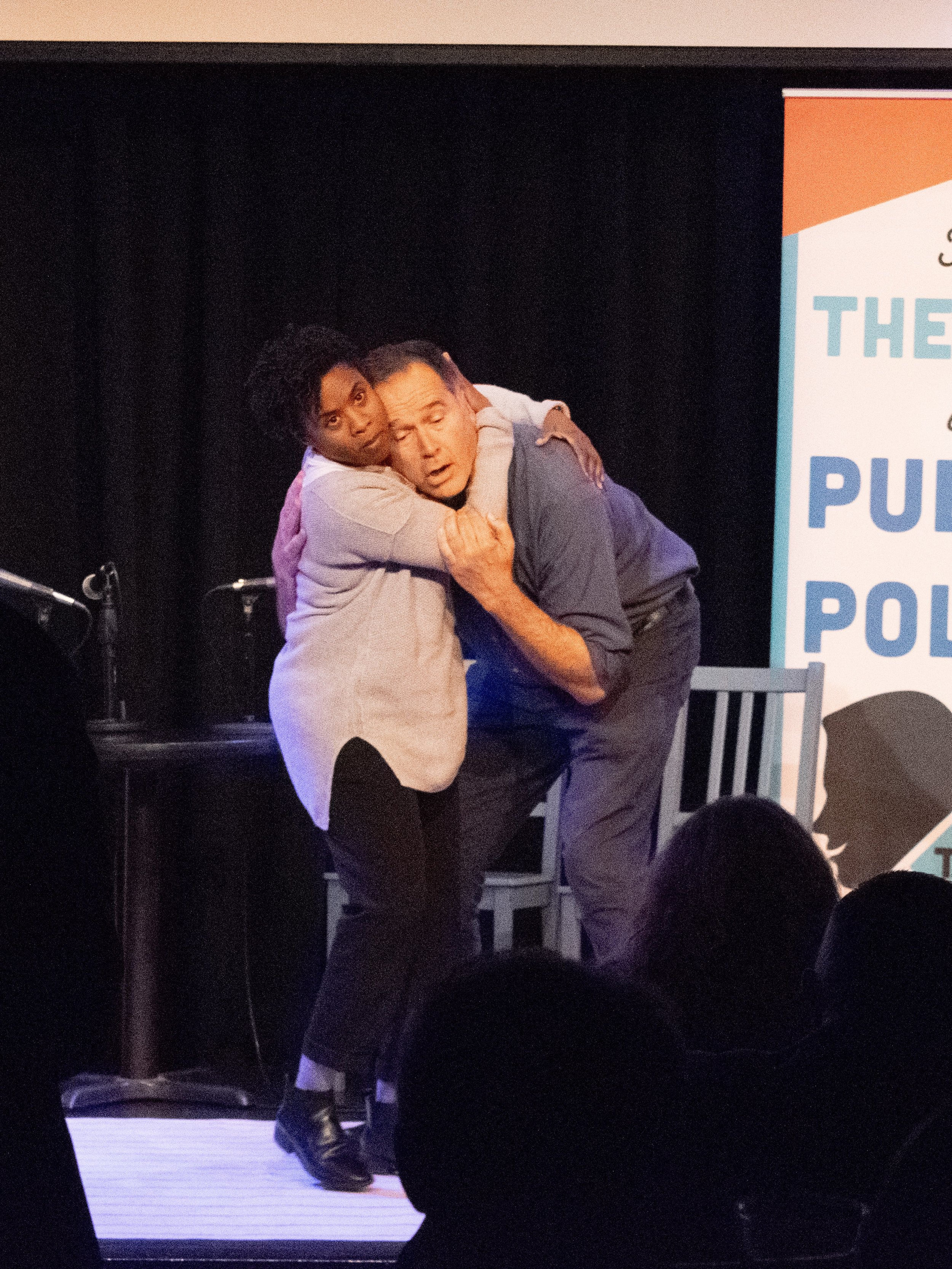
(Left to right) Danger Boat cast members Carmen O’Halloran, Jim Robinson, and Alexis Camille (Oct. 13, 2026)
Where’s the improv?
One piece you will not see in this recording is the improv part of a “The Theater of Public Policy” debate. If you’ve never seen it, The Theater of Public Policy features me interviewing someone or moderating a debate/conversation. Then whatever is discussed is taken by our very talented team of improv performers and turned into unscripted improv theater scenes. We did that as part of this debate, though for technical audio reasons, we’re not including it in the recording linked here.
Just a note on why we mix improv comedy theater with serious discussion of issues: Laughter does real work. People relax, candidates drop the script (a little), and everyone leaves with a clearer picture of who's on the ballot. It isn’t a distraction. It actually makes the debate and conversation better. I hope you’ll come to a future The Theater of Public Policy show and see that in person.
A bit about the candidates
If you’d joined us in-person at the Bryant Lake Bowl, you’d also have gotten a very snazzy program that included submitted bios of both candidates. Here are those bios provided by the campaigns:
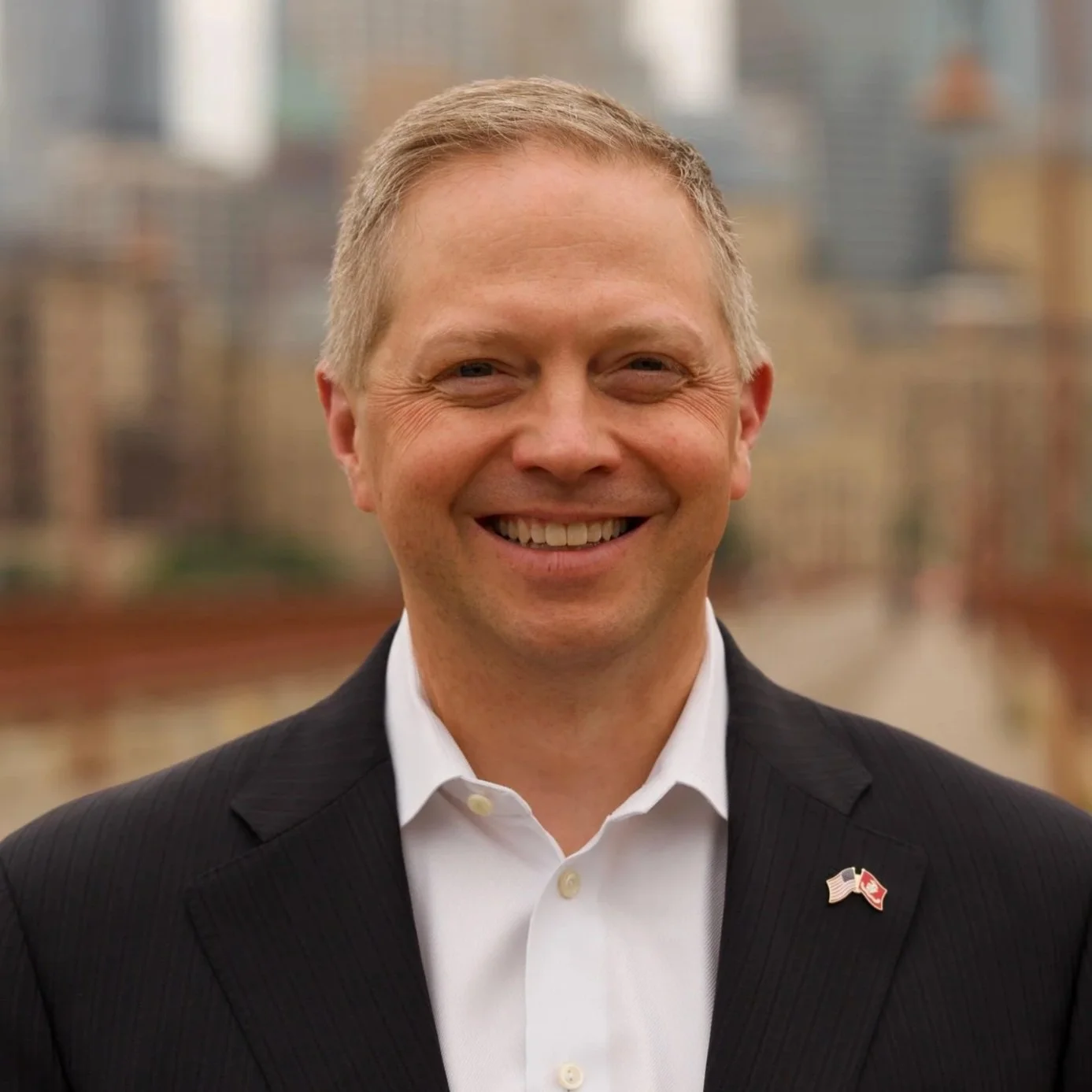
Anders Folk is a Democrat, a Marine, former Acting U.S. Attorney for Minnesota, and Hopkins native. Folk attended the University of Minnesota for college and law school and began his career under County Attorney Amy Klobuchar. He has served at the highest levels of the Department of Justice under the Biden administration and brings decades of leadership and legal experience. Anders and his wife Angela are raising their four children in Minneapolis.
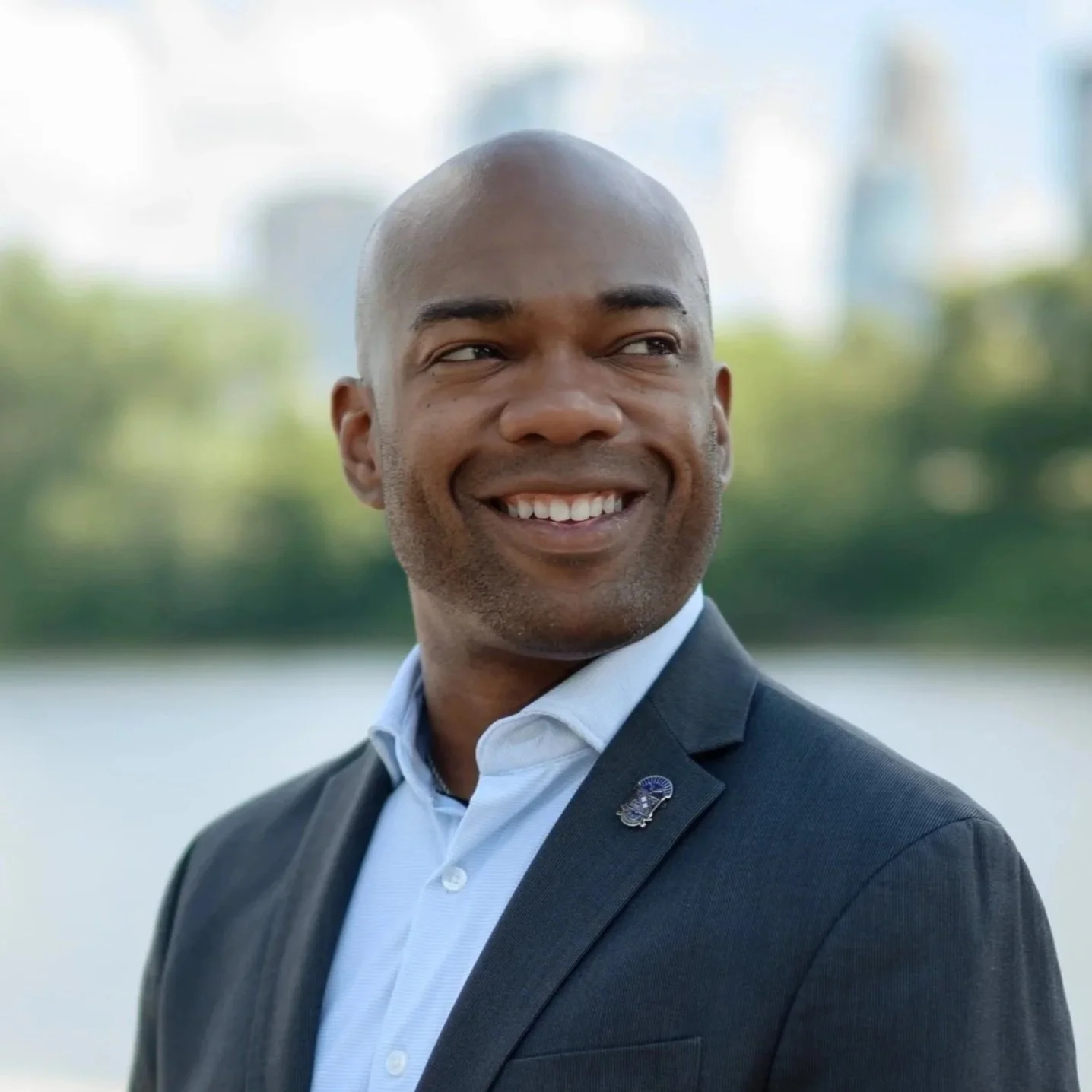
Representative Cedrick Frazier grew up dealing with poverty, gun violence, and drug trafficking during the height of the 80s and 90s crack cocaine epidemic. After earning a master's and a law degree, he built extensive professional experience as a public defender, legal counsel for Minneapolis Public Schools, and labor attorney at Education Minnesota. Cedrick also developed key elected experience as a New Hope city councilmember and three-term DFL state legislator.
His combined lived, professional, and elected background provides the well-rounded perspective necessary to lead the Hennepin County Attorney’s office. Cedrick is the DFL & Labor endorsed candidate who won the August Primary Election by over 30,000 votes.
Voting this November
Thank you to both candidates for saying yes to something unusual, to our cast, to Bryant Lake Bowl, and to the Minneapolis Foundation for supporting our Fall 2026 season. Plus, thank you to our Media Partner City Cast Twin Cities for the pre-show trivia! You can subscribe to City Cast’s daily Twin Cities newsletter here.
If you live in Hennepin County, please take some time to learn about both candidates before you vote. Hopefully this recording of our October 13 debate between Anders Folk and Cedrick Frazier will help.
And whatever you do, DON’T FORGET TO VOTE.
Author: Tane Danger
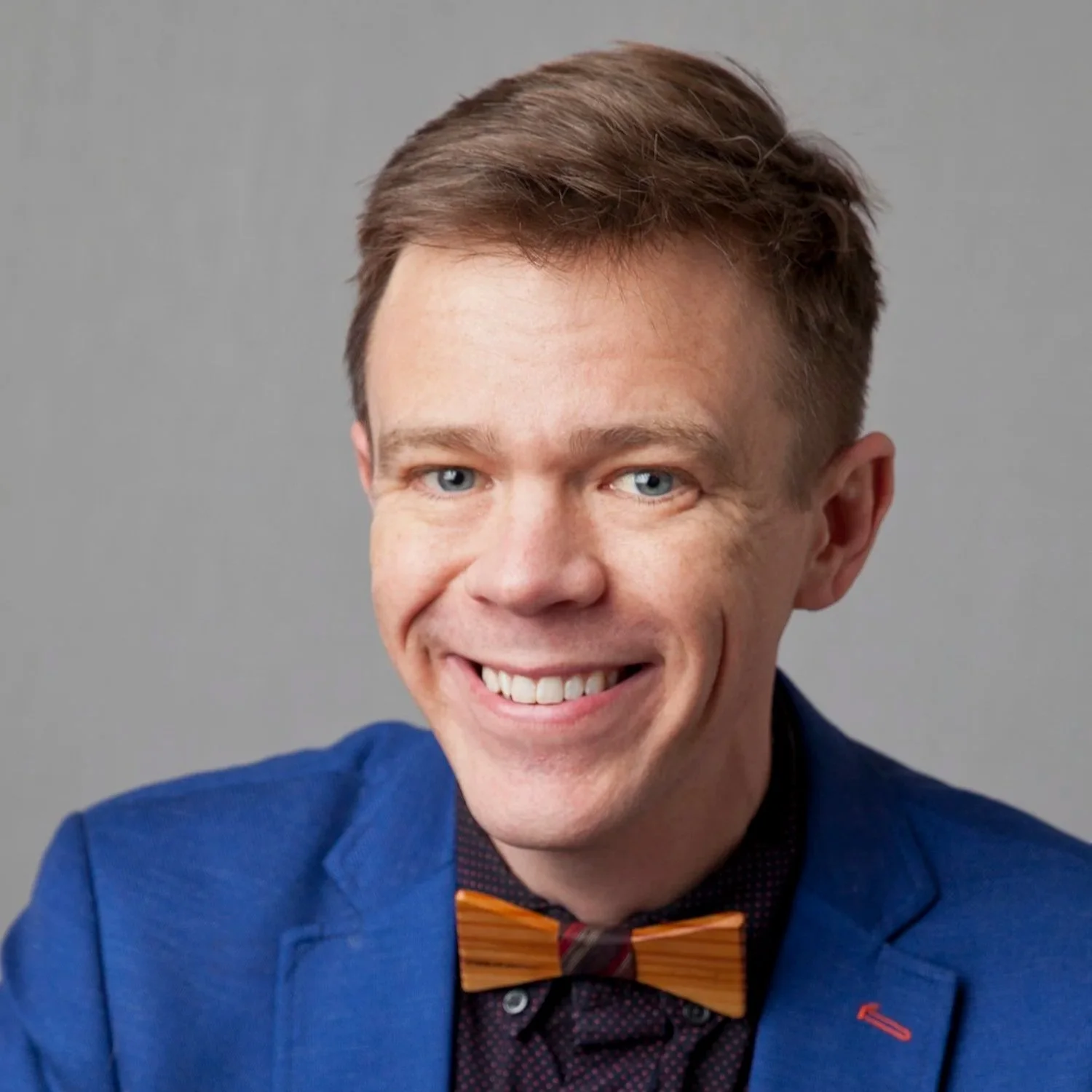
Tane Danger (yes, that’s his real name!) is the co-founder of Danger Boat Productions. As an interviewer, he brings 20 years of improv experience along with a master's degree in public policy. He is the inaugural Artist in Residence at Mayo Clinic’s Dolores Jean Lavins Center for Humanities in Medicine and a contributor to both City Cast Twin Cities and TPT’s Almanac. When he's not emceeing, hosting, or agonizing over what bow tie to wear, he is baking bread that never really rises properly, or succumbing to the yowling demands of his cat, George.
Full Transcript
Tane Danger:
Okay. Thank you. Thank you. I am so excited. This is great. This is great. How many theater improv shows have a public debate between Hennepin County attorney candidates? This is good. This is fabulous. Thank you for being here. I don't know who said yes, but you all both said yes, so I'm very grateful. So I wanted to just, as a way to start this, you both have and have had a lot of high profile, important jobs. You're a representative, you have served in administrations previously. So why do you want to do this job of Hennepin County Attorney now? What is it that you believe you can do in this role that you haven't maybe been able to do previously or you feel like needs to be done now and specifically is something that you think you can do over the next four plus years? Representative Frazier, maybe I'll start with you.

Cedrick Frazier:
Thank you. I appreciate that. No, it is about... Hey everybody, how's everybody doing? Good to be here tonight. Thanks for the invitation. Glad I said yes, because it's feeling a good vibe here. The reason I want to do this, I've been a state representative for the last six years. Prior to that, I was a city council member and I've been a labor attorney for the last decade. And I started my career as a public defender in Hennepin County Public Defender's Office. But this moment, I've been telling people that Minnesotans have had a lot of trauma bonding over almost the last decade. And I've been in the middle of a bunch of that. I came into the legislator. I ran during COVID. I was there during the murder of George Floyd, was working on legislation to come out of all that and work on those things to make sure that we never have those moments again and that we can be preventative and serve the community and give them what they need to be successful.
So my main purpose of running is making sure that we don't ever return back to an old status quo that got us where we were in the first place, and particularly what would've happened with George Floyd in the aftermath of that. And that is my main focus, making sure we create a system that works for everybody and not against people.

Tane Danger:
And why specifically is the county attorney's office the place to do that rather than the legislature?

Cedrick Frazier:
To my point, I get a chance now to go down and execute and enforce the law. As a legislator, had a chance to write, shape and put that law in place. And now I get a chance to be on the front lines, working side by side, fighting for Minnesotans. And particularly we're thinking about what's happening right now, what happened in Metro Surge and making sure we hold those federal agents accountable. I couldn't think of a better place to be to make sure we do that and show the Minnesotans no one is above the law and no one's beneath the protections and we'll hold those individuals accountable for the harm they've done in our state.

Tane Danger:
Anders Folk, why do you want to be in this role at this time?

Anders Folk:
I think the Hennepin County Attorney's Office for the last four years has lost the thread of its core mission, which is public safety. And I think the role of the county attorney at its core is to make us all safe, as safe as we can be. And I think that office would be well served by an experienced prosecutor, an experienced leader and a servant leader. And I think the office is one that can do tremendous good for our community. I view the role of prosecutors and public servants like all of those good men and women at the county attorney's office as fundamentally there to protect the most vulnerable among us. And I think the county attorney's office plays a unique and critical role in terms of ensuring public safety for everybody in Hennepin County. And I couldn't be more excited to bring decades of experience as a prosecutor and as a public servant to the job.

Tane Danger:
Okay. So you've already brought up prosecuting federal agents as part of Operation Metro Surge. I've heard both of you talk about this. I think both of you have campaign materials on this. What is the difference between the two of you if you were in office in terms of what the prosecution of federal agents who potentially broke the law in Minneapolis and Hennepin County during Operation Metro Surge, if you were elected versus if you were elected? Anders Folk, what would be the difference if you were there versus your opponent?

Anders Folk:
I don't think in terms of the substance, there's really any daylight between the two of us. I think we both believe in accountability. I think we both believe it's critical, not just for public safety, but for truly ensuring everybody's held accountable under the law that any federal agent that violated Minnesota law during Operation Metro Surge is prosecuted and held accountable. Full stop.

Tane Danger:
No daylight between you. Do you agree with that?

Cedrick Frazier:
Yeah, I agree. I absolutely agree with accountability. And I think the thing that motivates me the most is I was out there in the community after Renee Goode was shot, after Alex Pretty was shot. I was out there in the community having these conversations directly with the community. And what they said to me is, "What can we do to make sure that people know no one is above the law?" I said, "That is the job of the county attorney to enforce those laws. And if you violate the laws in this state, we absolutely have to do that." So it was not something that I had to pull, that I had to wait for people to tell me was the right thing to do. All I know is someone came into our state, they occupied our state, they caused harm, they killed our neighbors, and we're going to make sure we hold people accountable.

Tane Danger:
Okay. So you're both sort of on this, in terms of prosecuting the cases against federal officers, you feel like that you're pretty much on the same page as about that?

Anders Folk:
Yeah, I think so. And I don't know if it's worth just a quick conversation with everybody here tonight, but there's two cases currently charged in Hennepin County. One is in the process of potentially being removed to federal court. The other one's kind of at an earlier stage. And none of us know this, but I would assume we will see other charges brought maybe soon, maybe later, I don't know. But these cases will all almost certainly be removed to federal court and then ultimately litigation will kind of ensue in front of a federal judge. And if it gets that far to a federal jury with Hennepin County prosecutors kind of leading the charge, it's this kind of fascinating hybrid model. And so we're all kind of in for something we've never really seen before in Hennepin County, frankly, or in Minnesota. And so it's going to be a real moment for the system to be tested in a way it hasn't been tested before.

Tane Danger:
Got it. Okay. Let me go to another piece then. And this is another place. I'm trying to figure out the space between you all. So you have proposed, Representative Frazier, you've proposed a victim and survivors advisory council, making that part of the county attorney's office. Anders Folk, you have proposed a victim's bill of rights. So if someone is a victim of a crime a year from now and they call your office, what happens? What is happening with the system that you are proposing versus the system that you are proposing? Representative Frazier?

Cedrick Frazier:
Well, if there are someone that are absolutely engaged in these issues around public safety, I would hope that they've been there part of my advisory board because I'm going to put the call out asking community members to join. This idea came from the community from me speaking to thousands of voters about how they feel about how this system works. And they were saying to me, "Hey, look, we want to make sure that we have a system that treats us like a human, treats us with decency and not like just another case that we process." And I think they're absolutely right. It's unacceptable if they feel like they're being treated that way now. So we're going to make sure we have that victims and survivors board so we can get that feedback in almost real time and then the community will be able to see us implement practices and policies based on the feedback we're getting from those individuals.

Tane Danger:
Do people feel like they're being treated like that now?

Cedrick Frazier:
I'm hearing from some voters that they don't feel like they're being treated like that now.

Tane Danger:
They don't feel like they're being treated as individual people.

Cedrick Frazier:
Correct.

Tane Danger:
So this would be a change. So tell me about the Bill of Rights for victims that you were talking about and how that would change what's happening in the office.

Anders Folk:
One of the main reasons I got in this race is because I think the county attorney's office needs a change of direction. And I think one of the greatest failings of the last four years under Mary Moriarty has been that crime victims and their families have been treated badly. And just last week I spoke to families who lost loved ones and were treated terribly by the county attorney and the county attorney bears responsibility for that. And in my experience as a prosecutor, we have to have our prosecutions and the work we do centered on our victims. Often victims are already going through incredible trauma just to bring their testimony forward into the system and to be treated badly by your chief prosecutor is just flat out wrong. And I think the victim's bill of rights for me was an important value statement for the office to say to the public, we are going to turn this approach around in this office and we are going to ensure everything this office does is centered on its victims. And I think tone from the top matters and that's really to me why it was so important to talk about that.

Tane Danger:
Give me an example or give me a specific on how it actually functions differently than it does now because we can throw around people are feeling like they're not being treated well, but what does that actually mean?

Anders Folk:
Well, it means that the county attorney treated victims of crime like the Zaria McKeever family, like the Steven Markey family terribly. And there's no better word for it. And I heard straight from their mouths how they were treated and it's wrong. And so what the Victim's Bill of Rights means is that this office will lift up our victims and ensure that they know that they and their wellbeing are a priority to the office and we will center our work on those victims every day. And I'll just give you one example. In the human trafficking space at the US Attorney's office, we've built a lot of big significant human trafficking cases. And one of the ways you talk about centering victims is when you look at victims of human trafficking, often women who are working in deplorable conditions and being trafficked by people often through force, fraud and abuse, not to treat them like they've done something wrong, but to ensure they know that you are there for them, that you are there to take care of them and lift up their voices so that we can ensure justice for the people who are doing that trafficking. And so when I talk about a victim's bill of rights, when I talk about centering the work of the office on the victims, that's what I'm talking about, making sure they understand that they are front and center in your efforts to achieve justice, not just for the broader community, but for them as human beings.

Tane Danger:
I'm guessing that you are not opposed to the centering of victims, but I do want to highlight the piece on that Anders Folk is arguing this would be a change from how the office is operating now. Do you see that there's changes that need to be made from where the office is operating now?

Cedrick Frazier:
Like I said, that's why I propose the Victims and Survivors Advisory Board. That's one of the reasons why I propose that. The other piece too, and I can say this, and as I'm talking to folks from different communities and I'm from one of those communities that this distrust in the office and the treatment, it goes back. I know Mr. Folk continues to talk about Mary Moriarty. She's not in this race. She's not here. She's not running again. So there's going to be change in this office moving forward when the next person steps in and takes that oath to lead that office. And I'm looking forward to doing that. But this issue of communities not feeling like they're being seen, appreciated, and treated like with human decency and respect has been around for a long time. And that's one of the reasons why I'm running to change that and create some trust because if we can build that trust, then the communities that will cooperate and work with us when we're doing investigations will help us to solve more cases and create a community that's safer for everyone.

Tane Danger:
So I have heard that critique or that charge that would be a continuation of Mary Moriarty's office. You obviously are not Mary Moriarty, but give me a policy or practice that Mary Moriarty's office is doing now that you're like, "That needs to end. I would do it differently."

Cedrick Frazier:
Well, I was very clear. One of the issues that Mr. Folk mentioned here, there was a case where they were looking to adjust the sentencing for an individual. I was very clear that I didn't agree with that. I wouldn't have moved that forward. We gave them a two, it's called PISA, prosecutor initiated sentencing adjustment.

Tane Danger:
This is the Kevin Taylor case?

Cedrick Frazier:
That's correct. And I made it very clear that I wouldn't have agreed with that and I wouldn't have moved that case forward. I was there when we passed that legislation. I worked closely with the author of that bill and we know what it was meant for. It's a good tool because it's a tool to work with and to address anything when there's changes with the individual that's been incarcerated, that things have gotten better, if victims are coming forward and agreeing on that change. And I agree with that, with having that tool to rectify some things that may have been happened with misconduct and also being able to change some things moving forward. I agree with that, but I didn't agree with the way the tool was being used in that explanation.

Tane Danger:
So let me just lay out the Kevin Taylor case. So Kevin Taylor was convicted by a jury of first degree murder in 2024, I believe? 2014, thank you. Sentenced to life in prison because he was actually, I believe, drove two other individuals who ended up killing another young man. He decided to go to trial and was found guilty. As you named, there was the, and you worked on, the Prosecutor Initiated Sentencing Adjustment Act, which Mary Moriarty's office has petitioned to a judge to reduce his sentence from life in prison to 26 years. He'd actually be up for probation in 16 years. You're saying that was the wrong decision by Mary Moriarty's office.

Cedrick Frazier:
That's what I'm saying.

Tane Danger:
And I'm guessing you also agreed that that was the wrong decision.

Anders Folk:
Yeah, we called that out as quickly as we could. And I think the legislation itself is one thing, and I am a firm believer that we want prosecutors to have not just the legal ability to, but also mechanisms within a prosecution office to correct injustices, whatever those may be. And so I think the legislation makes perfect sense. Where I've been most critical was the decision by Mary Moriarty's office to essentially pursue this unilateral decision to let this individual out of jail after a first degree murder charge when a young boy was killed on his bicycle.

Cedrick Frazier:
Well, I will add to that. There are checks and balances in that law. I called it out when I said I didn't agree with this. The judge has to make a determination here and I do believe a judge is going to reject this petition.

Tane Danger:
So let me do one more beat on this. And this is going to just take a moment, but I think that this is potentially very hopefully illuminative. So someone in Mary Moriarty's office, [Andrew] Markquart, was quoted in this case as saying, "At the time this case was prosecuted, which was under former Hennepin County Attorney Mike Freeman, the prevailing practice and expectation was that the Hennepin County Attorney's Office prosecutors were generally expected to charge the most serious offenses they believed they could prove beyond a reasonable doubt. Hennepin County Attorney's Office practice has since changed that prosecutors are afforded more flexibility in charging decisions and are encouraged to charge cases with a focus on what tools are best suited for addressing the problem that needs to be solved." So the question to both of you is, are you closer to what the prosecuting direction was under Mike Freeman, that you prosecute the most that you can do under the law and you believe you can prove beyond a reasonable doubt or closer to Moriarty's office, which is currently calling for the revision of this sentence?

Anders Folk:
Yeah, it's a great question. My general prosecutorial kind of philosophy based on many years of both prosecuting cases, but also running an office of prosecutors is that you want to give your prosecutors discretion whenever and wherever possible. You also want to be very consistent so that different people are not treated differently based on who they are rather than what they did. And in a case like this where you have a vulnerable boy murdered in cold blood on his bicycle in a gang motivated killing, and you have multiple people involved in that killing, and in this case, Kevin Taylor was the driver of the vehicle and involved in the planning, I think that's an area where I would want to ensure we are holding that individual sufficiently accountable. And whereas a leader of that office, I would be involved with my team to talk through what that looks like. And so I think the answer to your question is it's a little bit of both. You need to have your prosecutors feeling like they have discretion to make hard decisions in their individual cases, but at the same time on these really serious cases, we need to make sure we're being consistent and fair to everybody so that one person doesn't feel like they're being treated differently because of who they are.

Tane Danger:
I feel like you're both going to say it's a little bit of both. So help me figure out how do I decide between you?

Cedrick Frazier:
Well, let me say this. This goes back to the conversation I'm having with thousands of voters, and particularly from communities that feel like this system has not worked well for them, this system has not treated them with the same kind of equity that they're treating other people within the community. That's an important thing for me to make sure that I come in as a leader to rectify that, to build that trust. And another piece is the tools that I'm thinking about using. I worked on some legislation to get resources for non-fatal shootings. In this particular case, this individual's brother was shot prior to taking these kids out to look for someone, right? If that case could have been solved—it was an non-fatal shooting—if that case could have been solved, we may have prevented that from happening. So I am really big on that prevention piece and I'm really big on giving law enforcement the tools they need to do that because I think that type of situation, that type of investigation, had you cleared that case, a non-fatal shooting, you would've prevented this shooting from happening. But absolutely, this individual that did this, I abhor gun violence because I have personally dealt with gun violence. I have personally lost family members. I personally lost close friends to gun violence. And that is just as recently as this past year that that has happened to me. So I understand the pain that families feel when they go through that. And that is why I'm coming from a victim centered approach because I've been a victim and not just in the past, but recently. So I understand that no one's got to teach me about that to tell me that I've lived it. But in this particular case, that individual was prosecuted in the manner that they should have been prosecuted, which is why I didn't agree with changing that sentence.

Tane Danger:
Okay. Let me try it as a hypothetical.

Anders Folk:
I feel like I'm back in law school. It makes me very nervous.

Tane Danger:
A 15-year-old steals a car with two friends. One of the friends shoots somebody. Walk me through how your office approaches prosecuting that. Cedrick Frazier?

Cedrick Frazier:
So the 15-year-old steals -

Tane Danger:
Did not shoot someone.

Cedrick Frazier:
The 15-year-old did not steal someone.

Tane Danger:
He stole the car and he's driving it around.

Cedrick Frazier:
I want to look at all the facts in that case. Did the 15-year-old know that this individual was going to shoot someone? Were they driving him there specifically to do that? If they just stole the vehicle and then the individual that actually commits the crime and shoots someone does that, am I going to treat him exactly the same? If he had no idea that that was going to happen? We talked about this when we did felony murder law reform. We did it for that particular reason so that the individual that pulled the trigger or was the mastermind, and that's why I said, did this individual know that was driving that they were going to do that? Was he leading them to that? And if they were not leading them to that, and if they were not the mastermind and we have evidence and facts or witnesses to know that case, we're going to look at that case and we're going to charge those individuals and prosecute those cases based on the facts and how they apply to each individual.

Tane Danger:
And if they were the mastermind?

Cedrick Frazier:
If they were the mastermind, and I think that's a different conversation and we're going to charge them as if they commit the crime because they put it in motion and they made it happen and helped make it happen.

Tane Danger:
Yeah. Anders Folk?

Anders Folk:
Yeah. I mean, I think based on the hypothetical, that's exactly right. And I think facts drive analysis and that should drive charging decisions and every case should be driven by that.

Tane Danger:
Okay. Let me ask this since we're kind of in the vicinity of youth crime and things of that nature. Minneapolis and Hennepin County have had hundreds, if not thousands of window smashings and car break-ins over the last four plus years. St. Paul and Ramsey County have had almost zero. Why? And what do you do to make Minneapolis more like St. Paul?

Cedrick Frazier:
I think what you see... Minneapolis, don't worry.

Anders Folk:
I object. I object. I object.

Cedrick Frazier:
Not making us more like St. Paul, but absolutely looking at the way that they're working together in St. Paul, the way that law enforcement and the county attorney John Choi is working with the Sheriff Bob Fletcher and the police chief of local law enforcement over there to make sure they're coordinating efforts. They're identifying who the folks are that are doing those things. They're intervening. They're finding them. The big thing is the clearance way. Can you find these individuals and bring them forward to have that accountability and that intervention is a big deal. And so when someone knows if they're committing a crime, they're going to be caught and there's going to be consequences, that changes the way they think about things. And so over there in St. Paul, they're working pretty well together and here there's some pretty strained relationships and they're not doing that. That's why I'm coming in. I have a track record of bringing people together even when we don't agree on everything all the time and finding solutions to make sure we're doing exactly that, finding those individuals, holding them accountable, intervening, getting restitution for people when they're breaking their windows and damaging their property, but also making sure that it doesn't continue to happen.

Tane Danger:
Part of the argument from Minneapolis PD is that the burden of proof from the county attorney's office is too high, that they need to have visual evidence of somebody actually breaking a window in order to prosecute some of these kinds of things. Does that need to change?

Anders Folk:
It does. And I think fundamentally the issue we have here is that the county attorney's office has made a decision not to charge these kinds of cases and has made a decision not to ensure consequence for some of these offenders. And I think the kind of repeated nature of these crimes are kind of proof of that approach not working. And when I kind of launched my campaign, our first message was on day one, the Mary Moriarty era ends. And to me, this is a really clear example of that. The decisions for the last four years in many areas of the law have allowed this kind of behavior to continue and we just need to intervene. I think this isn't about locking people up and throwing away the key, but it's about sending a very clear message that when you break the law and you damage property and you do it over and over and over again, there's going to be a consequence so that we can get the behavior to stop.

Tane Danger:
Is there, I mean -

Cedrick Frazier:
Oh, spoiler alert. Mary Moriarty era will end because she's not running again.

Tane Danger:
But taking that piece, do we need to charge more aggressively in these kinds of cases?

Cedrick Frazier:
Yeah, I think when a situation is appropriate, yeah. And that's what's happening over in Ramsey County. You're looking at those cases, you're making those decisions on a case by case situation, but also they're working together. They're also working with community groups. That's where I have relationships already. We'll be working with those folks that know the people in the community and we can identify, find, and get ahold of those people that are doing these things. One of the first meetings I had, when I announced that I was just considering running, I had announced that I was running. One of the first meetings I had was with the principals for the high schools in Minneapolis. And the reason we had that meeting is because we wanted to talk about partnerships, how we can work together to identify issues before they become a big problem, get in there, talk to those people, get them resources if they need resources. Some of these kids have some terrible home lives. Can we get them some resources they need so they're not out here doing these things in the street and harming people, harming themselves or harming others? I'm looking forward to continue to lean into those relationships and doing exactly that, working together to make sure we can find people, hold them accountable, and then move forward so they don't continue to do these things.

Tane Danger:
Why aren't the partnerships working now in Hennepin County?

Cedrick Frazier:
I think these are all about egos and personalities.

Tane Danger:
Say more.

Cedrick Frazier:
I think as a leader, one, as a leader, you have to be a good listener. As a leader, you have to have people in the room that don't always agree with you because you need to hear that. You need that pushback. I was telling someone the other day I met what I said because they said, "I was in a room. I should have spoke up. I didn't." I said, "If I have you in a room, I want you to know I have you there because I believe you have something to add to that conversation. And it's a disservice to yourself and to me if you don't provide me with that information because I want to listen and I'm going to be making decisions based on that." So I think what you have is leaders that are not willing, when times get tough and you have to make difficult decisions, have tough conversations, they're not willing to continue to be in a room together. That's what it's like at the legislature. I'm ready and fighter to do that.

Tane Danger:
Why do you believe that the relationships aren't working in Hennepin County right now?

Anders Folk:
I think fundamentally the county attorney's office, and let me be clear that Mary Moriarty's running that office. She is the county attorney. She's the principal. She's the elected. She has failed to cultivate relationships with law enforcement. She has alienated law enforcement and she has alienated so many others of her public safety partners. And it fundamentally illustrates kind of a top-down, cramdown approach that's not based on input and being a good listener and being a servant leader, but making decisions based on ideology. And I think when you put rhetoric over results and when you drive policy based on ideology and not actually talking to your partners, talking to the community, talking to all these different stakeholders who care deeply about public safety, I think the result is what we've got now.

Tane Danger:
Just since you brought up a relationship with police, how do each of you feel about Mayor Jacob Frey's nomination of Bill Petersen to lead MPD? Do you support him?

Anders Folk:
So I've met the nominee. I don't know him well, but I think he's taking on probably the hardest job in law enforcement in Minnesota. And from what I've observed from him to date, he seems humble. He seems to know the department well. And what was probably the most kind of impressive thing I've seen from him to date was when he stood up in front of the city council and said, "The police department has a huge budget problem. We have got to fix this and we kind of screwed this up." And to me, good leaders do that. Good leaders are open and transparent and call it out when their organization has done something wrong. And time will tell this is a tough job, but boy, that's a good opening kind of comment from the potential chief to be.

Tane Danger:
Do you support Bill Petersen as chief of police?

Cedrick Frazier:
I don't know him as well either. I just recently met him, but we had a question and answer with a majority of the chiefs. And I both did. I though he had some good questions. He has great questions in that session that we had. And also what I want, it is a tough job. There's also a consent decree that they're under right now. And my main goal as the next leader in Hennepin County Attorney's Office is to help them and provide support, not surprises, but provide support with our staff as much as possible to help them reach those goals and be compliant with that consent decree because I think it's going to make for a better MPD and it's going to make for a better community in Hennepin County.

Tane Danger:
So one last piece before we break for our improv, you both have talked about needing a third option for youth who we don't want to sort of leave at home because they have potentially committed crimes, but we don't want to just put into prison. Hennepin County used to have the Home School that was shut down a number of years ago. We could re-litigate the sort of shutdown process of that. But what I'm more interested in is if you all, if one or the other of you were in office, what would you propose should be the path forward specifically in terms of building that third space where a rehabilitation space for youth in the criminal justice system?

Cedrick Frazier:
So Ramsey County, 2023, we gave some resources to Ramsey County for a pilot program to develop and build five residential secured facilities around the county. I went to Hennepin County. I asked them, I said, "Hey, I live in Hennepin County. What are we doing? I know we lost the Home School. We need more tools. We need more resources. I can bring this legislation. I can bring these resources. We can also participate in this pilot program and do that." What I was told by the commissioner who's over the public safety committee, the chair of that, Jeff Lundy, was that we have a plan. We don't have a plan, so we need a plan. So I agree with the approach that Ramsey County has taken. They're doing that because they closed Boys Totem Town. Also, some very problematic history is the reason why they led to that. But what we need, we need those things strategically placed within the county because we know that if we can get those kids in secured facilities when they've made some terrible decisions and we have to get them the services they need, having that proximity to caring and close community members leads to better outcomes. And I think that is very important. And I think Judge Tanya Bransford said it the best when they were having this conversation about closing Hennepin County Home School. She said, "Look, as judges, we are not sending as many kids to the Home School anymore, but we still need that tool because when we have to send our kids far away or out of state, we can't control what is happening. They may not be getting the resources and services that they need to be successful when they come back into the community." And I wholeheartedly agree with that and I wish that was a better conversation than actual plan when they closed it before.

Tane Danger:
So the Frazier plan is something like five, multiple sites around the county that would do this kind of work.

Cedrick Frazier:
Correct.

Tane Danger:
Anders Folk, what would be your proposal?

Anders Folk:
To me, it's less about how many facilities as it is about we've got to have a third option. It's got to be secure. It's got to be residential. It needs to be in Hennepin County and it needs to be focused on the things that are lacking right now, which is the rehabilitation, the holistic care for these kids. Punishment and accountability for sure is part of being in a residential facility. But what we want to do is return these kiddos to the community better than they went into the Home School or whatever we're going to call this new thing. And to me, what's most important is that we have a best in class facility in the county where these kids can get the help and the rehabilitation they need in order to thrive.

Tane Danger:
Would you ever support reopening the Home School?

Anders Folk:
Well, I don't know. So if the building's still available, if the land is still available, it's in Glen Lake. I grew up in Hopkins. I know exactly where it used to be. If there's the opportunity to use that property again, I think that's a great location. I would want to make sure whatever we reopen fixes all the issues that we had that led to it getting closed to begin with. But I think if that opportunity presents itself for that location, I think we should absolutely look at it.

Tane Danger:
Would that be one of the sites? Would you ever be open to that?

Cedrick Frazier:
No, that's a bit of a shift because our last debate he said he was absolutely open to reopening that place. And I know the history of that place. I know why it was closed. My main focus is making sure we build something that does not have that history that is more strategically placed because of what I said before. We know statistically that when you have those strategic places in the proximity to people that care about those kids, you have better outcomes.

Anders Folk:
I don't think that's a shift, but that's fine. I'll let everybody else decide.

Tane Danger:
All right. Well, Let's all decide through improv theater. So for right now, can we do a big round of applause for these two guys being up here? *Dennis Curley plays Law & Order theme song on the keys* That's good, Dennis.

Cedrick Frazier:
Hey, the music!

Tane Danger:
And actually keep that round of applause going as we welcome back to the stage, Representative Cedrick Frazier and Anders Folk to answer some of your questions. I don't know. Maybe they aren't coming back. No, please have a seat. That's great. Thank you both so much. Okay, so we got a batch of questions here for you all. I'm going to just dive into some of these. So we got this question. Could each candidate please tell us your experience in terms of prosecuting cases? I know that you have this background. I will say just to jump into it, this is one of the critiques I do hear of your campaign, that you have not been a prosecutor. So folks who are skeptical that you have not had that experience, what do you say?

Cedrick Frazier:
I have been a criminal defense attorney. I've been practicing law for nearly 20 years, so I'm very familiar with the court, been in the court as a litigator. I currently work as a labor attorney, still going into court on occasions to litigate cases. But this office, what I should say is the county attorney is an elected role. And I've said this many of times, and you do have to have some political acumen, not be a career politician, but have some political acumen to actually navigate the relationships and the opportunities and the things that are going to come toward you in this office. I've shown I've got a track record of doing that. I've done it as a city council member. I've done it as a labor attorney. I've done it as a state representative for the last six years. I'm bringing all of these relationships. I'm the DFL endorsed candidate for a reason because when we went through that endorsement process, overwhelmingly, those folks that endorsed me said that we believe you can do this job. We believe you can bring people together. You can be the face and be the voice working with the community and bringing the right voices into the room to come up with solutions to make sure we have a public safety system that works for everybody. That's also why I'm labor endorsed. That's also why we have a majority of the endorsements from city legislators, mayors, and city council members across this county because they believe I can do this job and move forward. And I will note that John Choi in Ramsey County was not a prosecutor before he came the county prosecutor in Ramsey County. Keith Ellison who was endorsed this campaign was not a prosecutor before became the attorney general. I am proud of those endorsements. They've done a great job of bringing people together and bringing the right folks in the room and I'm going to do exactly that as well.

Tane Danger:
I have a follow-up to that, but can you talk about your prosecutorial experience and why you make the case that that matters?

Anders Folk:
Yeah. I think fundamentally, this is the largest public law office in the state of Minnesota and it's the largest public prosecution office in the state of Minnesota. The challenges facing the public prosecutors right now are some of the most complex we've ever seen in the history of this county, from accountability for Operation Metro Surge to a surge in gang violence in our suburbs. And this is not amateur hour. It's time to have somebody in who knows how to do this work and who's done this work. And I think the prosecutors of Hennepin County have had an experiment run on them for the last four years by a career public defender who was manifestly unqualified for this job, who should not have done what she's done for the last four years. And it's time to change course. And the experience you get as a prosecutor and leading a public law office isn't just the technical know-how, but it's actually understanding how to set a strategy and execute on it. And I think it's a critical part of the job. Absolutely, we need people with the technical skills in the office, but what you need is a leader who has the experience as a prosecutor to do this work. And I think it makes an extraordinary difference in normal times and even more of a difference now.

Tane Danger:
Do you want to respond or?

Cedrick Frazier:
Yeah, just to this point. I mean, Amy Klobuchar wasn't a prosecutor before she got elected to this office. Neither was Mike Freeman. These are two individuals that my opponent speaks highly of and says that they support him and that they're his mentors. So I don't understand this contradiction of terms of how people can be successful, you can support them. And now it's totally different when someone who's sitting here now has the experience, has the know-how, and will be able to be successful in this role. And I really want to make sure we really talk about the great work that the great attorneys, the line attorneys in the office that will be in court, making sure they enforce the law and going through these cases every single day. I've talked to a lot of them in the office. I know they're going to continue to do great work. My role is going to be as their leaders to make sure we get the resources they need, keep the politics away from them so they can do their job and keep our community safe.

Tane Danger:
Go ahead.

Anders Folk:
No, I mean I think, look, there's a clear difference here between my opponent and I in terms of our backgrounds. And like Mary Moriarty, Cedrick Frazier has never prosecuted a case in his life. Like Mary Moriarty, Cedrick Frazier never led a prosecution office in his life. And those are differences between us for sure. But I also think it's important to remember that my opponent not only endorsed Mary Moriarty, but co-chaired her transition team and has supported her for the last four years. And my fundamental reason for getting in this race was to talk about the need to change the direction of that office. And the Mary Moriarty era is about more than Mary Moriarty. It is about a misguided approach to the criminal justice system that puts rhetoric and ideology ahead of results and that has walked away from our crime victims and our community's public safety needs for the last four years. And that's fundamentally why I'm in this race.

Tane Danger:
Has our approach been wrong for the last four years?

Cedrick Frazier:
What I want to talk about is the approach that I've taken to bring people into the room, to be a leader, to make sure we have the right voices in the room.

Anders Folk:
That wasn't the question.

Cedrick Frazier:
Yeah, I'm getting there. My opponent continues to talk about, again, Mary Moriarty, Mary Moriarty. News alert: I'm not Mary Moriarty, right? I don't know how more clear I can be about that, but what my opponent didn't say, he named Mary Moriarty all those times and the things she haven't done. His mentors, Amy Klobuchar and Mike Freeman, they also were in the same boat, but you're not going to sit here and say those things about them. That is hypocrisy. It is a contradiction of what he really believes in. And again, I want to say a lot of this race has been about... The reason I believe this campaign is resonating so much because it's been about transparency and it's been about being forthright with the voters about what they're going to get. I am not ashamed of anything I've done in my career. I've done those things. I've worked hard to make sure that we can do work to serve the good people of Minnesota and I will continue to do that. And I've always been transparent about my resume. My opponent has not been transparent about his resume. So every time he brings up my resume, we need to talk about both of our resumes. And will you be transparent about your resume? Will you be transparent? Let me ask the question. Will you be transparent that you applied to be the US attorney under Donald Trump?

Anders Folk:
Yes, I did. And I was passed on by Senator Klobuchar and Senator Smith and I was rejected roundly and I didn't get the job.

Cedrick Frazier:
And then you took the number two job.

Anders Folk:
So if we're going to do transparency -

Cedrick Frazier:
We are doing transparency. Go ahead.

Anders Folk:
Do you support Mary Moriarty?

Cedrick Frazier:
I do not support everything that Mary Moriarty has done in our office.

Anders Folk:
That wasn't my question.

Cedrick Frazier:
I do not support everything that Mary Moriarty has done at office and I've been very clear about that on the record.

Anders Folk:
Other than Kevin Taylor, name one thing you disagree with.

Cedrick Frazier:
I don't agree with her approach to relationships she has in that office, and I don't agree with that case that you just mentioned. And I've been very clear about that. Anytime I ask, I will give a clear distinction of where I don't agree.

Anders Folk:
So you believe she's mistreated law enforcement for the last four years?

Cedrick Frazier:
I believe she doesn't have great relationships. Absolutely. That's why I'm running because I do have better relationships and that's how you make things work.

Tane Danger:
...So, I, um. [Audience laughter] No, that was great. That was good. So I do want to ask about the relationships piece. I do think that there is a part of this office that absolutely depends on building relationships. This is obviously something you have made core and central to what you are talking about. What is your case for you can make the connections, you can build the relationships, you can bring the people into the room when frankly, a lot of those groups have endorsed your opponent?

Anders Folk:
Well, I think let's talk about kind of the role of the county attorney as it relates to relationships. So you have law enforcement partners, you have community partners, you have educators, you have faith leaders, you have all the different components of our community. And what I look at when I look at my campaign is hundreds of people showing up to support the campaign and it includes people from all of these groups I've talked about. We have support from all corners of our public safety community and frankly all corners of the county. And I think hats off to my opponent for his endorsements. He's been a politician for a long time and I think those endorsements reflect that and make plenty of sense. But I think that when it comes to relationships, these are relationships that are built on experience, that are built on having done the work and that are built on a strategy and a vision that is actually going to succeed and not on slogans. And so I think this is really an opportunity for people who for the last four years have felt left behind to have a partner who actually has done the work and knows how to do the work.

Cedrick Frazier:
One of my candidates' biggest supporter, Ryan Winkler, ran for this office last cycle. He did not have the support and endorsements that I have and he was a politician a lot longer than I was. So this is not about that. This is about someone that knows how to build relationships, cultivate and maintain those relationships, bringing people in the room even when they disagree to come to a solution that's going to work best for the county and for Minnesotans. And that's what I have a track record of doing. That's why I have the support of the majority of the folks that I have around this county.

Tane Danger:
Two endorsements that your opponent has though that seem critical for this job are the mayor of Minneapolis and the Hennepin County Sheriff. And so how do you build those relationships when they right now are in the corner of your opponent?

Cedrick Frazier:
I already don't have terrible relationships with Sheriff Dawanna Witt or Mayor Jacob Frey. I've worked well with them since I've been a legislatore. I am a part of the Hennepin County delegation. So when we're supporting things that they need and they need resources, I've been right there for them. I worked with the mayor to get some changes done to the staffing for his higher ranking folks in the police department to help move forward the consent decree. I've worked on things to get resources for the Hennepin County Sheriff's Office. I will continue to do that work. I don't hold grudges. People can make their decisions based on relationships, but my job is to get there and make sure we're doing what's best for the county and I will make sure I'm working with anybody there that's willing to do that. And that relationship goes both ways and I'm looking forward to working with those folks.

Tane Danger:
Anything you would add?

Anders Folk:
Look, I think the work of the county attorneys... Oh, thank you very much. The work of the county attorney is to be a good partner to everybody across Hennepin County in every facet of our community. And my endorsements and the work I've done throughout my career reflect that I built that credibility over my career. And I know because I have the track record to show that this work is so critically important that folks like Mayor Frey, folks like Dawanna Witt, folks like former US attorneys, Todd Jones and Andy Luger have gotten behind me and my campaign. I've had the good fortune to work with so many people across our kind of public safety spectrum to include Attorney General Ellison, to include Ramsey County Attorney John Choi. The good news about Minnesota is in general, people work together, but always people need experienced leadership to get this work done the right way.

Cedrick Frazier:
And I'm an experienced leader.

Tane Danger:
I want to push you on one piece because we pushed Representative Frazier quite a bit on the connections and past support of Mary Moriarty.

Anders Folk:
Give it to me.

Tane Danger:
A lot of folks that I talk to who are skeptical or worried about you say he's going to take us back to 2019 and to a Mike Freeman era, which I didn't like either. So what do you say to those folks?

Anders Folk:
Look, we're going one direction and that's forward. I think we don't want the county attorney's office to ever return to a practice that was bad for public safety, that was bad for the public's perception of the office.

Tane Danger:
Was that Mike Freeman's era?

Anders Folk:
Look, I think over the last... So let's go back in time. Mike Freeman, Amy Klobuchar, Mike Freeman, and before that, Tom Johnson maybe. I think there's elements of the last 50 years where some county attorneys did things really well and some county attorneys did things really badly. I think we have got to ensure that the Hennepin County Attorney's Office is a leader nationally in terms of innovative, forward-looking and progressive prosecution. And I know we can do that and that's what I'm committed to. I am not returning to an era of the past that failed us. My goal is to move us forward and to kind of take everything I've drawn over a career in doing this really hard work to make sure the office is doing the best work it can do.

Tane Danger:
Do you believe that the Hennepin County Attorney's Office right now is a national leader?

Cedrick Frazier:
In any particular area?

Tane Danger:
Yeah. As a model for how the rest of the country should look.

Cedrick Frazier:
I think in the times of what we're dealing with right now and the way the county attorney is going after making sure we hold those federal agents accountable, I think that is a model right there in partnership with the attorney general's office and I will keep those partnerships in place to move those cases forward.

Tane Danger:
Okay. I've been terrible about audience questions. I'm sorry. It's been a good conversation. Somebody asked, I'm guessing this will be a quick one, your positions on Flock cameras. It's 2026. How can I not ask about Flock cameras? Support or would you be opposed to Flock cameras? Would you push through your office to have them removed?

Anders Folk:
I don't know if the County Attorney's office has that authority, but I'll tell you this. Flock has failed the public and it has failed the test of ensuring that its data is being protected. I don't know until we get guardrails in place how we can continue to use them, at least for law enforcement purposes. I talk a lot about the impact of technology on our constitutional protections, and I think what we've seen with Flock is kind of a case study and how to screw it up. I have deep concerns about how we go forward with that, but I am committed to making sure we are not allowing the AI robots to trample over our constitutional rights.

Tane Danger:
Okay. Opposed to AI robots. Flock cameras?

Cedrick Frazier:
To these Flock cameras, we know that these cameras were used in situations to track and surveil our community members, particularly during Metro Surge. We have a real big concern with that. I shared this with the chiefs when they asked me about this. I am all for tools that can help us be more safe. I am not for tools that put our people's lives in danger and harm and share data and surveil us the way they shouldn't.

Tane Danger:
I feel like we talked a lot about this in the first half, but somebody submitted this and I think it's a good question. The county has significant resources to devote to prevention such for youth car theft prevention programs. It's been well evaluated. How do you plan to actually use these resources and is that any different than how they're being used now?

Cedrick Frazier:
Well, it sounds like in the most recent report I read, and it was around what's happening over in Ramsey County and how they're dealing with windows and car theft. When you hear the statements from the leaders in both in the county attorney's office, in the office of the Department of MPD, you hear them both say two separate things. And my goal is going to be as a leader to make sure I'm having a relationship with them so that we're at least working and operating from the same page. What you hear from one is that this program is working great. We're not getting a lot of referrals. When we do get referrals, the kids go through and they don't do this thing again. We're hearing from the others and then we're hearing that, well, we're not referring those cases because nothing is happening. It's got to be one or the other. My thing is it's all about focusing on the clearance rates, finding out who the folks are that are doing it, making sure we get them in a process in a program that will prevent them from doing it again and make sure they get the resource they need so it doesn't continue to happen in a repeated manner.

Anders Folk:
Yeah, and I think that's going to be a significant change from the current path if that happens, but I think bottom line is we need to ensure we're ensuring the appropriate penalty to make the behavior stop.

Tane Danger:
We got a question about how you would approach enforcing laws that you disagree with, which is something that could come into this. I would add one other piece to this, which is that you would very likely have to work with a Trump-appointed US attorney on a number of cases. So can you talk about how you approach both enforcing laws that you may not agree with and working with somebody who we've spent a bunch of time saying we're not happy with their appointments?

Cedrick Frazier:
Look, I talked about political acumen and I've served in a partisan environment. That's what I do every single day. I work with people that I don't always disagree with. I work with people that don't think I should be existing and be in that space, but I find a way to work with them because I'm doing it because I'm doing the work because I'm trying to do what's best for the communities that I serve. I don't care if you're Republican, I don't care if you're Democrat or Independent or whatever you want to call yourself. I'm there to do the job. You elected me and I serve the people and that's everybody that I'm serving. It's the exact same way I'm going to be as the Hennepin County attorney. So I will absolutely going to have to work with a US attorney appointed by Donald Trump because he's still the president. He will be when I get elected. So I'm absolutely going to have to work with that individual. I'm looking forward to doing that work and I'm going to be there committed to make sure I can do what I can to help my community and at the same time do what I can to protect my community. And that's why we got to vote for fighters to be in this role. We need someone that's going to push back against authoritarianism and tyranny like Minnesotans have done and they want a fighter leading to do that exact thing and I'm looking forward to being that person for them.

Tane Danger:
Anything different that you would say?

Anders Folk:
No, you got to work with your counterparts across the system. I think everybody in this room has been so deeply impacted by Operation Metro Surge and frankly, the Department of Justice's inaction as it relates to investigation and charging against federal agents who violated Minnesota law. We're going to always have to focus though on the public safety bottom line here to ensure we're working together as best we can.

Tane Danger:
Okay. Last question I'm going to ask for this part, which was something that was submitted and I love this question. At the end of your first term, how is Hennepin County different? How do people experience it differently?

Cedrick Frazier:
One, I'm hoping when we have the victims and advisory board, people have more trust. They're more interactive. They know they're going to have a leader that they can have a connection with that's going to be responsive, that's going to be out there in the community telling them what's happening and giving them information and taking information back in and it's going to show in our policies and practices. I'm hoping that at the end of the year, we will have prosecuted and held accountable agents when we have the evidence to move those cases forward in a court and that people will feel good about that accountability and then they can move forward and heal.

Tane Danger:
Anders Folk, what is Hennepin County like at the end of your first term if you're elected?

Anders Folk:
We're looking forward to the next four years for having changed the direction of the county attorney's office. We've reduced the friction between the county attorney and all of our public safety partners. Our law enforcement partners are proud to call the county attorney a partner. Our public safety partners are proud to be on a first name basis, texting the county attorney when they have ideas and questions and our crime victims are feeling like they actually have a voice again.

Tane Danger:
These are both very qualified individuals that I am so grateful are running for this office and who agreed to spend all this time with us this evening. Can we do a big round of applause for both these gentlemen for being here with us today? Thank you so much. I'm going to bring you back.