
How many people should be on a conference panel?

Danger Boat Host Tane Danger (center) moderating on onstage conversation with Dr. Ann McIntosh (left) and Brenda Hartman (right) during “End of Life: Live and Unscripted”
How many people should be on a conference panel?
When Danger Boat is hired for conferences and events, we’re often asked for our advice about panel composition. How many people should be part of the conversation?
It’s an important question. Adding more people can bring more ideas, perspectives, and lived experience into the room. But eventually you reach a cliff. The conversation gets crowded, the moderator has less room to follow interesting threads, and some panelists barely get the chance to speak.
Through our show, The Theater of Public Policy, we’ve hosted more than 200 panel conversations, interviews and live discussions. Along the way, we’ve learned a lot about what makes a panel work and what could make the audience lose interest.
Panel Composition
Before choosing your panelists, think carefully about the kind of conversation you want your audience to experience. Do you want depth? Debate? Storytelling? A range of perspectives? A practical discussion with clear takeaways?
All of the formats below assume that there is a moderator involved. And by moderator, we don’t mean someone who simply reads introductions and watches the clock. A good moderator asks thoughtful questions, guides the flow of the discussion, brings quieter voices into the conversation, and helps the audience understand why the conversation matters.
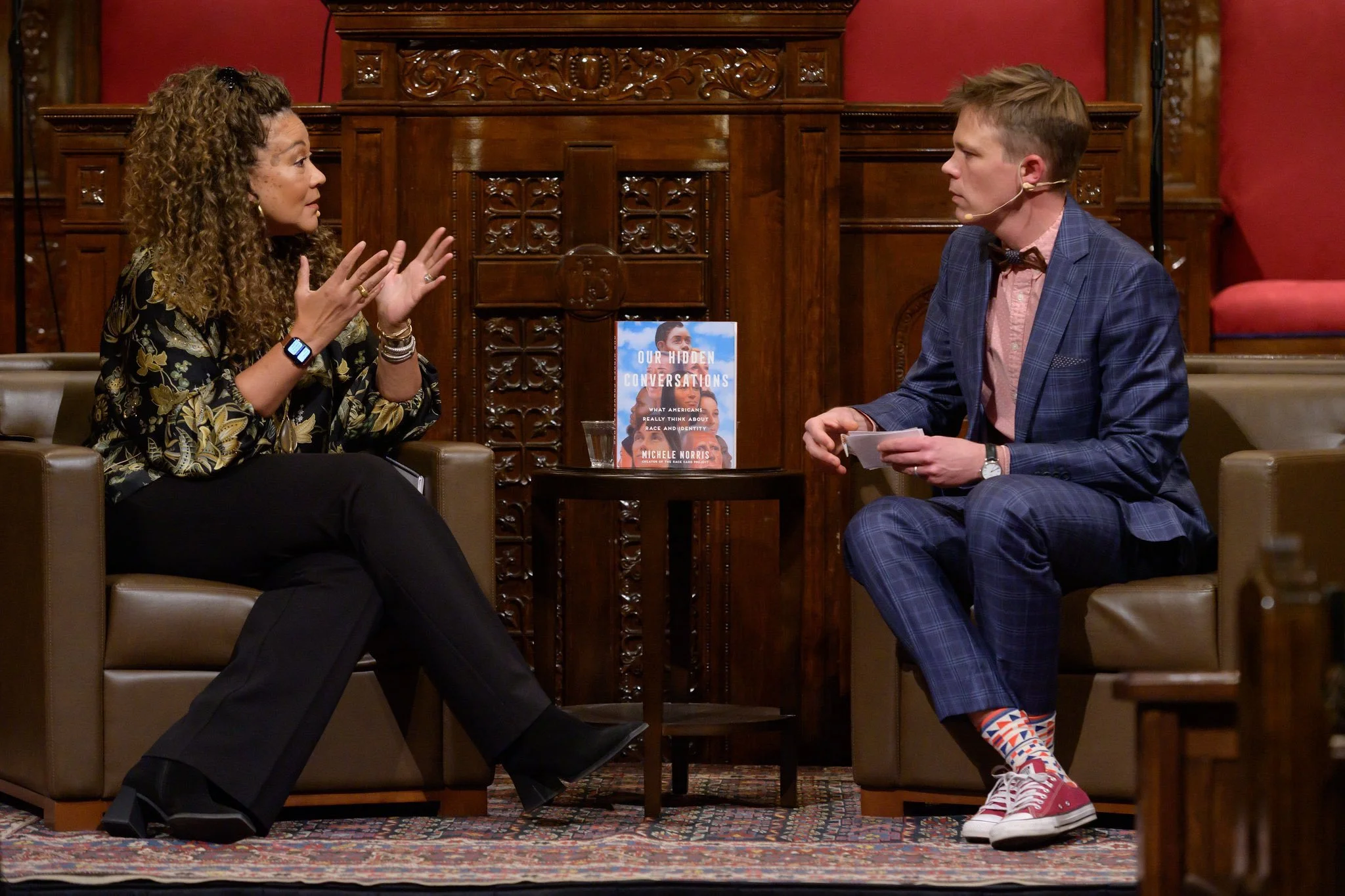
Tane Danger (right) moderating a fireside chat with Michelle Norris (left) at the Westminster Town Hall forum in 2024.
One Person
This is not a panel.
But that’s okay! A one-person conversation is usually called a fireside chat, and it can be a great format for exploring someone’s ideas in depth.
In this format, it’s the moderator's goal to ask smart follow-up questions, push back when needed, pull on interesting threads, and gently guide the conversation so that the audience enjoys not just the conclusion, but the process of getting there.
A common pitfall of the fireside chat happens when the moderator wants to show how smart they are. That’s not the assignment. The audience came to hear from the guest. The moderator should help the speaker shine, not compete for airtime.
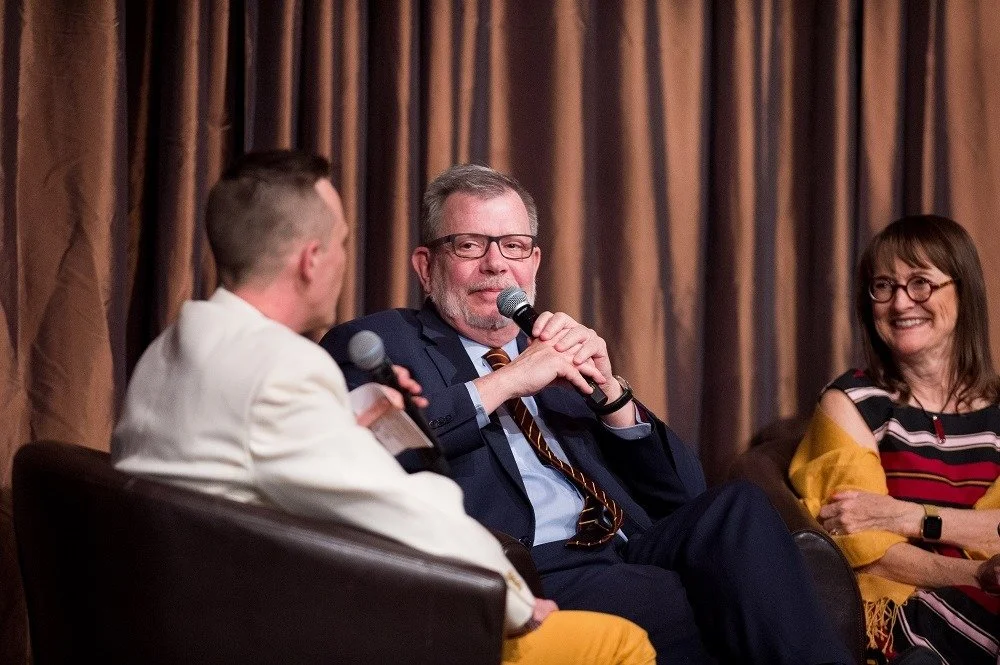
Danger Boat’s Tane Danger (front left) moderating a panel during a University of Minnesota Alumni Event.
Two People
This is one of the strongest formats for a conference panel. It gives you multiple perspectives without making the conversation too crowded.
With two panelists and a moderator, you have a real triangle of conversation. The panelists can respond to each other, the moderator can compare their ideas, and the audience gets enough contrast to stay engaged.
It’s also worth noting that “two perspectives” does not have to mean “two people who are ready to fight each other.” It can be a mistake to choose opposing viewpoints simply for the sake of “balance.” A raised voice can be an exciting moment, but it can also lead to thoughtless bickering.
The better goal is productive tension: two people who see the topic differently, but are capable of building on each other’s ideas.
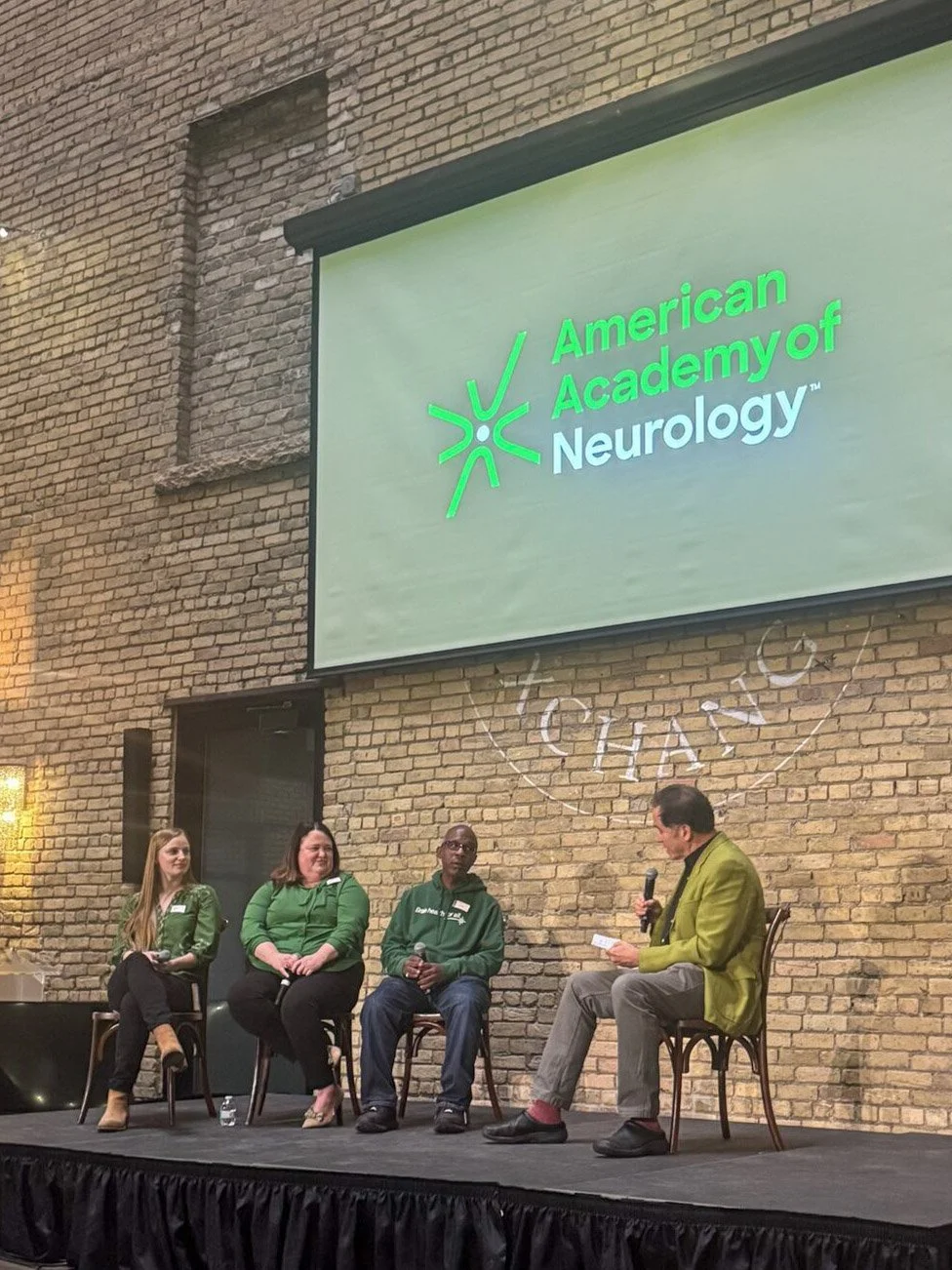
Danger Boat’s Jim Robinson (right) moderating a panel for the American Academy of Neurology in 2025.
Three People
With three panelists, a panel discussion can get really interesting.
At this size, you’re likely to have different perspectives, experiences, and areas of expertise in the conversation. That can create energy, complexity, and useful disagreement.
You may also start to see factions around certain ideas. That can be engaging—as long as the conversation stays balanced. What you want to avoid is two people ganging up on the other person for the entire discussion. A good moderator can help by making sure each person has room to explain their thinking and respond with nuance.
For most events, three panelists is the upper end of the sweet spot.
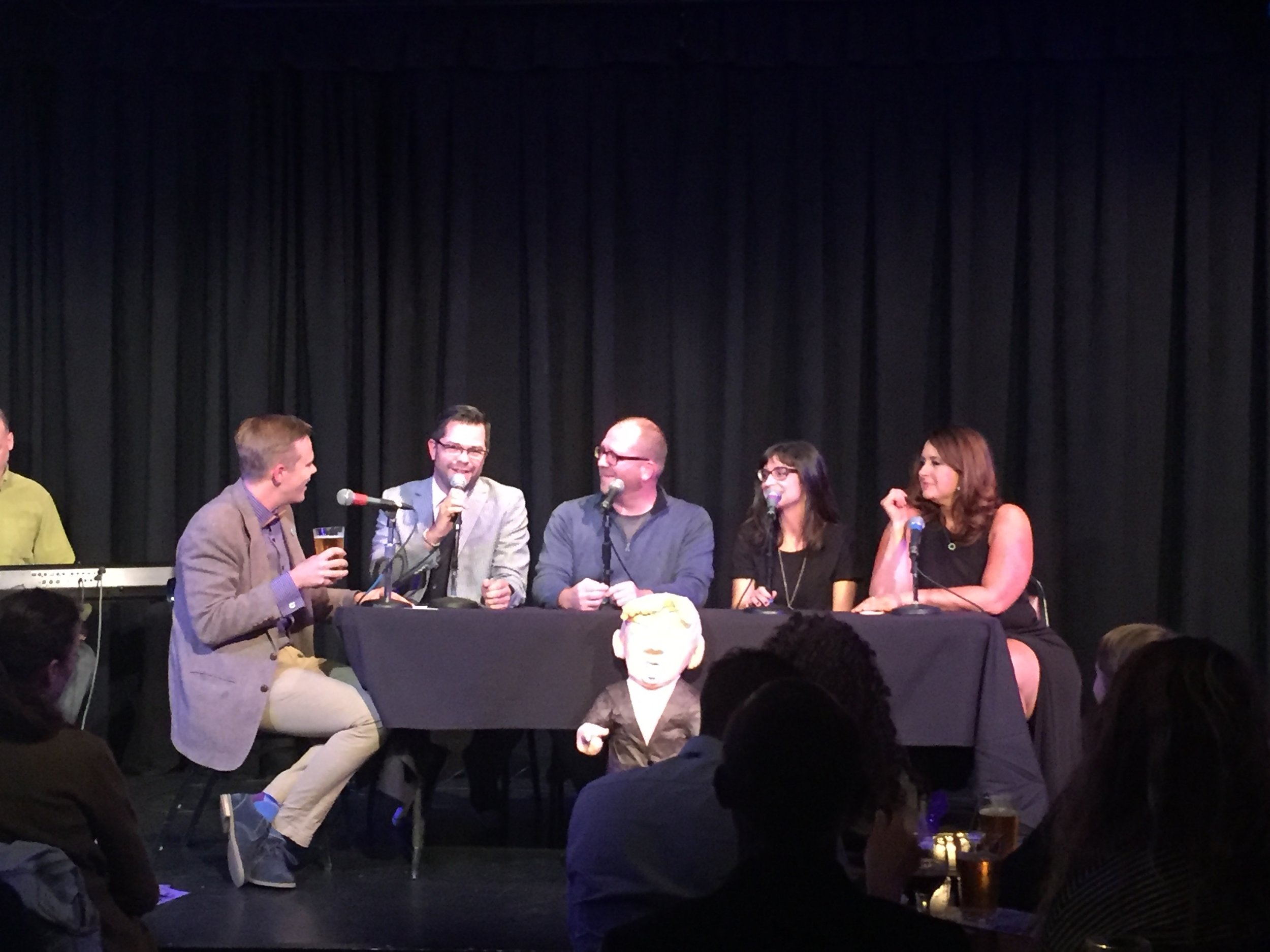
Tane Danger (left) moderates a conversation with the hosts of the Wrong About Everything podcast on The Theater of Public Policy in 2016.
Four People
At four panelists, the panel starts to crash out.
Unless you have an extremely skilled moderator, one or two people will usually dominate the conversation while the others contribute very little. If two dominant speakers each take 40% of the speaking time, the other two panelists are left with only 10% each.
In a 30-minute conversation, that’s about three minutes per person. At that point, they have more in common with the audience than with the panel.
Four people can work, especially for longer sessions or highly structured conversations, but it requires discipline. The moderator needs to be very intentional about pacing, transitions, and who gets brought into the conversation.
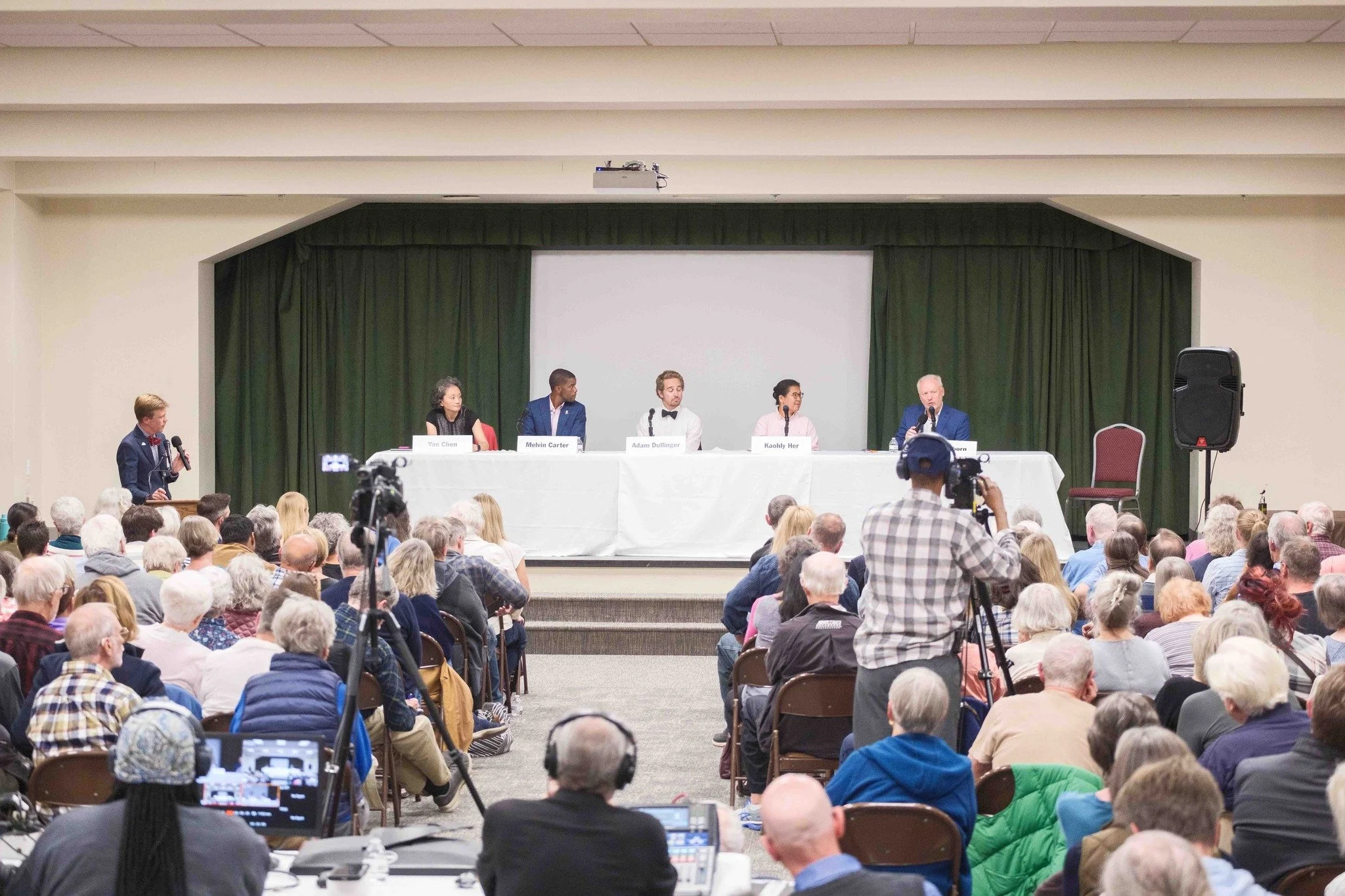
Tane Danger (far left) moderating the 2025 St. Paul Mayoral Candidate Forum
Five People
At five panelists, you now have enough for a basketball team.
This is where it starts to become overwhelming. The moderator has to track too many voices, too many introductions, and too many possible threads. This can create awkward moments for panelists and audiences alike; I was once on a panel of this size where the moderator forgot to introduce me entirely.
With five panelists, it becomes much harder to create a natural, flowing discussion. People either speak too little, speak too long, or sit politely waiting for an opening that never comes.
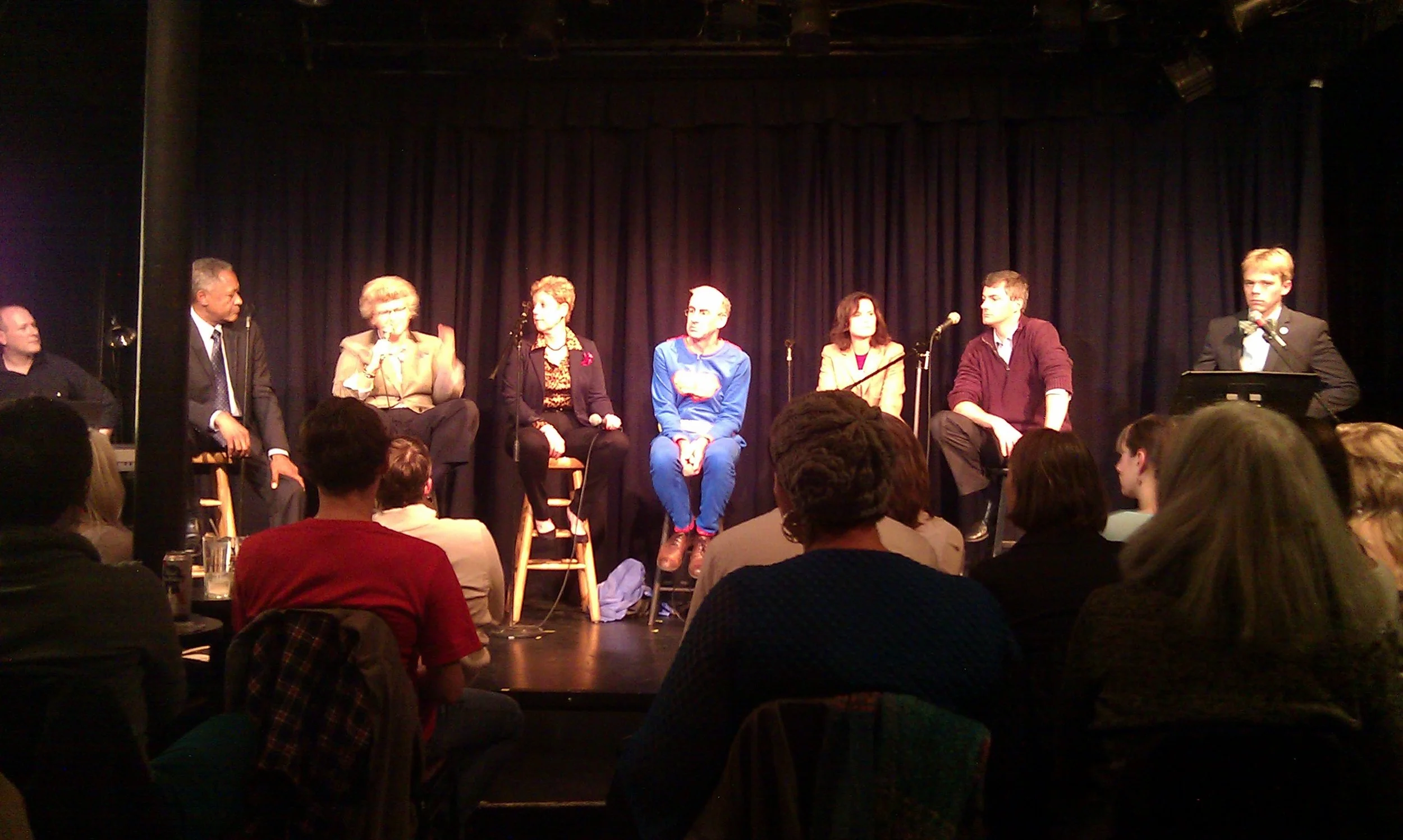
Tane Danger (far right) moderating a 2013 Minneapolis Mayoral Candidate Forum at the Bryant Lake Bowl.
Six People
At six panelists, things are officially out of hand.
The problem comes down to basic math. In a panel of six people, you will either have a few people dominate the conversation while others barely speak, or you’ll need to impose rigid rules: strict time limits, turn-taking and highly structured responses.
That can be useful in some formats, but it no longer feels like a lively panel discussion. It starts to resemble a political candidate forum. And given the low attendance at many candidate forums, that may not be the model to copy if you want your audience to be engaged.
The preparation also becomes much more complicated. You need to collect six bios, manage six schedules, wrangle six sets of talking points, and keep an email thread from turning into a part time job. And all of those hours of effort may result in a conversation where each panelist only gets a few minutes to speak.
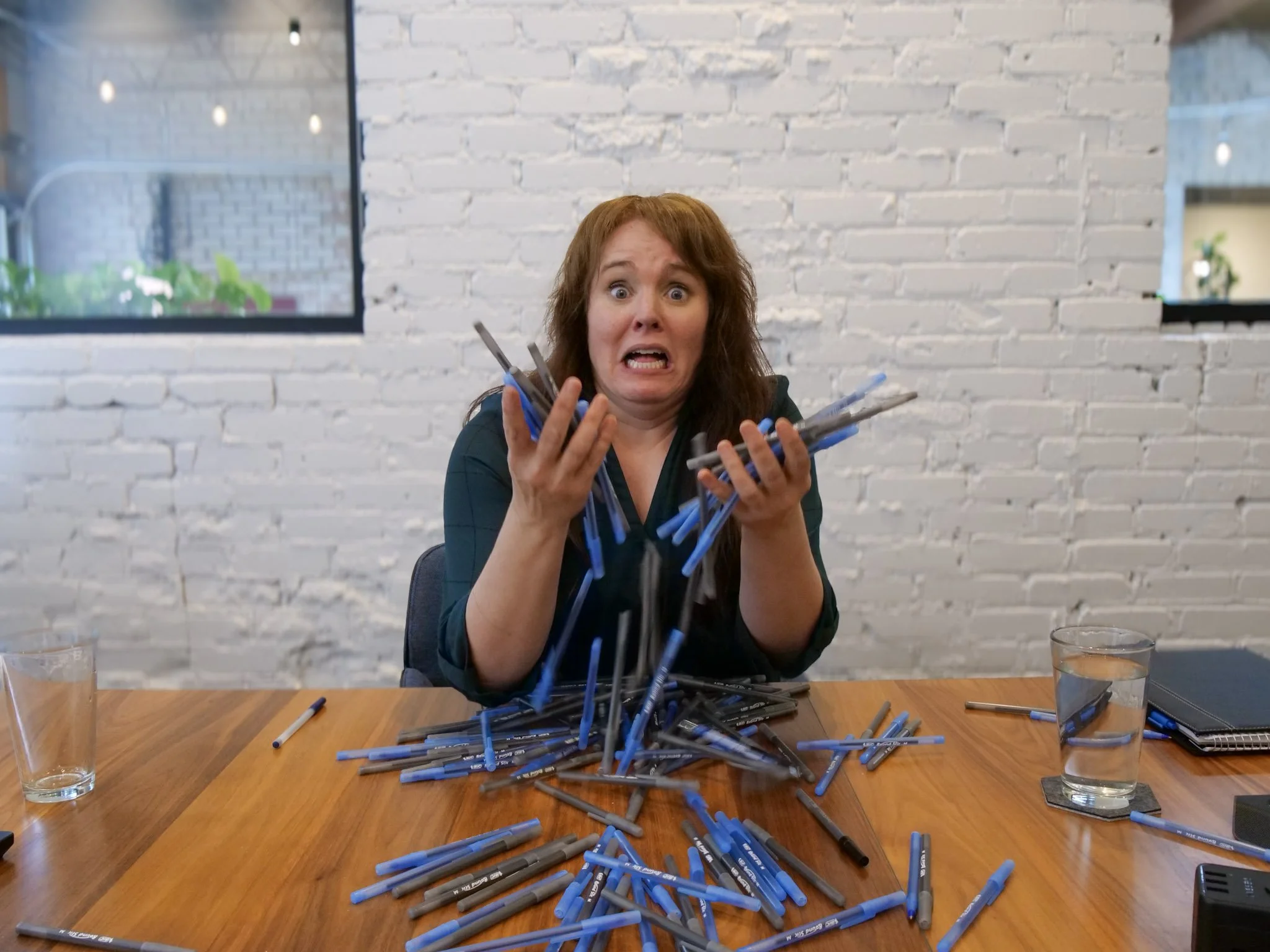
Danger Boat’s Heather Meyer feeling overwhelmed by far more than 6 pens.
Beyond Six
At this point, why not just let everyone in the audience talk too?
Conclusion
For most conferences and events, the ideal panel has two to three panelists and one strong moderator.
That gives you enough variety to create an engaging conversation, but not so many voices that the discussion becomes crowded or shallow. A great panel is not about putting as many smart people on stage as possible. It’s about creating the conditions for a conversation the audience actually wants to follow.
Choose the right number of people, give them a clear purpose, and hire a moderator who knows how to guide the room. Your audience—and the panelists—will thank you.

Author: Brandon Boat (he/him)
As co-founder of Danger Boat Productions, Brandon has produced and/or performed in more than 1000 shows that have delighted and surprised audiences throughout the US. In addition to performing, Brandon oversees the logistics of all Danger Boat’s productions and the company’s daily operations and finances as well as cast coordination, client collaboration and so much more.
