
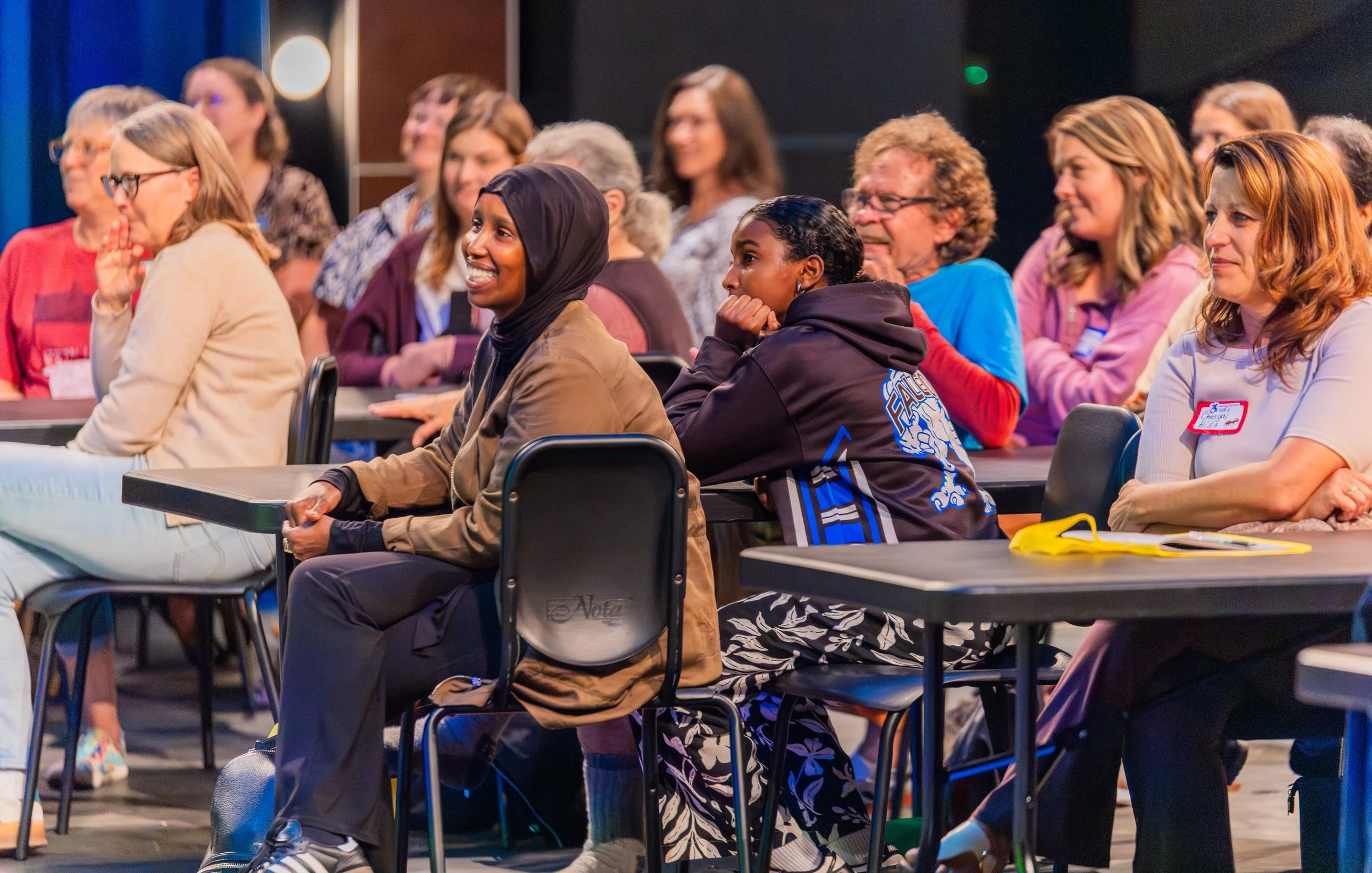
Audience members at a 2025 Improv Cafe with The Sowing Room.
An Improv Cafe with Danger Boat works best when the questions are strong.
The format is simple: bring people together for meaningful small-group conversations, then turn those reflections into live, unscripted comedy. But the quality of the experience depends heavily on the questions you ask your audience. A great question helps people share real stories, listen to one another, and uncover the ideas that are funny, surprising, thoughtful, and useful.
Here’s how we think about designing questions for an improv cafe.
What is an Improv Cafe?
An Improv Café is an interactive experience where audience members help shape the show.
Participants begin by discussing a shared question or theme in small groups. A team of improvisers listens to those conversations, then turns what they hear into original, unscripted scenes. Think of it like group therapy, but with personalized comedy bits instead of inner parts work.
A typical Improv Cafe follows this structure:
Introduction: 5 mins
1st Round of Questions: 15-20 minutes
1st Round of Improv: 10 - 15 minutes
2nd Round of Questions: 15-20 minutes
2nd Round of Improv: 10-15 minutes
Closing: 5 mins
In general, we like to begin with the more difficult or problem-focused questions, then move toward more hopeful or solution-oriented questions in the second round. That structure helps the audience name real challenges while still ending with energy, possibility, and forward motion. And the comedy between rounds gives the whole room a cathartic breath out.
Identify the Audience and Goals
Before developing the questions, we need to answer two basic questions: Who will be in the room, and what do you want the event to accomplish?
Understanding the audience helps determine how specific or broad the questions should be. For example, if the audience is made up entirely of board members of a hospital system, the questions can be more industry-specific.
But if the audience includes people of different ages, backgrounds, professions and roles, the questions should be more inclusive. The goal is to make sure everyone at the table can participate, whether they are an expert in the topic or simply someone with lived experience to share.
What Makes for Good Questions?
The best questions invite stories, not speeches. They help people reflect on what they have seen, felt, experienced, or hoped for. They are broad enough for everyone to answer, but focused enough to connect to the event's larger purpose.
A strong Improv Cafe question is:
Open-ended: Avoid yes/no or questions with one “correct” answer. Invite stories, opinions, and lived experiences.
ex. “What do people get wrong about your industry?” instead of “Do you think people misunderstand your industry?”
Accessible: People from different backgrounds, roles, and levels of expertise should be able to respond meaningfully.
Emotionally resonant: Good questions tap into hopes, frustrations, fears, pride, curiosity, or dreams.
Free of unnecessary jargon: Unless the whole audience shares the same professional language, avoid questions that feel too technical or insider-y.
Connected to challenges and possibilities: Strong questions often help people name what is hard and imagine what could be better.
A conversation-starter, not debate-sparker: The goal is connection, not winning an argument.
Grounded in lived experience: Ask people what they have noticed, experienced, or wished for. They should not just think in the abstract.
Relevant to the event: The questions should connect to the purpose of the gathering without becoming so narrow that only a few people can answer.
Open to surprise: The best questions create room for unexpected stories, laughter, insight and empathy.
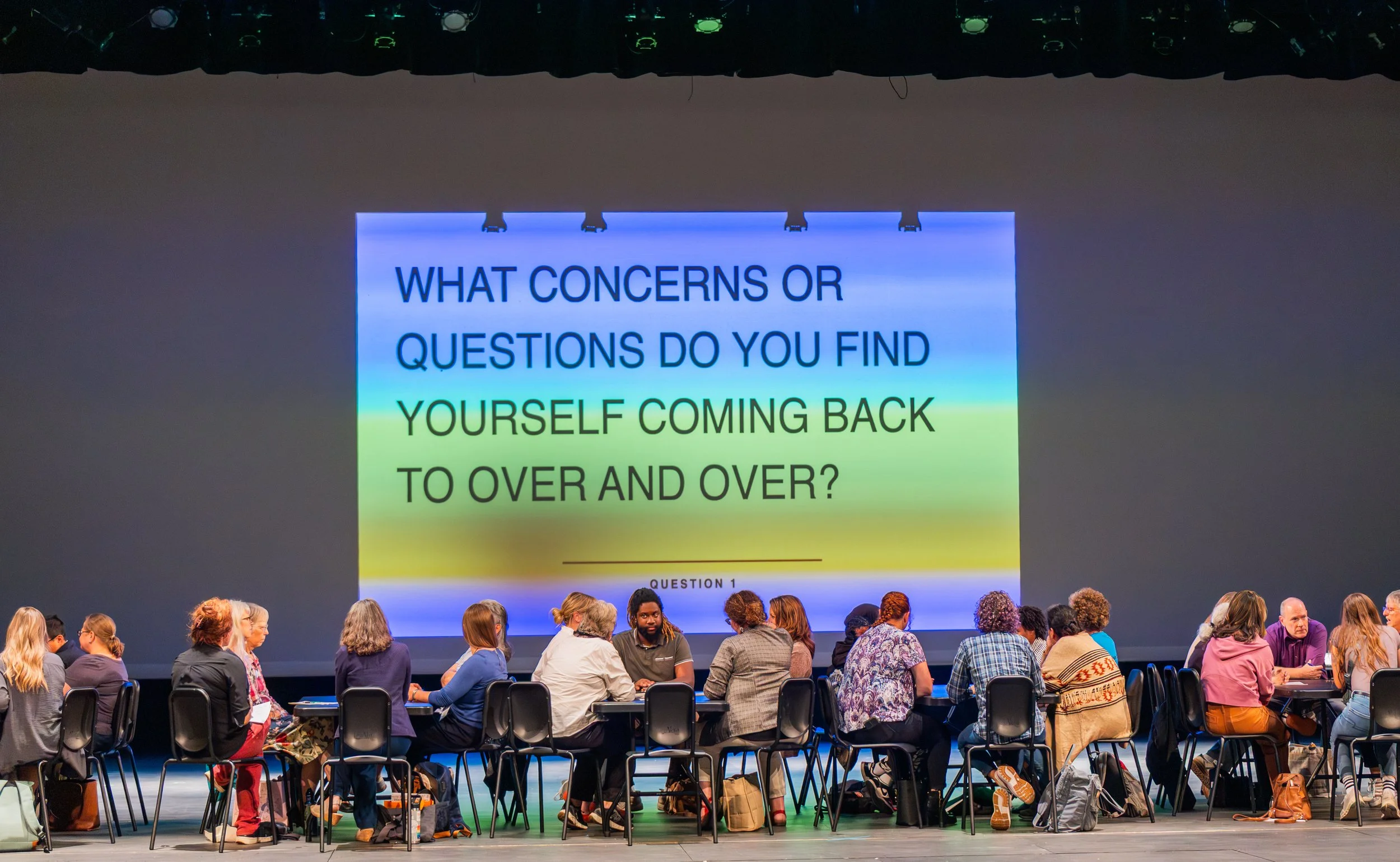
2025 Improv Cafe with The Sowing Room.
Broad Example Questions
Here are a few broad questions that can be adapted for different audiences and events:
> What frustrates you about this work?
> What are the biggest challenges you’re facing in the coming year?
> What’s the biggest challenge facing your community?
> What do you wish people understood about your work?
> If you had a magic wand, what's one thing you would change?
> What are the sources of strength in your community?
> What makes you hopeful about your work?
> What is holding you back?
> What do people get wrong about your community?
> What do people outside your community misunderstand about it?
> What is one thing your community does better than people realize?
Choose 4-8 Strong Questions
Once you have a working list, narrow it down to four to eight strong options. From there, share the list with the event planners or key stakeholders and ask them to consult with anyone else who should weigh in.
The final event usually works best with four questions: two for the first conversation round and two for the second. That gives the audience enough structure to go deep without overwhelming them with too many prompts.
Conclusion
What sets an Improv Cafe apart from a typical conference session or community dinner is not just the comedy; it’s the questions that allow people to share something real.
Strong questions help people move beyond surface-level answers, which helps our improvisers move beyond surface-level comedy. Well-crafted prompts invite stories, reveal patterns, and create moments of recognition across the room. When that happens, the improv becomes more than entertainment. It becomes a creative reflection of what the audience is thinking, feeling, and imagining together, and leaves everyone feeling more connected after the last round of applause.
