
How Sketches of Minnesota Uses Comedy to Build Community
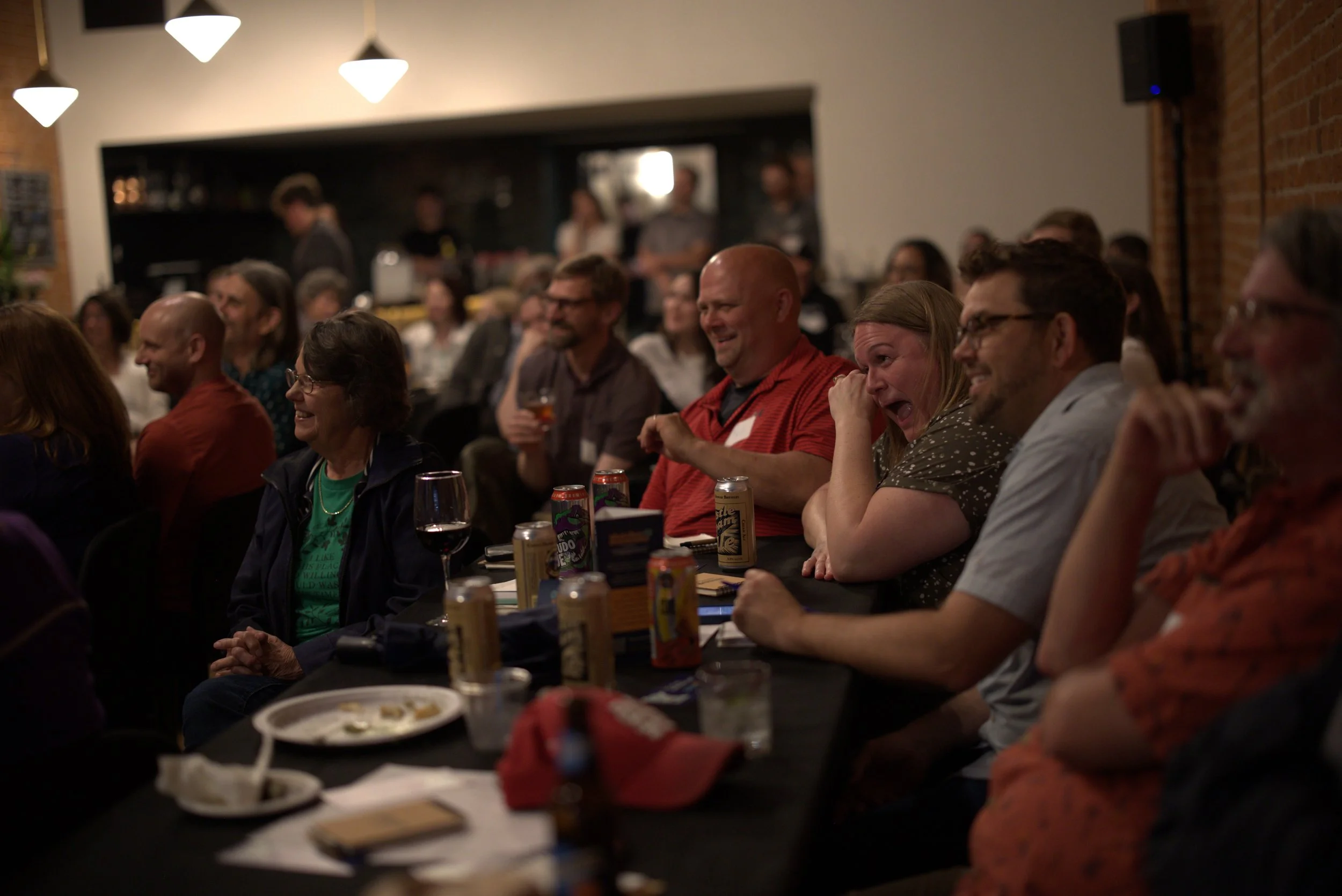
Audience members laugh at a 2025 Sketches of Minnesota show in Winona, MN.
How Sketches of Minnesota Uses Comedy to Build Community
by Brandon Boat | 15 min read
At Danger Boat Productions, we believe humor can do more than entertain. It can help people listen differently, talk more openly, and see their neighbors with a little more curiosity and care.
That belief is at the heart of Sketches of Minnesota, a statewide civic improv project created in partnership with the Minnesota Humanities Center. The project brings Minnesotans together for a shared meal, a facilitated community conversation, and an original improv comedy performance inspired by what people say about their town.
It is joyful, local, and, like gambling to win meat, very Minnesotan. And underneath the laughter is a serious idea: when people feel seen, heard, and connected, communities are better equipped to understand themselves and work across differences.
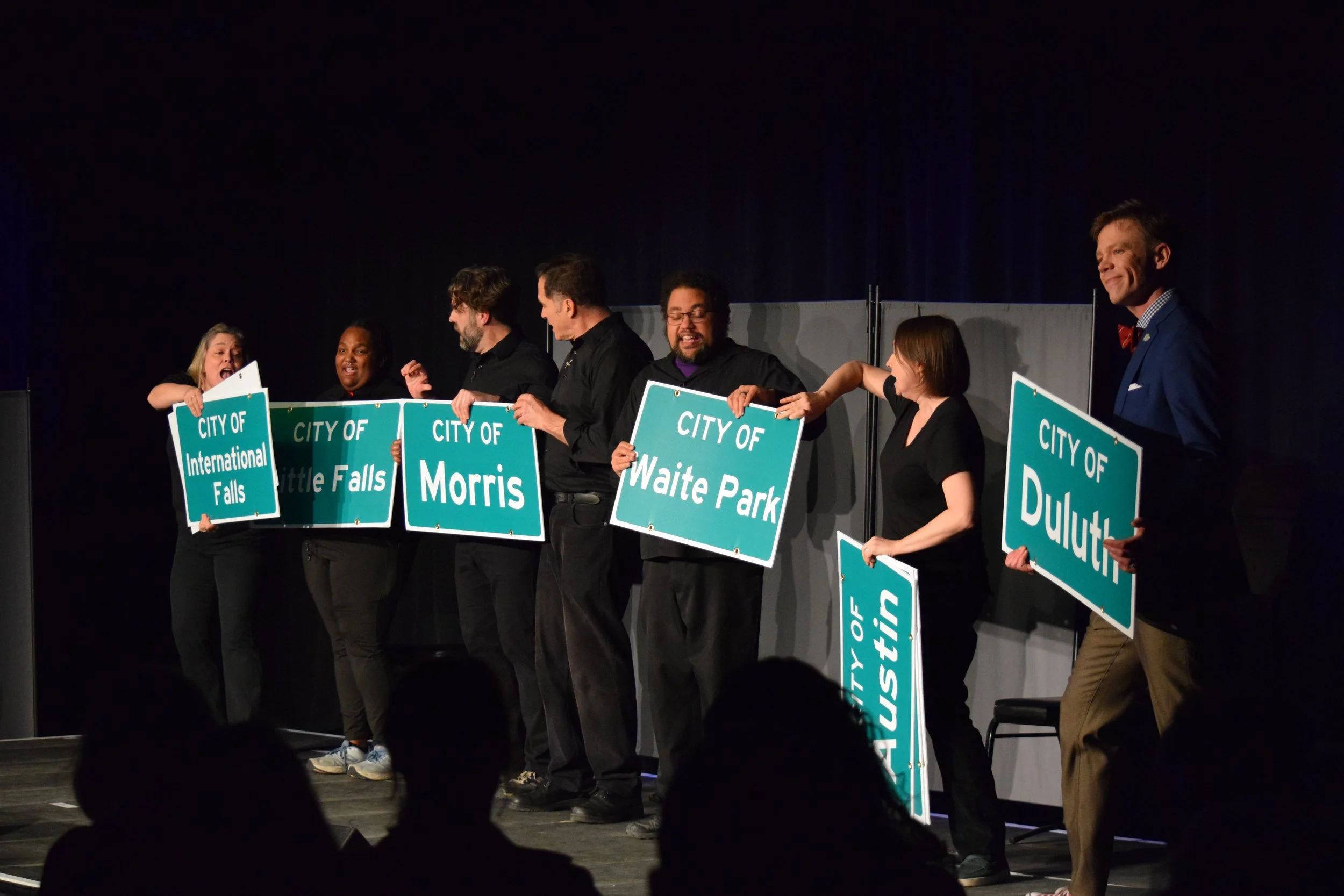
Danger Boat cast members hold signs with Minnesota town names during the 2025 Sketches of Minnesota scripted show.
With two tours under our belt already, we are about to embark on a new adventure across the North Star State. Starting this Friday, July 10th, our cast will be visiting 10 towns all across Minnesota this summer and fall — and we really mean all across Minnesota:
2026 Sketches of Minnesota Tour Dates:
July 10: Freeborn County (Events at the Broadway in Albert Lea)
July 16: Red Wing (Red Wing Public Library)
August 1: Edge of the Wilderness (Edge Center for the Arts in Bigfork)
August 13: Montevideo (American Legion)
August 18: Emily (Emily City Hall)
August 26: Rochester (Rochester Art Center)
September 10: Marshall (Marshall Area YMCA)
September 25: Worthington (Lerma’s Event Center)
October 1: Iron Range (Minnesota Discovery Center in Chisholm)
October 10: Luverne (Big Top Tent Rental)
After 2 years, we think it’s safe to say people like the program. But to help explain how this project actually creates impact in the communities we visit, we developed a Theory of Change for Sketches of Minnesota.
What is Sketches of Minnesota?
Sketches of Minnesota is a community-inspired civic improv comedy tour.
In each host community, residents gather for dinner and guided conversation around questions like:
What is something great about your town that people elsewhere might not know?
What do outsiders often get wrong about your community?
What divisions or conflicts concern you, and why?
What do you imagine for the future of this place?
Danger Boat improvisers listen to those conversations and then create a live, unscripted comedy show that reflects the community back to itself. The performance is not about making fun of people. It is about honoring what was shared, lifting up local stories, and using humor to make serious themes more approachable.
The result is part community gathering, part live performance, part civic reflection — with just enough laughter to make the medicine go down.
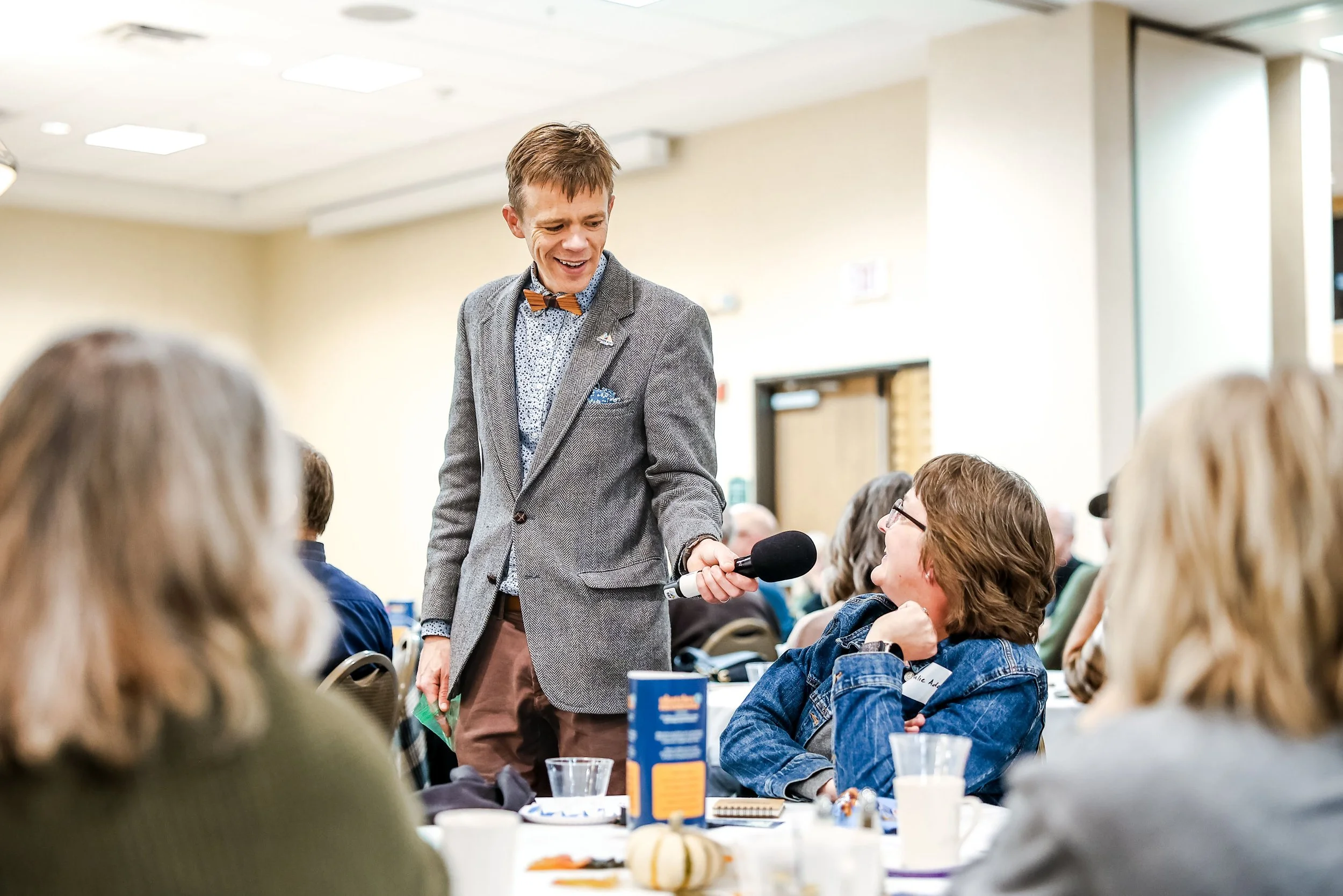
Host Tane Danger gets feedback from an audience member at a 2025 Sketches of Minnesota show in Ottertail.
What is a Theory of Change?
A Theory of Change is a simple way to explain how a project creates impact.
It connects the dots between 1) the problem a program is trying to address, 2) the assumptions behind the work, 3) the resources required, 4) the activities being delivered, and 5) the outcomes the project hopes to create.
In other words, it answers the question: How do we believe this work leads to meaningful change?
For Sketches of Minnesota, our Theory of Change helps clarify why we use community meals, facilitated storytelling, and improv comedy together. These are not random ingredients tossed into the civic casserole. They are intentional parts of a process designed to build connection, understanding and civic engagement.
The Sketches of Minnesota Theory of Change

Problem - Challenge We Aim To Fix
Minnesota communities are facing disconnection and fragmentation, especially across geographic, cultural and ideological divides. That disconnection weakens public life, civic trust, and a shared sense of identity.
Many people want to feel more connected to their community, but they may not have welcoming spaces to talk with neighbors, explore shared challenges, or celebrate what makes their town meaningful. Serious conversations can feel tense, overly formal, or inaccessible. Arts and humor are often underused as tools for bringing people together.
Sketches of Minnesota was designed to create a different kind of civic space: one that is thoughtful, welcoming, local, and genuinely fun.
Assumptions - What We Believe is True
This project is built on several core beliefs.
We believe shared storytelling can build understanding. When people hear what their neighbors love, worry about, and hope for, they begin to see their community in a fuller way.
We believe humor and the arts can create psychological safety. Laughter helps lower defenses and makes room for honest reflection without turning the room into a debate stage.
We believe people engage more deeply when they feel seen and heard. A community member who hears their own words, concerns, or hopes reflected back onstage may experience a new sense of belonging and recognition.
We also believe that small, local, in-person events can have a larger civic ripple effect. One evening will not solve every challenge facing a community, but it can create new conversations, new relationships, and new energy for what comes next.
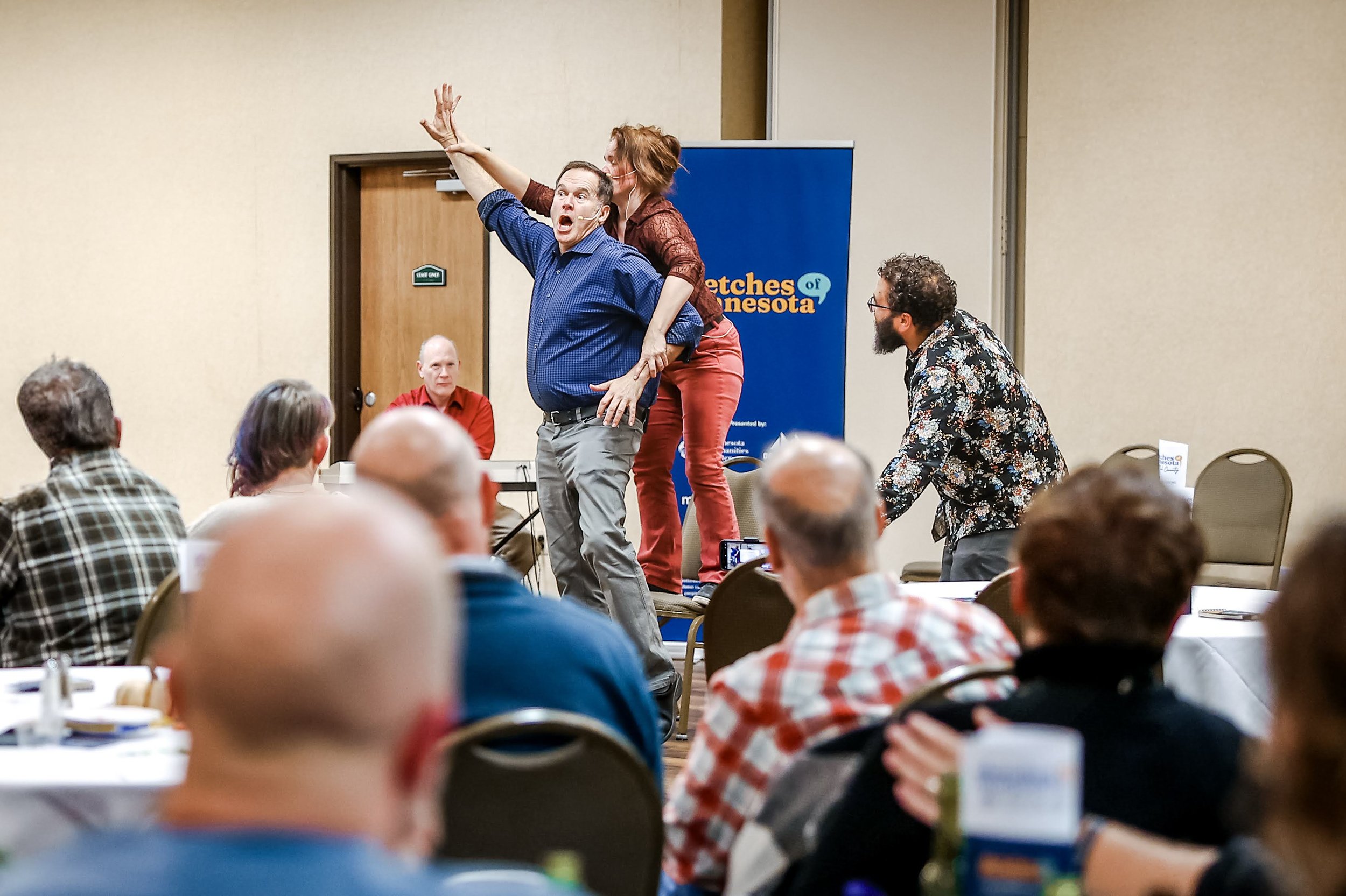
Danger Boat cast members perform at a 2025 Sketches of Minnesota show in Ottertail.
Risks - What’s Stopping Us
Like any meaningful community project, Sketches of Minnesota faces real risks.
Some people may be skeptical of an arts-based format. Others may worry that comedy will make light of serious issues. Community divisions could surface in unproductive ways. Logistical challenges, limited host capacity, unrepresentative participation, and staff or artistic burnout can all affect the success of the project.
There is also the challenge of measurement. Connection, trust, belonging, and civic engagement matter deeply, but they are not easy to quantify. Humans, as it turns out, are inconveniently complex. (But still easier to survey than dogs.) Rude of us.
That is why the Theory of Change includes clear indicators and follow-up tools to help us understand what is working and where the project can improve.
Key Indicators - How We Know it Works
To measure short-term impact, we use post-event surveys, audience talkbacks, and debriefs with host community planning committees. These tools help us understand whether participants left with new insights, a stronger sense of connection, or a changed perception of their community.
To measure medium-term impact, we aim to follow up with host organizations and participants months after the event. This helps us understand whether the experience contributed to ongoing conversations, new community engagement, or shifts in how people think about working across differences.
Theory of Change Program for Sketches of Minnesota

The program model describes how the project moves from resources to action to impact.
Inputs - Resources Required
Sketches of Minnesota depends on strong partnerships and community infrastructure. Key inputs include the Minnesota Humanities Center, Danger Boat Productions, local community organizations, individual community members, event materials, technology and media support, and a welcoming community gathering space.
Each partner plays an important role. Local hosts bring community knowledge and relationships. The Minnesota Humanities Center brings expertise in storytelling, humanities-based dialogue, and civic engagement. Danger Boat brings facilitation, comedy, performance, and the ability to transform community stories into a live theatrical experience.
Activities - Actions Taken
The core activities are simple, but powerful: a community gathering, a shared dinner, facilitated conversation and an improv comedy show.
The meal matters because it creates warmth and welcome. The conversation matters because it gives people a chance to share their experiences directly. The improv matters because it transforms those stories into something memorable, joyful, and communal.
Together, these elements create a civic experience that feels less like a meeting and more like a community celebration.
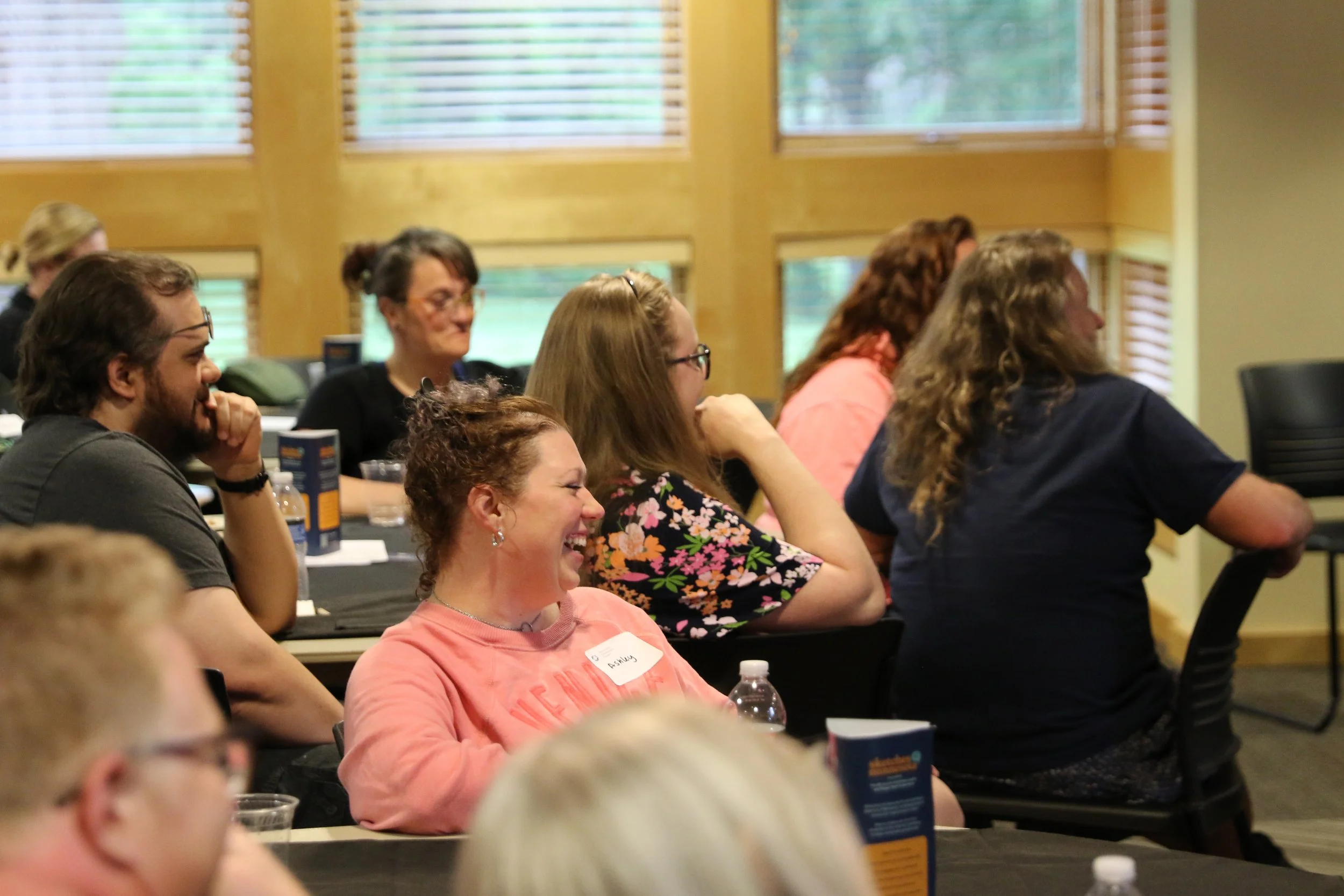
Audience members laugh at a 2024 Sketches of Minnesota show in West St. Paul.
Outputs - Outcome of Activities
The project tracks outputs such as the number of participants registered, the number of participants who attend, the number of host community applicants, the number of events held each year, and the number of local organizations represented at each event.
These numbers help us understand reach, demand, and participation. They also help us see whether the project is bringing together a broad enough mix of people and organizations to actually reflect the community.
Outcome - Outcomes Created
In the short term, we hope participants leave with a desire to return to the arts, a new understanding of their town, a greater awareness of their personal role in the community, and more hope for the future.
In the medium term, we hope communities become more confident in the power of sharing stories and more committed to working across differences.
These outcomes are intentionally practical. The goal is not just for people to say, “That was a fun night” (though we do like that). The deeper goal is for people to leave thinking, “I know this place differently now,” or “I want to be more involved,” or “I understand my neighbors a little better.”
Primary Impact - Changes Occured
The long-term vision for Sketches of Minnesota is that public life in Minnesota is revitalized through arts-driven gatherings that build empathy, understanding, and civic engagement.
That is a big goal, and no single event can accomplish it alone. But repeated across communities, with strong local partners and thoughtful follow-up, Sketches of Minnesota offers a model for how the arts can help people reconnect with place, neighbors, and civic life.
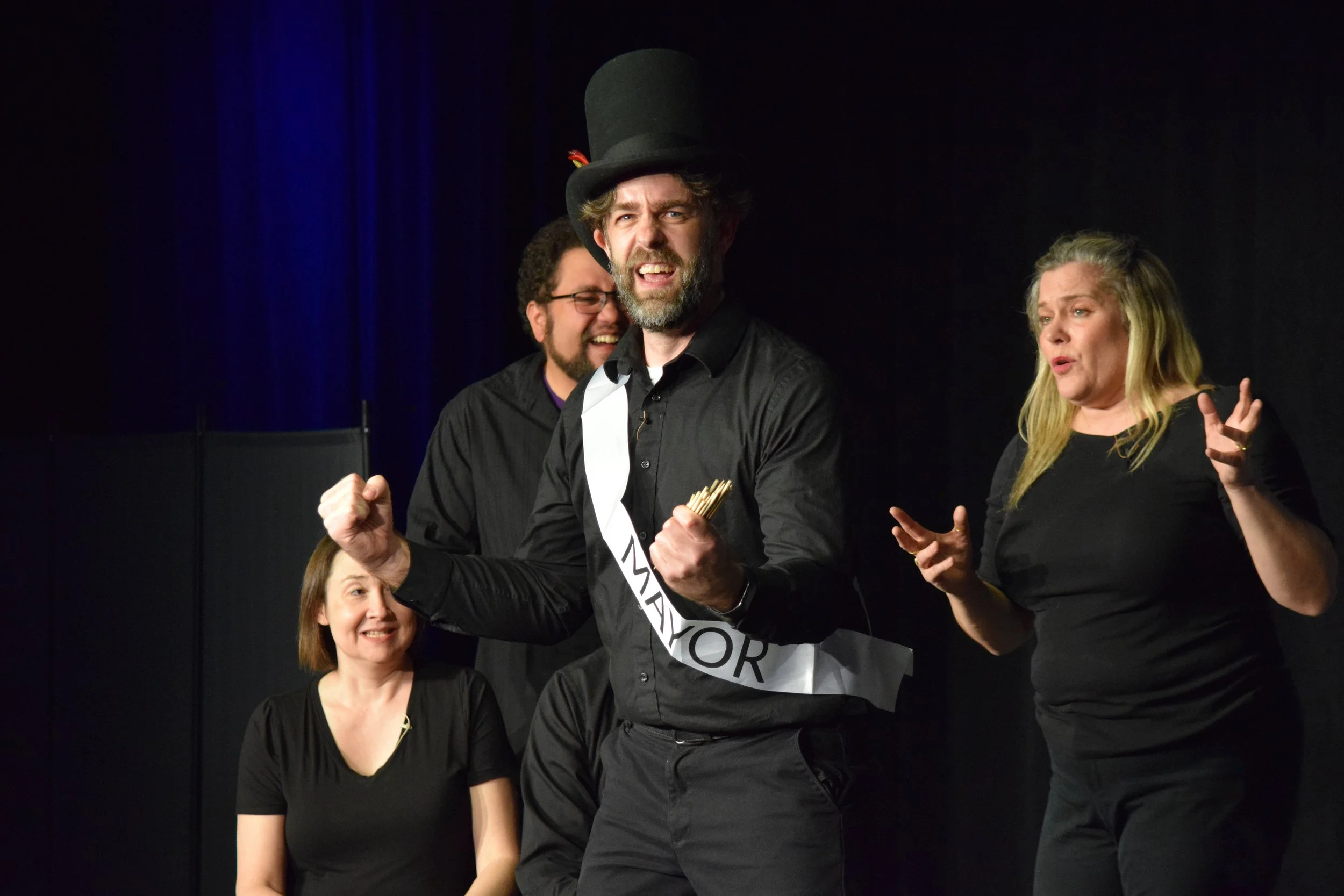
Danger Boat cast members during the 2025 Sketches of Minnesota scripted performance.
Conclusion
Sketches of Minnesota starts with a simple invitation: come share a meal, tell stories about your community, and watch those stories become comedy.
But underneath that invitation is a larger belief. Communities need spaces where people can gather across differences, talk about what matters, and experience joy together. They need opportunities to feel proud of where they live while also being honest about what is hard. They need ways to imagine the future that feel human, creative, and possible.
This is what Sketches of Minnesota is built to do.

Author: Brandon Boat
As co-founder of Danger Boat Productions, Brandon (he/him) has produced and/or performed in more than 700+ shows that have delighted and surprised audiences throughout the US. In addition to performing, Brandon oversees the logistics of all Danger Boat’s productions and the company’s daily operations and finances as well as cast coordination, client collaboration and so much more.
